 Chuckanut
 Edison sits close enough to the water that its homes take a different kind of weather than houses even a few miles inland. Salt-laden air off Samish Bay, wind-driven rain that comes in sideways more often than straight down, and a moss season that can stretch from October well into spring all put steady pressure on window frames, sills, and seals. Windows here don't fail because they're old — they fail because the climate never really gives them a break. This page covers what that means for custom window work in Edison specifically: what to watch for, what a correct job looks like, and how we approach it.
Why Edison Windows Wear Differently
Most window damage we see in this corridor isn't dramatic. It's slow. Salt air accelerates corrosion on aluminum hardware, screws, and cheaper cladding long before the glass itself shows any problem. Driving rain finds any gap in flashing or caulking and pushes water sideways and upward, not just down — which means standard drainage details that work fine in drier parts of the state can leak here. And moss doesn't just grow on roofs; it takes hold in window tracks, sill corners, and anywhere organic debris and moisture sit together for weeks at a time, holding water against wood and trim.
The result is a pattern we see again and again in Edison-area homes: windows that look fine from across the room but have soft sills, fogged double-pane glass, or hardware that's seized up from corrosion. None of that is unusual for this stretch of Whatcom County coastline — it's just what happens when window details aren't matched to the actual weather.
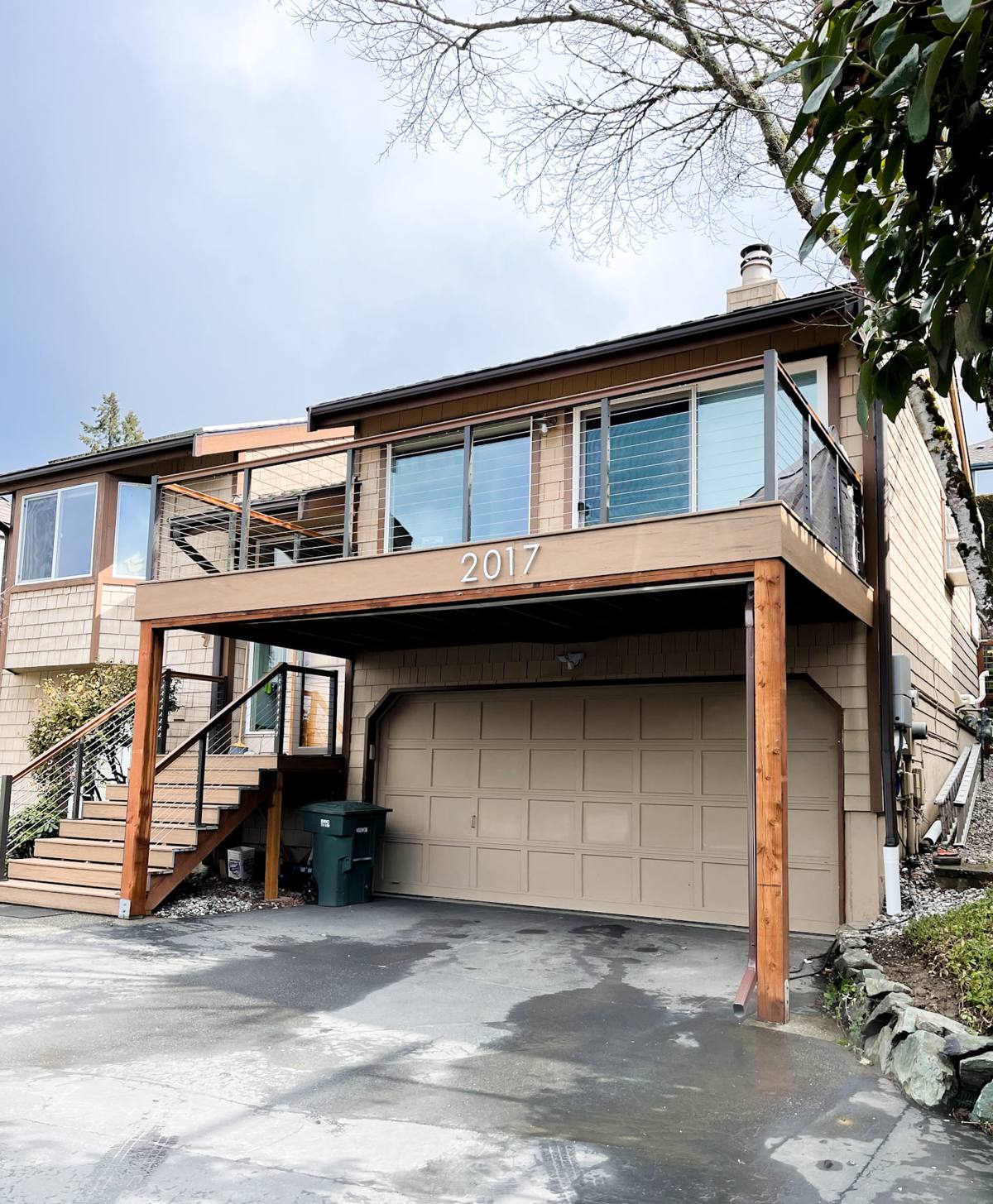
Signs It's Time to Look at Your Windows
- Fogging or a milky haze between panes — the seal has failed and the insulating gas is gone
- Sills or lower frame corners that feel soft, spongy, or show dark staining
- Windows that stick, won't latch fully, or have handles/locks that have seized or corroded
- Visible daylight or a draft you can feel with your hand along the frame edge
- Moss, algae, or black staining building up in the tracks or on the exterior trim
- Paint or finish that's bubbling or peeling specifically around the window opening
- A noticeable jump in heating costs with no other explanation
What a Correct Window Job Actually Involves
It Starts Before the Window Ever Shows Up
A window is only as good as the opening it sits in. Before we touch a new unit, we check the rough opening for rot, confirm the sill pitches outward so water can't pool, and look at how the existing flashing (if any) is tying into the siding or house wrap. In a lot of older Edison homes, this is where the real problem lives — not in the glass, but in decades-old flashing that was never installed to shed water in a driving rain.
Flashing and Weather Barrier Come First
Around here, we treat flashing as non-negotiable, not optional. That means proper sill pans that route any water that gets past the window back outside instead of into the wall cavity, side and head flashing that laps correctly with the water-resistive barrier, and sealants rated for exterior exposure — not general-purpose caulk that turns brittle after one salt-air winter.
Fit, Insulation, and Sealing
A window that's slightly out of level or racked in the opening will leak eventually, no matter how good the unit is. We shim and square every install, insulate the gap around the frame properly (not overpacked, not left hollow), and finish with interior and exterior sealant appropriate to the material.
Frame Materials: What Holds Up Here vs. What Struggles
Material choice matters more in Edison than it does further inland, mostly because of the combination of salt air and constant moisture exposure. Here's how the common options generally perform in this environment:
| Frame Material | Salt Air / Moisture Behavior | Maintenance | Typical Fit |
|---|---|---|---|
| Vinyl | Won't corrode or rot; handles damp climates well | Low — occasional cleaning | Good all-purpose choice for most Edison homes |
| Fiberglass | Excellent moisture and temperature stability | Low | Strong option for larger custom openings or higher-exposure walls |
| Aluminum-clad wood | Exterior holds up well; interior wood keeps traditional look | Moderate — clad seams need periodic checking | Good where a wood interior is wanted with a durable exterior shell |
| Bare aluminum | Prone to pitting and corrosion in salt air over time | Higher — needs regular inspection | We use it selectively, mainly where budget or a specific look calls for it |
| Solid wood | Handsome, but the most vulnerable to rot without diligent upkeep | Highest — needs regular refinishing | Best reserved for protected elevations, not direct weather exposure |
We're not against any of these materials outright — the right choice depends on the wall's sun and rain exposure, your budget, and how much upkeep you actually want to do. What we won't do is put a low-maintenance-marketed product in a spot where the installation details can't back that claim up, or use a material that's a poor match for direct salt-air exposure just because it's cheaper up front.
Our Process for Edison Custom Window Jobs
- On-site assessment — we look at the openings, the wall assembly, drainage, and existing damage before recommending anything
- Honest scoping — if there's rot or flashing failure behind the window, we tell you before the project starts, not after we've opened the wall
- Material and unit selection — sized and specified to the opening, matched to that wall's actual sun and rain exposure
- Removal and opening prep — old units come out carefully, framing is repaired as needed, sill pans and flashing go in correctly
- Installation — squared, shimmed, insulated, and sealed to exterior-grade standards
- Final check — operation, seal, and weatherproofing verified before we call it done
Custom Windows vs. Off-the-Shelf: When It Matters
Not every Edison home needs fully custom sizing, but a fair number do — older farmhouses, additions, and homes with non-standard openings are common in this area. Custom sizing means the window is built to your exact opening rather than the opening being reframed to fit a stock size, which usually means less structural disruption and a cleaner result. It costs more than a stock unit, but for an oddly sized or historic opening, it's often the more honest path than forcing a standard window to fit.
Cost Factors Homeowners Should Know
| Factor | Why It Moves the Price |
|---|---|
| Frame material | Vinyl is generally the most budget-friendly; fiberglass and clad-wood cost more but offer different durability trade-offs |
| Custom vs. stock sizing | Custom-built units cost more than off-the-shelf sizes but avoid reframing the opening |
| Hidden rot or flashing repair | Damage found once the old window is out adds labor and material that couldn't be quoted sight-unseen |
| Glass package | Upgraded glazing for sound, sun exposure, or energy performance adds cost per unit |
| Number and size of openings | Larger or multiple windows in one project bring some efficiency in labor per unit |
We give straightforward ranges once we've actually seen the opening — we don't quote sight-unseen numbers that fall apart once the old window comes off the wall.
Why a Crew That Already Works in Edison Matters
Window work here isn't the same as window work in a drier, inland part of the state, and a crew that hasn't worked this coastline regularly can miss that. We know which details actually matter in this climate — sill pan flashing that handles wind-driven rain, hardware and fasteners that won't corrode prematurely in salt air, and sealants that hold up through a long, wet moss season instead of cracking after one winter. That's not a sales pitch, it's just what repeat exposure to this specific weather teaches you. A window installed to a generic standard might look fine on day one and still leak by year three.
Maintaining Your Windows After Installation
- Clear tracks and sills of moss, leaves, and debris a couple of times a year, especially heading into fall
- Rinse salt residue off frames and hardware periodically if your home is closer to the water
- Check exterior caulking annually for cracking or gaps and re-seal before winter rains set in
- Operate every window through its full range a few times a year so hardware doesn't seize
- Watch for early fogging between panes — it's cheaper to address one failed seal than wait for several
If your Edison home has windows that are sticking, fogging, drafting, or just showing their age faster than they should, we're happy to take a look. We offer free, no-pressure estimates — you'll get a straightforward read on what your windows actually need and what it would cost to fix it right. Fill out the form below to get started.