 Chuckanut
 Why Fairhaven Homes Wear Out Siding Faster Than Most
Fairhaven sits close enough to the water that homes here deal with a combination most inland Whatcom County neighborhoods don't: salt-laden air, wind-driven rain coming off Bellingham Bay, and long stretches of shade and dampness under mature evergreens that never let siding fully dry out. Any one of those factors alone is manageable. Together, over ten or fifteen years, they're what push siding on Fairhaven homes into failure well before homeowners expect it.
Salt air is corrosive to exposed metal fasteners and trim, and it accelerates the breakdown of lower-grade coatings. Driving rain off the bay doesn't just wet the face of your siding — on older or poorly detailed homes, wind pressure can force water sideways and upward behind laps and around window trim, which is where rot actually starts. And Whatcom County's long, mild, wet winters mean moss and algae get a head start on north- and west-facing walls that stay shaded and damp for months at a stretch. If your siding already shows green or black streaking, or if paint is failing faster on one side of the house than the other, that's the local climate doing exactly what it does here.
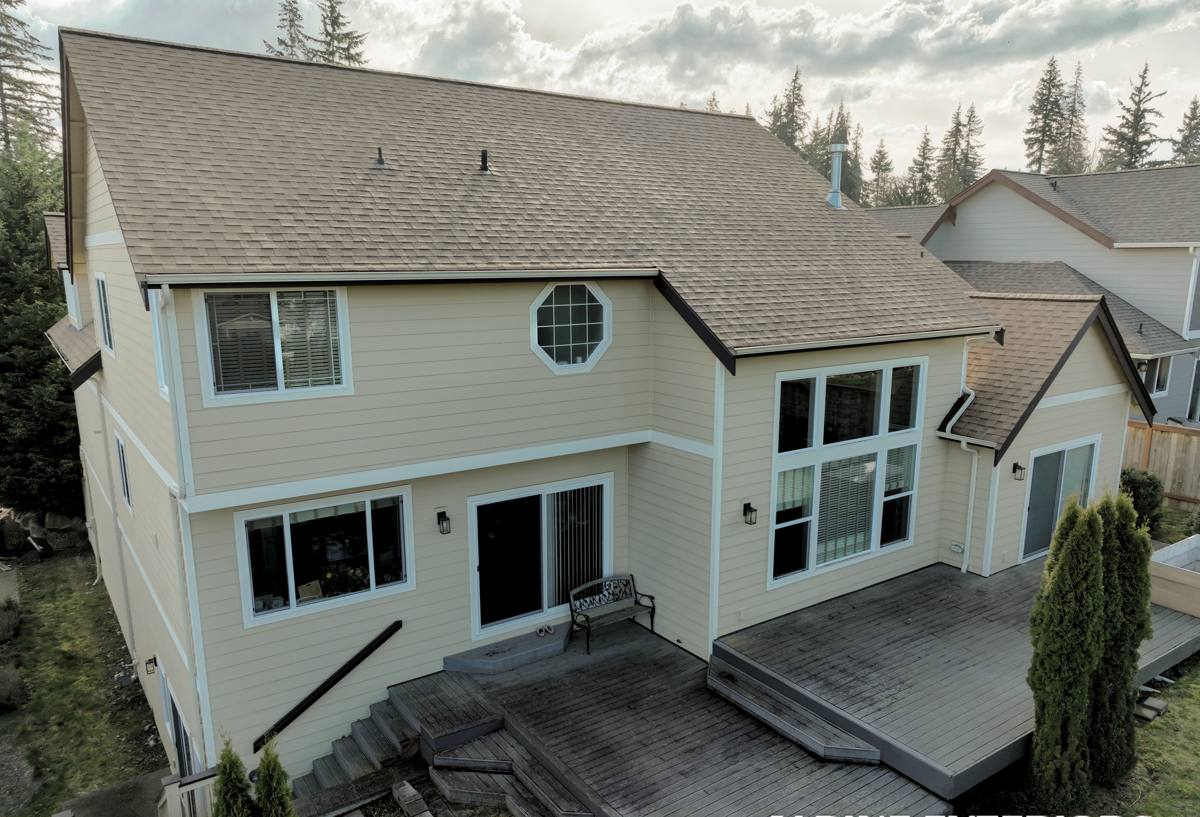
Signs a Fairhaven Home Actually Needs Siding Replacement
Not every issue calls for a full tear-off. But some signs mean the siding — or what's behind it — has been compromised in ways that patching won't fix.
- Soft, spongy, or crumbling spots when you press on the siding, especially near the bottom of walls or below windows
- Persistent paint failure — bubbling, peeling, or flaking that comes back within a year or two of repainting
- Visible gaps, warping, or cupping in individual boards or panels
- Moss or algae that keeps returning to the same areas no matter how often it's cleaned off
- Rising energy bills alongside drafts near exterior walls, which often points to a failed or missing weather-resistive barrier behind the siding
- Siding that's original to a home built more than 20-25 years ago, particularly if it's LP-style OSB panel, cedar, or old vinyl
If you're seeing two or more of these, it's worth having someone open up a small section and look at the sheathing underneath before deciding whether replacement is necessary. Sometimes the siding looks worse than it is; sometimes it looks fine on the surface while the wall behind it is already wet.
What a Correct Siding Replacement Actually Involves
Siding replacement isn't just swapping old boards for new ones. Done right, it's a full reset of your home's weather barrier system, and the steps behind the wall matter more than the siding itself.
Tear-Off and Inspection
Full removal of the old siding and trim, down to the sheathing, is the only way to know what's actually happening behind the wall. This is where a contractor finds — and should document — any rot, delaminated sheathing, or past water damage that needs to be addressed before anything new goes up. Skipping this step and installing new siding over compromised sheathing just hides the problem for another owner to find later.
Sheathing Repair
Any rotted or soft sheathing gets cut out and replaced. This isn't optional and it isn't something a reputable contractor should try to talk you out of if it's needed — new siding over bad sheathing fails early, no matter how good the siding itself is.
Weather-Resistive Barrier
A new, continuous water-resistive barrier goes over the sheathing before any siding is hung. In a wind-driven-rain environment like Fairhaven, how this barrier is lapped and sealed around windows, doors, and penetrations matters as much as the barrier itself. This is one of the most common places corners get cut on lower-cost siding jobs, and it's usually invisible until a wall starts failing years later.
Flashing and Window/Door Detailing
Proper head flashing above windows and doors, correctly lapped with the weather barrier, is what actually keeps wind-driven rain out of the wall assembly. This detail work is slower and less visible than hanging siding, which is exactly why it's where quality separates most.
Siding Installation
Panels or planks go up with correct fastener spacing, gapping for expansion, and manufacturer-specified clearances from grade, roofing, and other transitions. For fiber cement specifically, cutting and fastening methods matter — done wrong, they can void the manufacturer's warranty even if the product itself is sound.
Trim, Caulking, and Finish
Corner boards, trim, and caulking at penetrations finish the job and are also where a lot of long-term water intrusion either gets prevented or gets built in, depending on how carefully it's done.
Why We Install Only James Hardie Fiber Cement
We standardized on James Hardie fiber cement siding for every replacement we do, including in Fairhaven, and we don't install LP SmartSide, vinyl, cedar, primed spruce, or other fiber cement brands. That's a deliberate choice, not a sales preference.
Fiber cement is non-combustible, which matters in a region where wildfire smoke seasons have become a real consideration even west of the mountains. James Hardie's factory-applied ColorPlus finish is baked on under controlled conditions and backed by a real finish warranty, which holds up better against salt air and UV exposure than field-applied paint. Hardie also engineers specific product lines (their HZ5 formulation) for wetter, harsher climates like ours — the product is built with this kind of weather in mind, not adapted to it after the fact. And because it doesn't absorb water or swell the way wood-based products can, it holds up better through the kind of sustained damp conditions Fairhaven sees from November through April.
None of that means other products are without merit — vinyl is inexpensive and low-maintenance in mild climates, and cedar has real aesthetic appeal. But given what we see coming off failed siding jobs in this area — moisture-related rot, coating failure, and warranty gaps — we made the call to install one product system we can stand behind completely, and install it correctly every time.
Our Siding Replacement Process
- On-site assessment. We walk the exterior, check for soft spots and moisture signs, and look at how the home is currently detailed around windows, trim, and grade.
- Written estimate. You get a clear scope of work — what's being torn off, what sheathing repair is anticipated, and what's included in the new install.
- Scheduling around the weather. Because tear-off exposes your sheathing, we plan the job to minimize the number of days walls sit uncovered, which matters more here than in drier climates.
- Tear-off and sheathing repair. Old materials come off, damaged sheathing gets replaced, and you're shown what we find before we cover it back up.
- Weather barrier and flashing installation. This is the step that determines whether the job lasts 10 years or 40.
- Hardie siding installation. Installed to manufacturer spec, with correct fastening and clearances.
- Final walkthrough. We go over the finished job with you before calling it done.
What Drives the Cost of a Siding Replacement
Every home is different, but the same handful of factors move the price up or down on most Fairhaven projects.
| Factor | Why It Matters |
|---|---|
| Extent of sheathing damage | Hidden rot found during tear-off adds repair scope that can't be accurately quoted until walls are opened |
| Home size and wall complexity | More corners, dormers, and trim details mean more labor and material cuts |
| Siding profile chosen | Hardie offers lap, shingle, and panel styles at different price points |
| Access and site conditions | Steep lots, mature landscaping, and limited staging space near the water can slow work |
| Trim and detail work scope | Full trim replacement costs more than reusing sound existing trim where appropriate |
| Removal and disposal | Multiple layers of old siding or hazardous materials in older homes add disposal cost |
We won't quote a firm number sight unseen, and you should be skeptical of any contractor who will — the sheathing condition alone can shift a project's scope significantly once walls are open.
Choosing a Contractor for a Job Like This
Siding replacement is one of those projects where the visible result can look fine for a year or two even if the underlying work was rushed. The damage from a bad weather barrier or missed flashing detail often doesn't show up until it's expensive to fix. A few things worth checking before you hire anyone:
- Ask specifically how they detail flashing around windows and doors — a vague answer is a red flag
- Confirm they're a factory-trained or preferred installer for the siding brand they're proposing
- Ask what happens if they find rotted sheathing during tear-off, and how that's priced
- Get the weather barrier and fastening approach in writing, not just "we'll install it correctly"
- Check that their license and insurance are current in Washington State
- Ask how many jobs they've done specifically in coastal or near-water neighborhoods like Fairhaven
Why Local Experience in Fairhaven Matters
A crew that's worked other homes in and around Fairhaven and Chuckanut already knows which walls take the worst of the wind-driven rain, how far moss creeps up a north-facing elevation in a normal Whatcom County winter, and where salt air tends to do the most damage to trim and fasteners. That's not something you can fully substitute with general siding experience from a drier or more inland market. It also means we're not guessing at how a product will hold up in this specific environment — we've already seen how Hardie performs on homes with the same exposure yours has.
Caring for Your New Siding After Installation
A correctly installed Hardie siding system is low-maintenance, but "low" isn't "none," especially in this climate.
- Rinse siding annually, focusing on shaded, moss-prone north and west walls
- Keep gutters clear so overflow doesn't run down siding repeatedly in the same spot
- Trim back vegetation and tree cover that keeps walls damp and shaded
- Recaulk trim joints if you notice cracking or gaps developing over time
- Address any impact damage promptly rather than letting it sit exposed
If your Fairhaven home is showing signs of siding failure, or you'd just like an honest read on what shape yours is in, we're glad to come take a look. The estimate is free, there's no pressure, and you'll get a straight answer about whether you need a full replacement or something smaller — use the form below to get started.