 Chuckanut
 Fairhaven's Siding Has to Work Harder Than Most
Fairhaven sits close enough to the water that homes here deal with a combination most inland Whatcom County neighborhoods don't: salt-laden air, wind-driven rain coming off Bellingham Bay, and a shaded, damp microclimate that keeps moss and algae active for most of the year. Siding that would hold up fine twenty miles inland can start showing problems in Fairhaven years earlier — soft spots at the bottom courses, chalky paint, green streaking under eaves, or trim that's swollen and separating at the joints.
This page is specifically about fiber cement siding installed correctly for Fairhaven conditions — not a general overview of the product. If you own a home in this neighborhood, the climate factors below should shape how the job is planned, not just what material goes up.
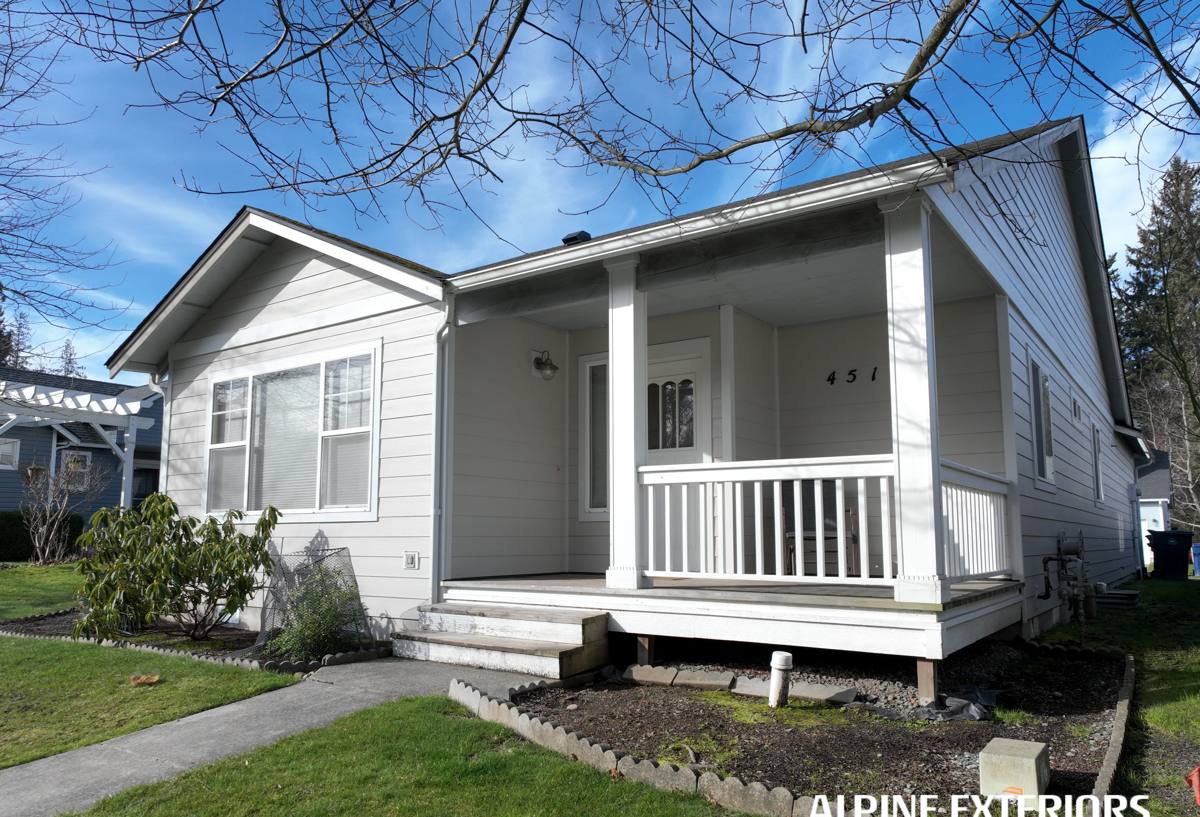
What Fairhaven's Climate Actually Does to Siding
Salt Air
Airborne salt accelerates corrosion on any exposed metal fastener, flashing, or trim edge, and it slowly breaks down cheaper coatings and caulks faster than manufacturers' inland test data usually accounts for. Siding near the water needs corrosion-resistant fasteners and flashing details that don't rely on caulk alone to stay watertight.
Driving Rain
Storms coming off the bay don't just fall straight down — wind pushes rain sideways into wall assemblies, especially on west- and southwest-facing elevations. That means laps, butt joints, and penetrations (hose bibs, vents, light fixtures) take on water pressure that a calm-weather installation wouldn't have to resist. Gaps and shortcuts that would be cosmetic issues elsewhere become actual water paths in Fairhaven.
Moss and Algae Season
Shaded lots, tree cover, and high humidity keep moisture sitting on north-facing and shaded walls long after the rest of the house has dried out. That extended damp window is exactly what moss and algae need to establish. Siding that can't shed water quickly, or that traps moisture behind it, gives moss a head start every single season.
Why We Only Install James Hardie Fiber Cement Here
We install James Hardie fiber cement exclusively — not vinyl, not LP SmartSide, not cedar or primed spruce, and not other fiber cement brands like Cemplank or Allura. In a climate like Fairhaven's, that choice matters more than it might inland.
- Non-combustible core: fiber cement doesn't feed a fire the way wood-based products can, which matters in a region where wildfire smoke and ember exposure have become a real seasonal concern.
- Moisture-resistant by composition: Hardie's cement-based board doesn't absorb and swell like wood-based siding, which is a meaningful advantage against the driving rain and standing dampness Fairhaven sees.
- ColorPlus factory finish: a baked-on finish applied under controlled conditions holds color and resists the chalking and fading that salt air and UV speed up on field-applied paint.
- HZ5 product engineering: Hardie makes climate-specific formulations, and the HZ5 line is built for the Pacific Northwest's wet, moderate-freeze conditions rather than a one-size-fits-all national spec.
- Long transferable warranty: a real, manufacturer-backed warranty that can transfer to a future buyer is worth more on a coastal-influenced property where siding problems are more likely to surface early if something's wrong.
We're not going to pretend other products don't have their place. Vinyl is cheap and low-maintenance in mild climates; cedar has real curb appeal if you're willing to maintain it. But in Fairhaven's specific combination of salt, rain, and shade, we've seen enough of those products fail early that we no longer put them on homes here. Hardie fiber cement, installed correctly, is what we stand behind.
What "Correct Installation" Actually Means in This Neighborhood
Fiber cement siding is only as good as the installation underneath it. In a climate like Fairhaven's, the details that get skipped on a rushed job are exactly the ones that cause the most damage.
Water Management Behind the Siding
Every Hardie installation should include a drainage plane — typically a weather-resistant barrier plus a rainscreen gap — that lets any moisture that gets past the siding drain and dry out instead of sitting against the sheathing. On a home taking direct rain off the bay, skipping or shortcutting this step is one of the fastest ways to get hidden rot behind siding that looks fine from the curb.
Fasteners and Flashing
Near salt air, fastener choice isn't a minor detail — it's the difference between trim that stays tight for decades and trim that starts rust-streaking and loosening within a few years. Flashing at windows, doors, and horizontal trim needs to be integrated with the water-resistive barrier in the correct shingle-lap order, not just caulked after the fact.
Gaps, Clearances, and Caulk Joints
Manufacturer-specified gaps at butt joints, corners, and trim allow the board to move with temperature and moisture changes without cracking the finish or forcing water into the joint. Ground clearance at the bottom of the wall matters too — siding installed too close to grade, a deck, or a walkway stays wet longer and is one of the first places we see failure in this area.
Cut-Edge Sealing
Every field cut on a Hardie board exposes raw material that needs to be sealed per manufacturer spec. In a high-moisture, high-moss environment, an unsealed cut edge is a starting point for both water intake and algae growth.
| Climate Factor | What It Does to Siding | What the Installation Needs |
|---|---|---|
| Salt air | Corrodes fasteners, breaks down coatings and caulk faster | Corrosion-resistant fasteners, flashing that doesn't rely on caulk alone |
| Driving rain | Forces water into laps, joints, and penetrations | Correct flashing sequence, drainage plane, proper overlaps |
| Extended damp shade | Feeds moss and algae growth | Ventilated rainscreen gap, ground clearance, factory-sealed finish |
| Freeze-thaw swings | Stresses joints and trim if boards can't move | Manufacturer-spec expansion gaps at joints and corners |
Our Process for a Fairhaven Fiber Cement Job
- On-site assessment: we look at elevation exposure, existing moisture damage, grading, and how much shade and tree cover the property gets — all of which affect how the new siding is detailed.
- Removal and sheathing check: once old siding is off, we inspect the sheathing for rot or soft spots before anything new goes up. Covering a moisture problem instead of fixing it just delays a bigger repair.
- Water-resistive barrier and rainscreen: we install the drainage plane and gap system appropriate to the wall assembly and exposure.
- Flashing integration: windows, doors, and horizontal transitions are flashed in the correct order before siding closes over them.
- Hardie installation to spec: proper fastener type and placement, correct gaps, sealed cut edges, and ground clearance per manufacturer requirements.
- Final inspection: we walk the job checking joints, caulk lines, and trim details before calling it finished.
Why Hiring Locally in Fairhaven Matters
A crew that regularly works in this neighborhood already knows which elevations catch the worst of the bay wind, which lots hold moisture longest under tree cover, and how to plan around the moss season instead of finding out about it after the fact. That local knowledge shows up in small decisions — where extra flashing attention goes, how ground clearance is handled on a sloped lot, which side of the house needs the most careful joint sealing — that a crew unfamiliar with Whatcom County's coastal conditions might not think to prioritize.
Signs Your Fairhaven Home May Need New Siding
- Soft, spongy, or visibly damaged siding near the base of exterior walls
- Persistent moss or algae staining that returns soon after cleaning
- Paint that's chalking, peeling, or fading unevenly, especially on rain-exposed sides
- Visible gaps, warping, or separation at trim and corner boards
- Rust streaking below fasteners or trim fixtures
- Musty smell or discoloration on interior walls that share an exterior wall with problem siding
What Influences Cost on a Job Like This
Every home is different, so we won't quote a number without seeing the property, but a few factors consistently affect cost on Fairhaven jobs specifically: how much of the existing sheathing needs repair once old siding comes off, how many elevations face direct wind and rain exposure, the amount of trim and detail work around windows and doors, and site access for a home on a sloped or tree-covered lot. A proper estimate accounts for all of these before we give you a number.
If you're seeing early wear on your current siding or planning ahead for a replacement, we're glad to take a look and walk you through what your home specifically needs. Fill out the form below for a free, no-pressure estimate — there's no obligation, and we'll give you an honest read on your siding's condition either way.