 Chuckanut
 Happy Valley's Climate Puts Real Stress on Siding
Happy Valley sits in the kind of Whatcom County microclimate that's genuinely hard on exterior materials. The neighborhood's proximity to Chuckanut Bay and the greater Salish Sea means homes here deal with salt-laden marine air, wind-driven rain that comes in sideways off the water during winter storms, and heavy tree cover that keeps roofs and walls shaded and damp for long stretches of the year. Put those three factors together and you get a moss and algae season that, in practice, runs most of the year on the north- and west-facing walls that never get a full day of direct sun.
None of that is unusual for this stretch of the Washington coast. But it does mean that siding choices and installation shortcuts that might hold up fine in a drier, sunnier climate can fail here in ways that show up fast: swelling at butt joints, paint film cracking and peeling, soft spots at the bottom courses, and green-black staining that keeps coming back no matter how many times it's power washed off. The siding on a Happy Valley home isn't a cosmetic layer. It's the first line of defense against a genuinely aggressive combination of salt, wind, and standing moisture, and it needs to be treated that way from the material choice through the last bead of caulk.
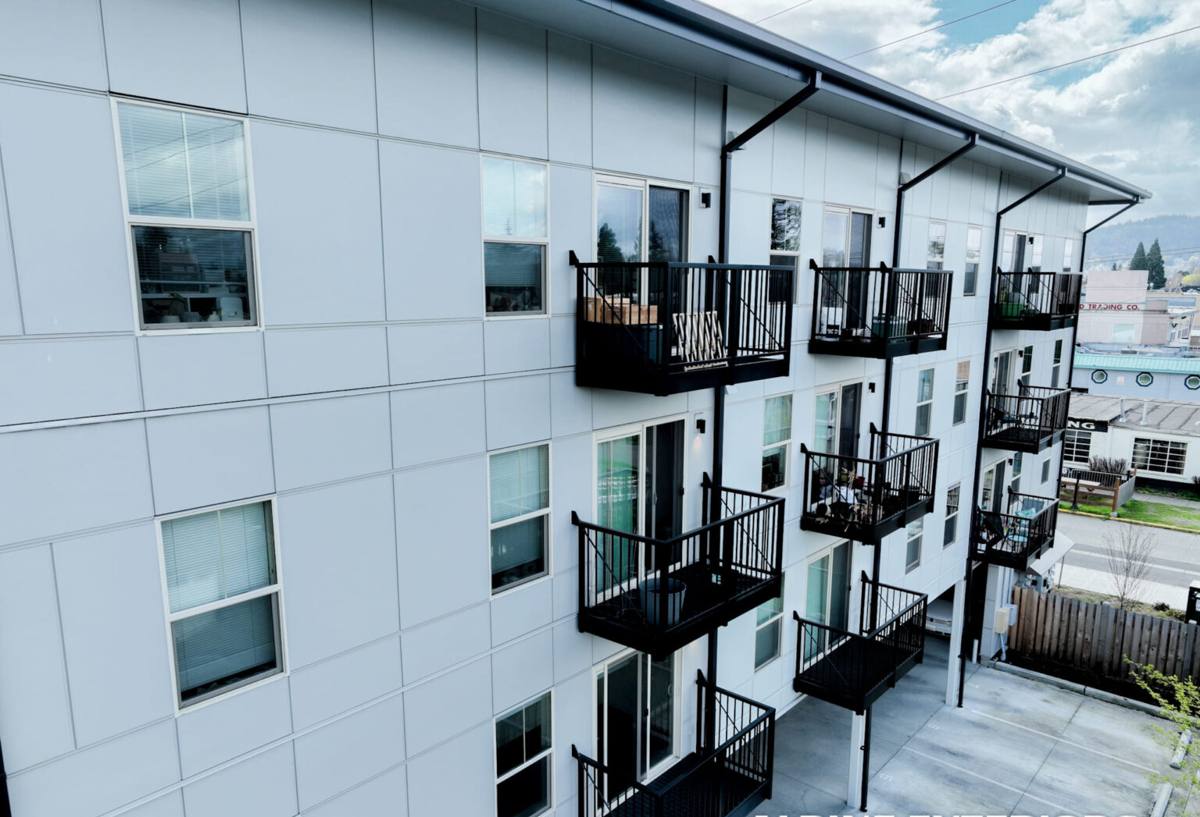
What Correct Fiber Cement Installation Actually Involves
Fiber cement itself is a stable, moisture-resistant material, but the product is only half the equation. Most of the siding failures we get called out to inspect in this area aren't material failures, they're installation failures. The details below are the ones that matter most in a climate like this one, and they're the ones that get skipped most often by crews who don't work this coastline regularly.
A Real Drainage Plane and Rain Screen Gap
Behind every plank of siding on a correctly built wall, there's a weather-resistive barrier and, ideally, a rain screen gap, a small air space that lets any water that gets past the siding drain and evaporate instead of sitting against the sheathing. In a climate with this much driving rain, skipping the rain screen or nailing siding tight to the wall assembly is one of the fastest ways to trap moisture where you can't see it, which is exactly how rot gets started behind perfectly good-looking siding.
Flashing at Every Penetration and Transition
Windows, doors, deck ledgers, hose bibs, vents, and every horizontal trim transition need proper flashing that directs water out and away from the wall assembly, not just caulk. Caulk is a maintenance item that degrades in the sun and salt air; flashing is a permanent mechanical solution. On a home exposed to wind-driven rain off the bay, a missed or undersized flashing detail at even one window can lead to hidden water damage long before anything shows up on the surface.
Fastener Pattern, Type, and Spacing
Fiber cement needs to be fastened per the manufacturer's engineering specs, correct nail or screw type, correct penetration depth, correct spacing at butt joints and field placement. In a salt-air environment, fastener corrosion resistance matters more than it does inland; the wrong fastener can rust and stain the siding face or lose holding power years before the siding itself is due for attention. We use fasteners rated for coastal exposure, not whatever's cheapest at the yard.
Why We Install James Hardie and Nothing Else
We standardized on James Hardie fiber cement products years ago and we don't install LP SmartSide, vinyl, Cemplank, Allura, or primed wood siding. That's not a marketing position, it's a practical one built around what actually holds up in a climate like Chuckanut's.
Factory-Cured ColorPlus Finish vs. Field-Applied Paint
Hardie's ColorPlus finish is baked on and cured at the factory under controlled conditions, which gives it a much stronger bond to the fiber cement substrate than paint applied on site after installation. That matters directly here: field-applied finishes are more vulnerable to the UV, salt, and moisture cycling this location sees, and they tend to show chalking, fading, and peeling sooner. A factory finish also means fewer paint days lost to Whatcom County's wet shoulder seasons, since the color is already cured before the siding ever reaches the jobsite.
Engineered for This Specific Climate
Hardie engineers its HZ5 product line specifically for regions with sustained moisture exposure and freeze-thaw cycling, which describes the Pacific Northwest well. It's a different formulation than the HZ10 product built for hot, dry, high-UV climates. Installing the wrong regional formulation, or a generic fiber cement product not engineered for zone-specific conditions, is a mistake we're not willing to make on a home that has to survive a Whatcom County winter every single year.
A Warranty Structure That Reflects Confidence in the Product
Hardie backs its siding with a long, transferable limited warranty and a separate finish warranty on ColorPlus products. Warranty terms matter most in exactly the climate where a product is most likely to be tested, and this is that climate.
How Hardie Compares to the Alternatives in This Climate
We get asked fairly often why we don't offer LP SmartSide, vinyl, or primed wood as lower-cost alternatives. Here's an honest side-by-side of how these materials tend to perform under Chuckanut's specific combination of salt air, driving rain, and heavy shade.
| Material | Moisture Behavior | Moss/Algae Resistance | Finish Durability in Salt Air |
|---|---|---|---|
| James Hardie Fiber Cement | Non-combustible, engineered for wet climates; won't swell or rot the way wood-based products can | Smooth, factory-finished surface sheds spores better than porous or textured materials | Factory-cured ColorPlus finish resists chalking and fade longer than field-applied paint |
| LP SmartSide (engineered wood) | Wood-strand core is more moisture-sensitive; edge sealing and caulking become critical maintenance items | Textured wood-grain surface can hold moisture and organic growth longer | Field or factory paint still sits on a wood substrate that can swell at cut edges |
| Vinyl Siding | Won't rot, but panels flex, gap, and warp; doesn't stop moisture from reaching the wall assembly behind it | Can still grow algae film, especially on shaded elevations | Color is molded in, not painted, but fades and becomes brittle with UV and salt exposure over time |
| Primed Wood / Cedar | Highest moisture sensitivity; needs consistent repainting and sealing to avoid rot in a wet climate | Natural wood grain and any surface roughness readily holds moss and algae | Requires the most frequent repainting of any option in this comparison |
None of this means the other products are junk, they're reasonable choices in the right climate and budget. It means that for a coastal Whatcom County home taking this much moisture and salt exposure, we think fiber cement done correctly is the more defensible long-term investment, and Hardie is the fiber cement product we trust to back that up.
Our Process, Start to Finish
The sequence below is how we approach a fiber cement siding project on a Happy Valley home. Skipping steps here is exactly how the moisture problems described above get built into a wall.
1. Site Assessment and Moisture Check
We walk the home, check existing siding and trim for signs of trapped moisture, rot, or prior water intrusion, and pay close attention to the elevations that take the most direct rain and salt exposure. Any sheathing or framing damage found here gets addressed before new siding ever goes up, covering a wet problem with new siding just delays the repair and makes it more expensive later.
2. Removal and Substrate Prep
Old siding comes off so we can properly inspect and repair the wall assembly underneath. This also lets us install a correct weather-resistive barrier and rain screen system rather than working around whatever's already there.
3. Weather-Resistive Barrier and Rain Screen Installation
A continuous weather-resistive barrier goes on first, with all seams properly lapped and taped, followed by a rain screen furring system that creates the drainage gap described earlier.
4. Flashing, Trim, and Panel Installation
Flashing goes in at every window, door, and penetration before trim and siding are installed over it, never the reverse. Hardie planks or panels are then installed to manufacturer spec for fastener type, spacing, and clearance from grade, decks, and roof lines.
5. Caulking, Touch-Up, and Final Detail Work
Because ColorPlus panels arrive factory-finished, on-site work is limited to sealing cut edges and touching up fastener heads and field cuts with color-matched product, not repainting the whole wall.
6. Final Walkthrough
We walk the finished job with the homeowner, checking clearances, caulk lines, and trim details before calling it complete.
Living With Fiber Cement Through a Moss Season
Correctly installed Hardie siding is genuinely low-maintenance, but low-maintenance in a climate like this one still means paying attention a couple of times a year, especially on shaded elevations near mature trees. A little routine care goes a long way toward keeping siding looking good through repeated wet winters.
- Rinse siding gently once or twice a year, focusing on north- and west-facing walls and any areas under tree cover where moss and algae build up fastest
- Keep gutters clear so overflow doesn't run down the face of the siding and keep it perpetually damp
- Trim back branches and shrubs that shade siding and restrict airflow against the wall
- Check and re-caulk cut edges, trim joints, and penetrations every few years as part of routine upkeep
- Watch for any soft spots, staining, or gaps at the bottom courses and address them early rather than waiting
- Avoid high-pressure washing directly against panel edges and seams, which can force water behind the siding
Cost Factors for a Happy Valley Home
We don't publish flat pricing because every home's siding job is different, but the factors below are the ones that most affect cost on projects in this neighborhood. A free on-site estimate is the only reliable way to get real numbers for your home.
| Factor | Why It Affects Cost |
|---|---|
| Existing siding removal | Full tear-off and disposal adds labor compared to a project on new construction or already-bare sheathing |
| Substrate repair needed | Rot or moisture damage found during tear-off requires framing or sheathing repair before new siding goes on |
| Home height and access | Multi-story sections, steep lots, and limited equipment access increase labor time |
| Trim and architectural detail | Homes with more windows, dormers, and trim transitions require more flashing and cutting work |
| Siding profile chosen | Lap siding, shingle-style panels, and board-and-batten each involve different material and labor costs |
| Elevation exposure | Walls that take the most direct wind-driven rain or salt spray may warrant extra flashing detail |
Why Local Experience in Happy Valley Matters
A crew that regularly works this specific stretch of Whatcom County knows things that don't show up in a generic installation manual: which elevations on a typical Happy Valley lot take the worst of the winter wind-driven rain, how much shade a mature tree canopy actually casts through the year, and how aggressively salt air corrodes unprotected fasteners and hardware near the water. That knowledge shapes real decisions on the job, like where extra flashing attention is worth the time and which fastener spec is actually necessary versus optional.
It also means realistic scheduling. Chuckanut's wet season isn't a minor inconvenience to work around, it's a defining feature of the local building calendar, and a contractor who's used to it plans tear-off, dry-in, and finish work accordingly instead of leaving a wall exposed longer than it should be. Hiring a crew that already knows this neighborhood's conditions isn't a nice-to-have; it's part of what makes the installation details above actually get followed on your specific home.
Ready to Talk About Your Home
If your Happy Valley home has siding that's showing its age, staining faster than it should, or you're planning ahead for a replacement, we're happy to take a look and walk you through what correct fiber cement installation would involve on your specific house. The estimate is free, there's no pressure, and you'll get a straight answer about what your home actually needs.