 Chuckanut
 Why Happy Valley Homes Need Siding Built for This Climate
Happy Valley sits in a part of Whatcom County where the weather doesn't do anything gently. Moisture rolls in off the water and sits in the air for months at a time. Driving rain comes in sideways during winter storms, hitting walls at angles that gutters and overhangs can't fully block. And because the sun doesn't dry things out quickly here, north-facing walls, shaded siding, and anything tucked under trees stays damp long enough for moss and algae to take hold and spread.
None of that is unusual for this corner of Washington. But it adds up to a specific set of demands on exterior siding: constant moisture exposure, salt-laden air that accelerates corrosion on fasteners and trim, and a growing season for moss and mildew that runs much longer than it would in a drier climate. Siding that isn't engineered for these conditions — or that isn't installed with these conditions in mind — tends to show it early, in the form of soft spots, streaking, cupping, or paint failure well before its expected lifespan is up.
What James Hardie Siding Does Differently Here
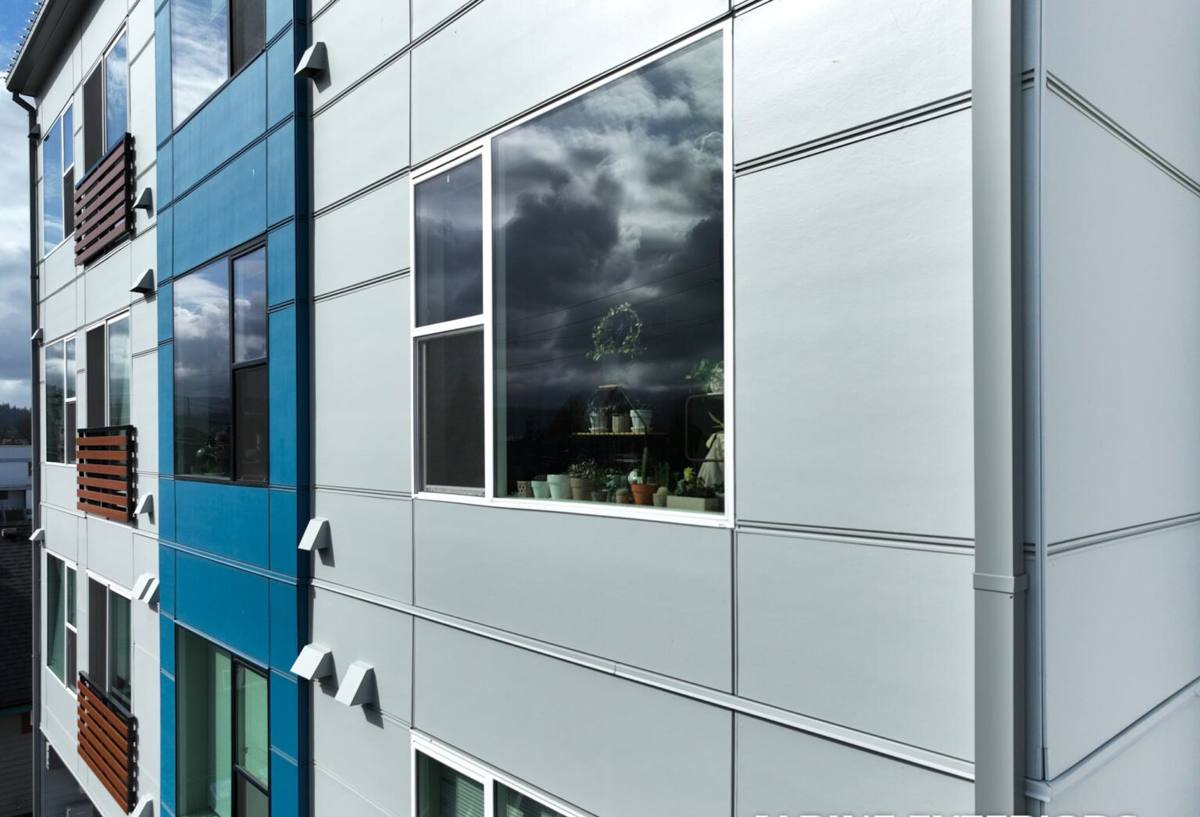
We install James Hardie fiber cement siding exclusively, and Happy Valley's climate is a big part of why. Fiber cement is made from cement, sand, and cellulose fibers, which makes it dimensionally stable — it doesn't swell, warp, or rot the way wood-based products can when they stay wet for extended periods. That matters enormously in a place where siding can stay damp for days after a storm system passes through.
The HZ5 Product Line
James Hardie engineers its siding for specific climate zones, and the Pacific Northwest falls under the HZ5 designation — their formulation built for regions with high moisture exposure and freeze-thaw cycling. HZ5 products are formulated to resist moisture intrusion and hold up against the kind of sustained damp conditions common in Whatcom County, rather than using a one-size-fits-all mix across the whole country.
ColorPlus Factory Finish
Most of the siding failures we get called out to inspect aren't the fiber cement itself failing — they're paint failing. Field-applied paint on any siding material has to fight adhesion problems in a wet climate, and once it starts peeling, the substrate underneath is exposed. James Hardie's ColorPlus finish is baked on in a controlled factory environment with multiple coats and a UV-cured topcoat, which gives it far better resistance to cracking, peeling, and fading than paint applied on site after installation. In a climate that punishes field-applied finishes, that factory process is one of the more important reasons we trust this product.
What a Correct Installation Actually Involves
Fiber cement siding is only as good as the installation behind it, and in a high-moisture climate the details matter more than they would somewhere dry. A correct James Hardie installation on a Happy Valley home includes:
- A properly lapped weather-resistive barrier behind the siding, with all penetrations flashed before a single board goes up
- Correct starter strip placement so the bottom course sheds water the way the system is designed to
- Manufacturer-specified fastener spacing and depth — over-driven or under-driven nails are one of the most common causes of premature failure
- Proper gaps at butt joints, corners, and trim, caulked with a product rated for the movement and exposure involved
- Clearance between the bottom edge of the siding and grade, decks, or roof lines, so water doesn't wick up into the material
- Field-cut edges primed or sealed before installation, since factory-finished edges are the ones protected at the plant
Skip any one of these steps and you can end up with a moisture problem behind siding that looks fine from the curb. That's the trap with fiber cement: it hides installation shortcuts well right up until it doesn't.
Our Process for a Happy Valley Project
We treat every Happy Valley home as its own project, but the sequence stays consistent because it's what produces a durable result in this climate.
1. On-Site Assessment
We walk the exterior looking at existing moisture damage, trim condition, roofline transitions, and any areas with poor sun exposure or drainage — the spots most likely to have given the old siding trouble.
2. Detailed Estimate
You get a written scope covering product line, board profile, color, trim details, and any water management upgrades the house needs — not just a square-footage number.
3. Prep and Weather Barrier
Old siding comes off, sheathing gets inspected for hidden damage, and a new weather-resistive barrier goes on with all flashing details addressed before we move forward.
4. Installation to Manufacturer Spec
Boards are hung, nailed, and sealed to James Hardie's published installation requirements — not shortcuts that speed up the schedule at the expense of long-term performance.
5. Final Walkthrough
We go over trim lines, caulking, and touch-up paint with you directly so nothing gets signed off until it meets the standard we'd want on our own home.
Product Lines That Fit Happy Valley Homes
James Hardie makes several board profiles, and the right one depends on your home's style and existing trim details, not just personal preference.
| Product | Best Suited For |
|---|---|
| HardiePlank Lap Siding | Traditional horizontal-lap look; the most common choice for standard home styles in this area |
| HardiePanel Vertical Siding | Modern facades, accent walls, or gable ends where a vertical line is wanted |
| HardieTrim Boards | Corner boards, window and door casing, and fascia that need to match the siding's durability |
| HardieShingle Siding | Accent areas or full facades where a shingle-style texture is preferred over lap boards |
Color selection matters too. ColorPlus finishes come in a range of shades engineered to resist fading, which is worth prioritizing over a custom field-mixed color if long-term appearance matters to you.
What Drives the Cost of a Project Like This
Every home is different, but the same handful of factors move the price up or down on most Happy Valley siding jobs.
| Factor | Why It Matters |
|---|---|
| Extent of existing damage | Rotted sheathing or framing found during tear-off adds repair work before new siding can go on |
| Home size and wall complexity | More corners, gables, and trim transitions mean more labor and material cuts |
| Board profile and accessories | Trim, shingle accents, and specialty profiles cost more than a standard lap siding scope |
| Access and site conditions | Slopes, tight side yards, and landscaping near the house affect staging and scaffolding needs |
| Water management upgrades | Adding or correcting flashing, kick-out flashing, or drainage details adds scope but pays off long-term |
We break all of this out in writing so you know exactly what you're paying for and why, rather than getting a single lump-sum number with no explanation.
Living With Fiber Cement Siding in a Moss-Prone Climate
Correctly installed James Hardie siding is low-maintenance, but "low-maintenance" doesn't mean "no maintenance" in a climate like this one. A little seasonal attention keeps it looking right and protects the finish.
- Rinse siding annually with a garden hose and soft brush to clear moss spores and organic buildup before they take hold
- Keep shrubs and trees trimmed back from walls so shaded, damp areas get more airflow and sun exposure
- Check caulking at trim joints and penetrations every year or two, since caulk wears out well before the siding does
- Clear gutters and downspouts regularly — overflow running down a wall is one of the fastest ways to stain or damage any siding
- Address any soft or discolored trim promptly, since trim boards take on water exposure differently than the field siding
None of this is heavy upkeep, but skipping it in a climate that supports moss growth for most of the year is how homeowners end up with problems that were easy to prevent.
Why Local Experience in Happy Valley Matters
A crew that has worked on homes throughout Whatcom County knows which walls in this area take the worst weather exposure, which older homes tend to have hidden moisture damage behind their original siding, and how local permitting and inspection requirements actually work in practice. That local knowledge shows up in small decisions — where to add extra flashing, which corners need reinforced sealant, how to sequence a job around this area's rain patterns — that a crew unfamiliar with the region might not think to make.
We stand behind our work with the manufacturer's transferable warranty backing the materials, combined with our own installation standards that we hold to on every job regardless of budget or scope. That combination — a warranted product installed correctly the first time — is what actually protects a homeowner's investment over the next several decades.
Get a Free, No-Pressure Estimate
If your Happy Valley home's siding is showing its age, or you're planning ahead before winter storms roll back in, we're happy to take a look and give you a straightforward assessment of what your home needs. Use the form below to request a free estimate — no pressure, no obligation, just a clear picture of your options.