 Chuckanut
 Roof Repair Built for Happy Valley's Weather, Not Generic Weather
Happy Valley sits close enough to the water and the wooded slopes around Chuckanut that its roofs take a different kind of beating than a roof twenty miles inland. Salt-laden air off the bay works on fasteners and flashing year-round. Storms roll in sideways instead of straight down, driving rain up under laps that would stay dry in a calmer climate. And the tree cover that makes the neighborhood shady and pleasant in July also means roofs stay damp and shaded long enough each winter to grow a serious moss problem. A roof repair here has to account for all three, not just patch the spot that's leaking.
This page is specifically about repairing roofs for Happy Valley homes — not a general roofing overview. If you're dealing with a leak, missing shingles, moss damage, or flashing that's failed after a hard winter, this is what we look at, what we fix, and why the details matter more here than they would somewhere drier and more sheltered.
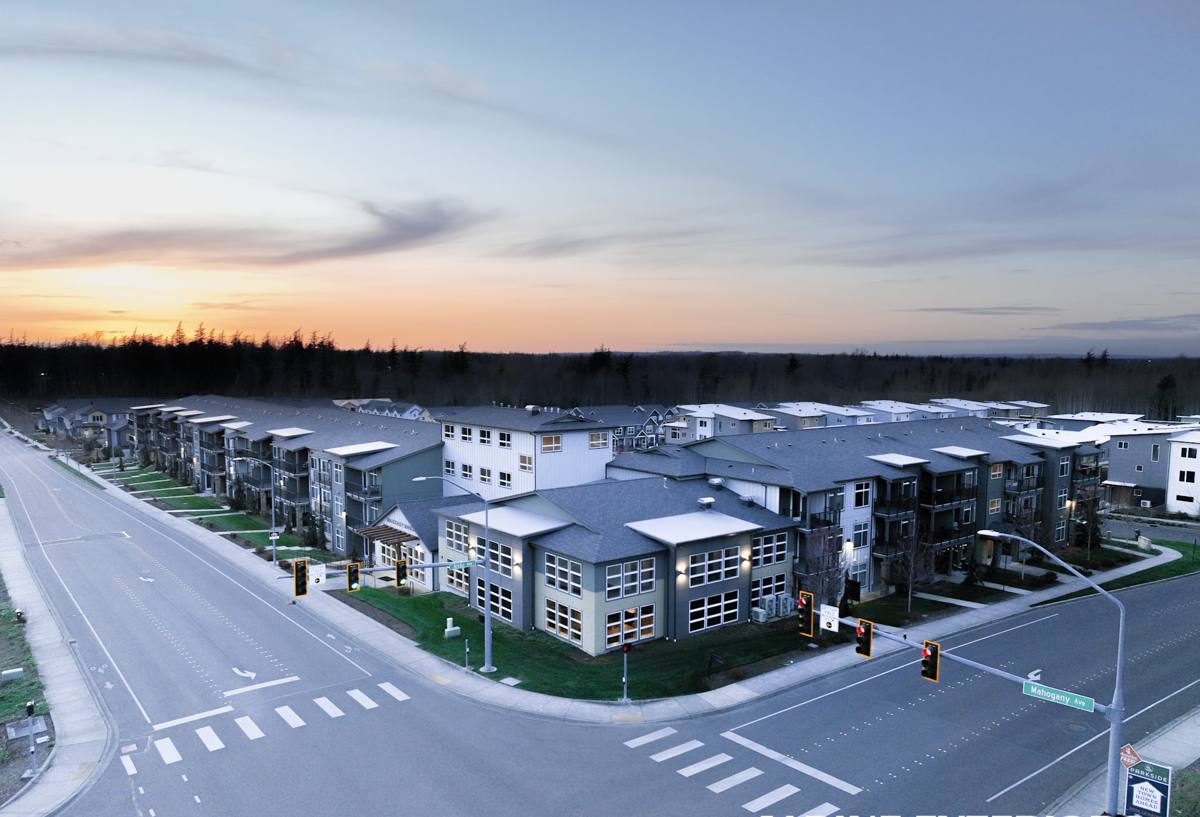
What Happy Valley Roofs Are Actually Up Against
Salt Air and Metal Fasteners
Proximity to Chuckanut Bay and the Salish Sea means airborne salt settles on every exterior surface, roofs included. Exposed nail heads, cheap flashing, and lower-grade metal drip edge corrode faster here than they would inland. A repair that reuses corroded fasteners or matches new work to already-failing metal is a repair that fails again in a few years. We spec fasteners and flashing metal rated for coastal exposure whenever we're working this area, even on a small patch job.
Driving Rain and Flashing Failures
Wind off the water doesn't just drop rain straight down — it pushes it sideways and up under shingle laps, around chimney flashing, and into valleys that were only designed to shed water moving downhill. Most of the leaks we trace back on Happy Valley roofs start at a flashing detail, not a field of shingles. Step flashing at walls, counter-flashing at chimneys, and valley metal are the first places we check, because they're the first places driving rain finds a way in.
Moss, Shade, and a Long Wet Season
Tree cover around Happy Valley keeps roofs shaded and slow to dry through the fall, winter, and spring. That's the recipe for moss, and moss on a roof isn't just cosmetic — it holds moisture against the shingle surface, lifts edges as it grows under tabs, and accelerates granule loss. Left alone through a few wet seasons, moss damage turns a simple repair into a section replacement. Any repair on a mossy roof has to deal with the moss itself, not just the leak it eventually caused.
Signs a Repair Makes Sense Right Now
Most roof problems in this climate give warning signs well before they become emergencies. Catching them early is what keeps a repair a repair, instead of turning it into a replacement.
- Water stains on ceilings or interior walls, especially after a windy rainstorm rather than a calm one
- Moss buildup thicker than a light green film, especially on north-facing or shaded slopes
- Granules collecting in gutters or at downspout outlets
- Shingles that are curling, cupping, or visibly lifted at the edges
- Flashing around chimneys, skylights, or wall intersections that looks rusted, bent, or separated
- Daylight visible through the roof deck from inside the attic
- Sagging or soft spots you can feel underfoot in the attic near valleys or eaves
What a Correct Repair Actually Involves
Diagnosis Before Anything Else
A leak almost never shows up directly below its source — water travels along the underlayment or decking before it drips through. We trace the path from the interior stain or attic evidence back to the actual entry point before touching a single shingle. Patching where the water appears without finding where it entered is the most common shortcut that leads to a callback.
Matching Materials, Not Just Covering the Spot
Whenever possible we match the existing shingle profile, color, and exposure so a repair blends into the surrounding field instead of standing out as an obvious patch. On older roofs where an exact match isn't available, we're upfront about that before starting, so there are no surprises when the work is done.
Flashing and Underlayment Get the Same Attention as Shingles
Given how many Happy Valley leaks trace back to flashing, we replace corroded or improperly lapped flashing as part of the repair rather than shingling over it. Underlayment in the repaired section gets replaced too — reusing old, saturated underlayment under new shingles just relocates the next leak by a season or two.
Moss Gets Treated, Not Just Removed
Physically clearing moss without addressing what caused it means it grows back. We remove moss carefully to avoid stripping granules, treat the area to slow regrowth, and where it's a repeat problem on a shaded slope, talk through longer-term options like zinc or copper strips that use rainwater runoff to keep moss from re-establishing.
Common Repairs We Handle Around Happy Valley
| Repair Type | Typical Cause Here | What the Fix Involves |
|---|---|---|
| Flashing replacement | Driving rain, corrosion from salt air | Remove and replace step, counter, or valley flashing; reseal and re-lap correctly |
| Moss-related shingle damage | Shade, long wet season, tree cover | Moss removal, damaged shingle replacement, treatment to slow regrowth |
| Wind-lifted or missing shingles | Storm exposure off the bay | Replace missing/damaged shingles, reset lifted tabs, check adjacent fasteners |
| Chimney or skylight leaks | Failed counter-flashing or aged sealant | Rebuild flashing detail, replace sealant with appropriate materials |
| Soft decking or localized rot | Long-term slow leak, often moss-related | Cut out and replace affected decking, then correctly flash and shingle over it |
Our Process, From First Call to Finished Repair
- Inspection. We look at the whole roof, not just the reported problem area, since related issues often show up nearby.
- Honest diagnosis. We explain what's actually causing the problem, in plain terms, before recommending a scope of work.
- Written scope and estimate. You know what's being done and roughly what it costs before we start — no vague verbal quotes.
- The repair itself. Matching materials where possible, correcting flashing and underlayment, not just covering symptoms.
- Cleanup and check. Debris and old materials removed, and we walk the repair with you before calling it done.
Repair vs. Replacement: How to Think About the Decision
Not every damaged roof needs full replacement, and not every leak can be solved with a patch. The honest answer depends on the roof's age, how widespread the damage is, and whether the underlying decking is still sound.
| Factor | Favors Repair | Favors Replacement |
|---|---|---|
| Roof age | Within its expected service life | Near or past typical lifespan for its material |
| Damage extent | Localized — one slope, one flashing detail | Widespread across multiple slopes |
| Decking condition | Solid, no rot found during inspection | Soft or rotted in multiple areas |
| Moss history | First occurrence or early-stage growth | Repeated, long-term moss damage across the roof |
| Typical cost | Several hundred to a few thousand dollars, depending on scope | Full replacement cost, but with a fresh service life and warranty |
We'll tell you plainly which side of that table your roof falls on. If a repair is the honest answer, that's what we'll recommend — a full replacement isn't the right call just because it's the bigger job.
Why a Crew That Already Works Happy Valley Matters
Roofing crews that mostly work drier, more sheltered inland areas don't always think about salt-air corrosion or moss-driven damage as a first concern — because for them, it usually isn't one. Around Chuckanut and Happy Valley, it has to be the starting point of every repair, not an afterthought. Knowing which flashing metals hold up near the water, which slopes in this neighborhood typically hold moss longest, and how driving rain off the bay actually finds its way into a roof changes how a repair gets diagnosed and built. That local pattern recognition is what keeps a repair from becoming a repeat visit.
Keeping a Repaired Roof in Good Shape
A well-done repair still benefits from basic upkeep, especially in a climate this wet and shaded. A little attention between service calls goes a long way toward not needing another repair sooner than necessary.
- Keep gutters and downspouts clear so water sheds off the roof instead of backing up under edges
- Trim back overhanging branches where practical to cut down on shade and debris buildup
- Have moss addressed early, before it spreads across a full slope
- Walk the attic after major windstorms to check for new water stains or daylight
- Have the roof looked at after any storm strong enough to cause visible damage elsewhere in the neighborhood
If you're dealing with a leak, storm damage, or a moss problem on a Happy Valley roof, we're happy to take a look and give you a straight answer about what it needs. Reach out for a free, no-pressure estimate using the form below.