 Chuckanut
 Storm Damage Roof Repair Built for Happy Valley Conditions
Happy Valley sits close enough to the water and the foothills that roofs here take a specific kind of beating. It isn't just one big storm a year doing the damage — it's the accumulation of salt-laden wind off the bay, long stretches of driving rain, and a moss season that never really ends. When a windstorm finally does peel back shingles or drive water under flashing, it's usually finishing off damage that was already building quietly underneath. That's the mindset we bring to storm damage roof repair in this neighborhood: fix what the storm did, but also find what the storm exposed.
This page covers exactly one service for this one area — storm-related roof repair for Happy Valley homes — so you know what to expect before you ever call.
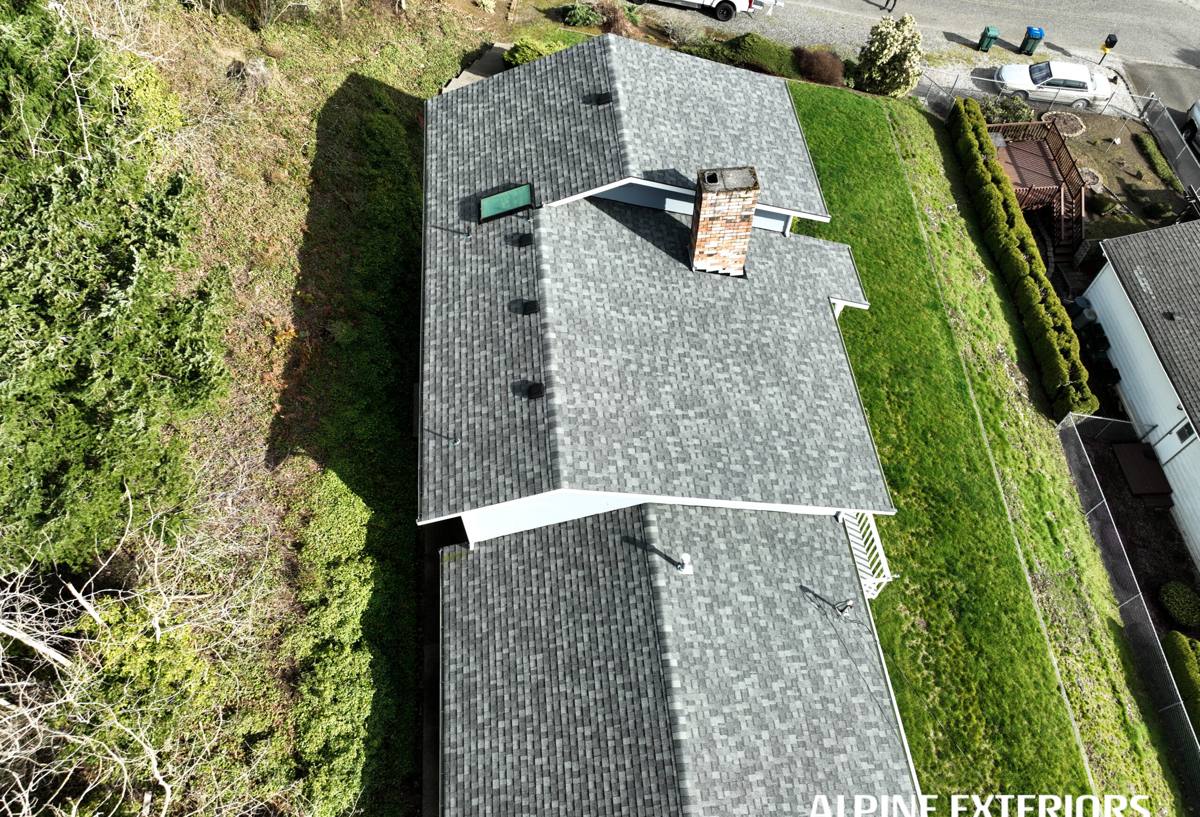
Why Storm Damage Here Looks Different Than Inland Repairs
Whatcom County gets its share of wind and rain no matter where you live, but Happy Valley's proximity to Chuckanut Bay and the surrounding tree cover adds two complications that inland repair crews don't deal with as often.
Salt Air and Metal Fatigue
Salt-laden air corrodes exposed fasteners, flashing, and metal drip edge faster than it does even a few miles inland. A roof that looks fine from the ground can have nail heads and flashing seams that have been quietly corroding for years. When wind finally lifts a section of roofing, it's often because those fasteners had already lost their grip — the storm just supplied the final push.
Driving Rain and Wind-Driven Water
Storms coming off the water tend to push rain sideways, not just down. That matters because a roof can be perfectly watertight in a normal rain and still leak during a wind-driven storm, because water is being forced up and under laps, flashing, and vent boots that were never designed to handle horizontal water pressure. This is one of the most common reasons homeowners tell us "it never leaked before."
Moss and Trapped Moisture
The tree cover and moisture around Happy Valley make this excellent moss territory. Moss holds water against the roofing surface long after a storm has passed, which softens shingles, lifts edges, and gives wind something to grab onto in the next storm. A lot of what looks like sudden storm damage is really moss-related deterioration that a storm simply exposed.
What a Correct Storm Damage Assessment Actually Involves
A rushed inspection misses the second problem — the one hiding under the obvious one. Ours covers the whole system, not just the spot you can see from the driveway.
- Full roof surface check for lifted, cracked, or missing shingles or panels, not just the area near the visible damage
- Flashing inspection at all valleys, chimneys, and roof-to-wall transitions, since wind-driven rain concentrates here first
- Fastener and nail-head condition check, especially on older roofs where salt-air corrosion has had years to work
- Moss and organic debris assessment, including how much moisture has already been trapped under growth
- Interior check of attic, ceilings, and top-floor walls for water staining that hasn't shown up outside yet
- Gutter and downspout function, since overwhelmed drainage during a storm often causes damage that looks like a roof leak but isn't
We document what we find with photos and a plain-English explanation before any repair work starts. If your homeowner's insurance is involved, that documentation matters — vague or incomplete assessments are a common reason storm claims get delayed or denied.
Our Repair Process, Step by Step
1. Emergency Stabilization (When Needed)
If a storm has left an active leak or exposed decking, the first priority is stopping further water intrusion — tarping, temporary flashing, or securing loose material. This isn't the permanent fix; it buys time to do the repair correctly instead of rushed.
2. Full Assessment and Written Scope
Once the immediate risk is handled, we walk the whole roof and put together a clear scope: what's storm damage, what's pre-existing wear the storm exposed, and what can reasonably wait. You get this in writing before any repair begins.
3. Repair or Section Replacement
Most storm damage in this neighborhood is repairable at the section level — replacing damaged shingles or panels, resetting or replacing flashing, and re-securing fasteners that have corroded loose. We only recommend a larger replacement when the underlying decking or a significant portion of the roofing is compromised, and we'll explain exactly why if that's the case.
4. Moss and Drainage Correction
Because moss and drainage issues are so often part of the underlying cause here, we address them as part of the repair rather than leaving them to cause the next round of damage. That might mean clearing growth, correcting a gutter that was overflowing onto the roof edge, or adjusting flashing that was letting moisture collect.
5. Final Walkthrough
Before we consider the job done, we walk the repair with you, explain what was replaced and why, and flag anything worth watching going forward — especially on an older roof where this repair may be one of several needed over the coming years.
Repair vs. Replacement: How We Decide
| Factor | Usually Points to Repair | Usually Points to Replacement |
|---|---|---|
| Extent of damage | Isolated to one section or slope | Spread across multiple slopes |
| Decking condition | Solid, no soft spots | Soft, delaminated, or rotted |
| Roof age | Well within expected service life | Already near or past it |
| Moss/moisture history | Recent, limited buildup | Long-term trapped moisture, widespread |
| Flashing condition | Isolated failure points | Corroded or failing throughout |
We'd rather give you an honest repair estimate than push a full replacement you don't need — and just as importantly, tell you clearly when a repair would just be a temporary patch on a roof that's genuinely done.
Cost Factors for Storm Damage Roof Repair
Every roof and every storm is different, so we're not going to quote a number without seeing the damage. What we can tell you is what actually drives the price up or down on jobs like this:
- Size and location of the damaged area, including how accessible it is
- Roofing material — some materials are simpler to source and match in small sections than others
- Condition of the decking underneath once damaged material is removed
- How much flashing needs to be reset or replaced, since flashing work is often more labor-intensive than the shingles themselves
- Whether moss removal and treatment is needed as part of the repair
- Steepness and complexity of the roof, which affects both labor time and safety setup
Working With Insurance on Storm Claims
If the damage is significant enough that you're considering a homeowner's insurance claim, timing and documentation matter. We provide a written assessment with photos that you can submit alongside your claim, and we're happy to be on-site or available if your adjuster has questions about the scope of the damage. We don't handle the claim itself — that's between you and your insurer — but we make sure the roofing side of that conversation is backed by clear, honest documentation rather than guesswork.
Why a Crew That Already Works Happy Valley Matters
Storm damage repair isn't the place for a contractor guessing at local conditions. A crew that already works this part of Chuckanut and Whatcom County knows what salt-air corrosion actually looks like on a roof versus normal wear, recognizes which flashing details tend to fail first in wind-driven rain, and doesn't need to be told twice how aggressive moss can get here. That familiarity shows up in faster, more accurate assessments and repairs that address the real cause rather than just patching the visible damage.
It also matters for response time. Storm damage doesn't wait for a convenient afternoon, and a local crew can typically get eyes on your roof and a tarp up faster than someone traveling in from further out — which can be the difference between a contained repair and a much larger interior repair job.
Signs You Should Have Your Roof Checked After a Storm
- Shingles or panels you can see are lifted, curled, cracked, or missing
- Granules collecting in gutters or at downspout outlets after a storm
- New water stains on ceilings or in the attic, even faint ones
- Visible moss growth combined with any soft or spongy feeling underfoot on the roof
- Gutters overflowing during rain when they didn't before
- Any daylight visible through the roof deck from inside the attic
None of these guarantee major damage, but any one of them is worth a proper look rather than waiting for the next storm to make the decision for you.
If a recent storm has left you with damage — or you just want a professional set of eyes on your roof before the next one hits — we're glad to come take a look. Estimates are free, there's no pressure to move forward, and you'll get a clear, honest explanation of what we find. Use the form below to get started.