 Chuckanut
 Bellingham's Climate Is Harder on Siding Than It Looks
Bellingham sits close enough to salt water and open exposure that homes here take a different kind of beating than siding fifty miles inland. It's not dramatic weather — no hurricanes, no hailstorms — it's the slow, patient kind of damage that comes from salt-laden air working into seams and fasteners, driving rain hitting west and south-facing walls at an angle for months at a stretch, and a moss season that can run from fall through spring on anything shaded or slow to dry. Individually, none of that is unusual for the Pacific Northwest. Together, on a specific lot with specific shade patterns and wind exposure, it adds up to siding wear that a generic install — correct for a drier climate, wrong for this one — won't hold up against.
This page is about one thing: installing James Hardie fiber cement siding correctly on Bellingham homes, in Whatcom County's specific climate, done by a crew that treats this area as home turf rather than another stop on a route.
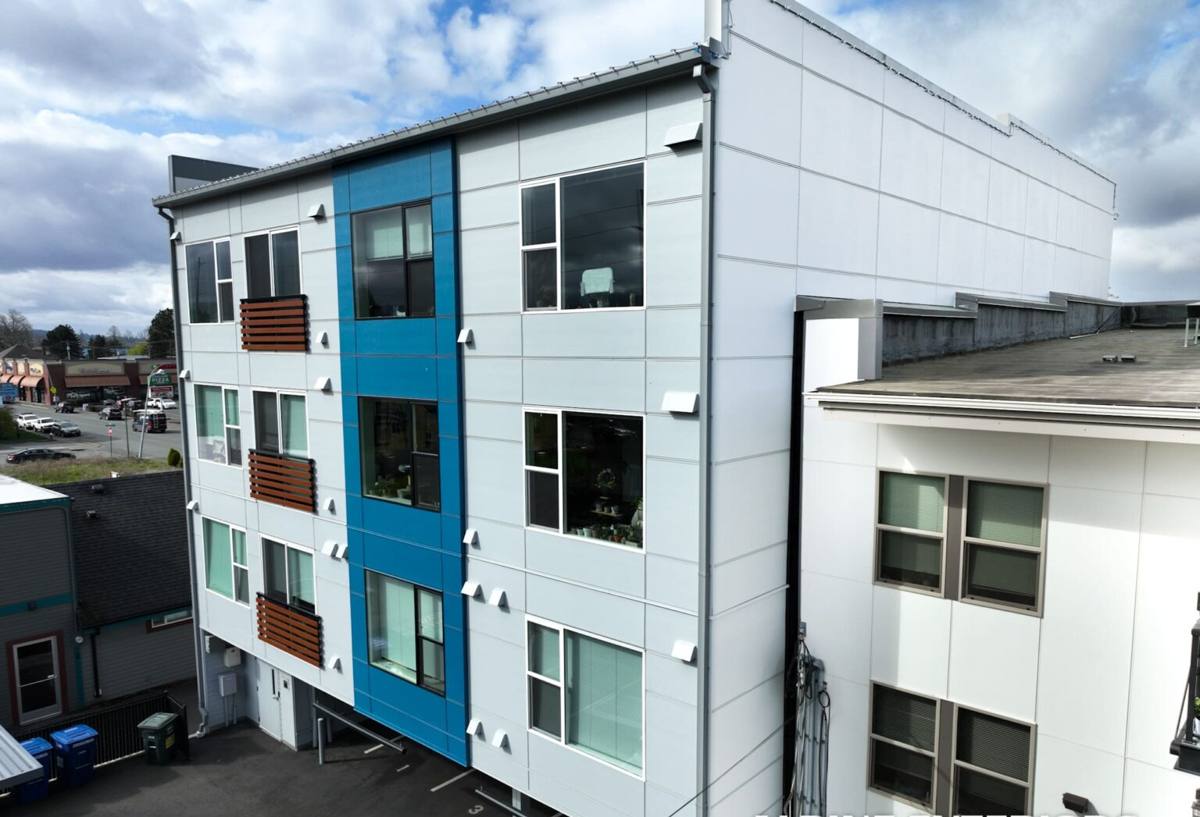
What Salt Air, Rain, and Moss Actually Do to Siding
Salt Air
Airborne salt doesn't rot wood by itself, but it accelerates corrosion in anything metal — fasteners, flashing, trim screws — and it draws moisture. Salt is hygroscopic, meaning it pulls humidity out of the air and holds it against whatever surface it's settled on. On a home close to the water or exposed to prevailing marine wind, that means siding surfaces stay damp longer than they would inland, even on days that look dry.
Driving Rain
Bellingham doesn't get the heaviest rainfall in Washington, but a lot of it arrives sideways, pushed by wind off the water. Driving rain finds every gap, lap joint, and unsealed penetration a normal vertical-rain climate would never test. Siding systems that rely on face-sealing (caulk alone) rather than proper water-shedding overlaps tend to fail first in exactly this kind of weather.
Moss Season
Shaded north walls, tree-lined lots, and the long, mild, wet stretches from fall through spring create ideal moss and algae conditions. Moss holds moisture directly against the siding surface for extended periods, and on materials without a factory-cured, moisture-resistant finish, that constant dampness is what eventually leads to swelling, delamination, or paint failure — not the moss itself, but what it traps.
Why We Install James Hardie and Nothing Else
We standardized on James Hardie fiber cement siding for every home we work on, including here in Bellingham. It's not the only siding product on the market, and we're not going to pretend competing products are worthless — but after years of doing this work in Whatcom County's climate, Hardie is what we're willing to put our name behind.
- Non-combustible core: fiber cement doesn't feed a fire the way wood-based or foam-backed products can.
- Factory-cured ColorPlus finish: baked-on color and sealant applied under controlled conditions, not brushed on-site where weather and dust affect the result.
- Climate-engineered HZ product lines: Hardie makes region-specific formulations, and the HZ5 line is engineered for wetter, more moisture-exposed climates like ours.
- Strong transferable warranty: backed by the manufacturer, not just the installer, and it transfers to the next owner if the home sells.
- Proven longevity when installed to spec: the "when installed to spec" part matters as much as the product — more on that below.
We won't install LP SmartSide, vinyl, Cemplank, Allura, primed spruce, or cedar on the homes we work on. Each of those products has real strengths and a place in the market — but each also comes with maintenance burdens, moisture behavior, or installation sensitivities that don't line up with what we've seen hold up in this specific climate over time. Refusing to install them is a standard we hold, not a knock on every homeowner who has them.
What a Correct James Hardie Installation Actually Involves
The biggest gap between a siding job that lasts twenty-plus years and one that fails early usually isn't the material — it's the installation. James Hardie publishes detailed installation requirements, and in a climate like Bellingham's, skipping or shortcutting them shows up fast.
Water Management Comes First
Before a single board goes up, the wall needs a correctly lapped weather-resistive barrier, properly integrated flashing at every window, door, and penetration, and a rainscreen or drainage plane where conditions call for it. This is the layer that actually keeps driving rain out — the siding itself is the second line of defense, not the first.
Fastening and Gaps
Hardie specifies fastener type, spacing, and placement for a reason — corrosion-resistant fasteners matter even more near salt air exposure. Board-to-board and board-to-trim gaps need to be sized correctly and, where called for, sealed with the right sealant rather than just caulked over and hoped for.
Clearances
Siding needs proper clearance from grade, roof lines, decks, and horizontal surfaces so it isn't sitting in standing water or trapped moisture — a common cause of early failure that has nothing to do with the siding material itself and everything to do with how it was hung.
Painted and Caulked Correctly
ColorPlus-finished siding is factory-painted, but cut edges, field-touch-up areas, and any site-painted trim still need the correct primer and paint system so the finish performs the way it's engineered to.
Common Problems We See on Bellingham Homes
Older siding — especially wood-based products or vinyl reaching the end of its service life — tends to show the same failure patterns across Whatcom County's marine climate:
| Symptom | Typical Cause | Where It Shows Up First |
|---|---|---|
| Moss or algae buildup | Persistent moisture, shade, poor airflow | North walls, under eaves, tree-shaded sides |
| Paint peeling or bubbling | Moisture trapped behind or within the siding | Lower walls, near grade, around penetrations |
| Swelling or soft spots | Water intrusion into wood-based substrates | Butt joints, corners, window trim |
| Corroded fasteners or streaking | Salt air accelerating metal corrosion | Water-facing and wind-exposed walls |
| Warping or cupping panels | Uneven moisture absorption | South and west-facing walls with sun/rain cycling |
None of these are exotic problems. They're the predictable result of this specific climate acting on materials or installations that weren't built to handle it.
Our Process, Start to Finish
- On-site assessment: we look at the whole exterior, not just the siding — flashing condition, water damage history, sun and shade exposure, and any trouble spots specific to the lot.
- Straightforward estimate: a clear scope and price, no pressure tactics, explained in plain terms so you know what you're paying for.
- Prep and water management: removal of failing material, inspection of sheathing for hidden damage, and correct installation of the weather-resistive barrier and flashing before any Hardie board goes up.
- Installation to manufacturer spec: correct fastening, gaps, clearances, and trim detailing throughout — not shortcuts to save a day of labor.
- Final walkthrough: we go over the finished job with you before we consider it done.
Choosing the Right Hardie Product Line
James Hardie makes several distinct product lines, and the right choice depends on the look you want and the specific exposure of your home.
| Product | Style | Best Suited For |
|---|---|---|
| HardiePlank lap siding | Traditional horizontal lap | Most homes; the standard choice for classic and modern exteriors |
| HardiePanel vertical siding | Vertical panel | Modern designs, accent walls, gable ends |
| HardieShingle siding | Staggered or straight-edge shingle | Craftsman and cottage-style homes |
| HardieTrim boards | Trim and fascia | Window, door, and corner detailing on any of the above |
For homes with heavier moisture exposure — close to water, shaded, or on wind-exposed lots — we typically recommend the HZ5 formulation, engineered specifically for wetter climate zones like Whatcom County.
Cost Factors Worth Understanding
Every home is different, so we don't quote sight unseen, but the main variables that move a project's cost are worth knowing going in:
- Total square footage and wall complexity (dormers, gables, and cutouts add labor)
- Condition of the existing wall assembly — whether sheathing repair or added water management is needed
- Product line and finish selected (lap vs. panel vs. shingle, standard vs. HZ5)
- Trim scope — how much of the home's trim is being replaced alongside the siding
- Access and site conditions — multi-story walls, tight lots, or landscaping that limits staging
Maintenance: What Ongoing Care Actually Looks Like
James Hardie siding, correctly installed, is low-maintenance — but low-maintenance isn't no-maintenance, especially with a moss season this long. A short seasonal checklist keeps a good installation performing the way it's designed to:
- Rinse siding periodically to clear pollen, dust, and early moss growth before it establishes
- Keep gutters clear so overflow doesn't run down and pool against wall sections
- Trim back vegetation that shades walls and slows drying time
- Inspect caulking at trim joints and penetrations every year or two and re-seal as needed
- Address any paint touch-up on cut edges or trim promptly rather than letting bare edges sit exposed
Why Hiring a Crew That Already Works Bellingham Matters
Manufacturer installation guidelines are written for a national audience, but applying them well requires judgment calls specific to the site — how much clearance a particular wall needs given its sun exposure, where a rainscreen gap matters most, which walls are most exposed to Whatcom County's prevailing wind and rain direction. A crew that works this area regularly has already seen how these variables play out on real homes here, not just in a manual. That's the difference between a technically compliant install and one that's actually tuned to hold up against salt air, driving rain, and a moss season that doesn't let up for months.
If you're weighing a siding replacement or want a straight answer on what your home actually needs, we're happy to take a look and walk you through it — no pressure, no obligation. Request a free estimate using the form below.