 Chuckanut
 Composite Decking Built for Larrabee's Conditions
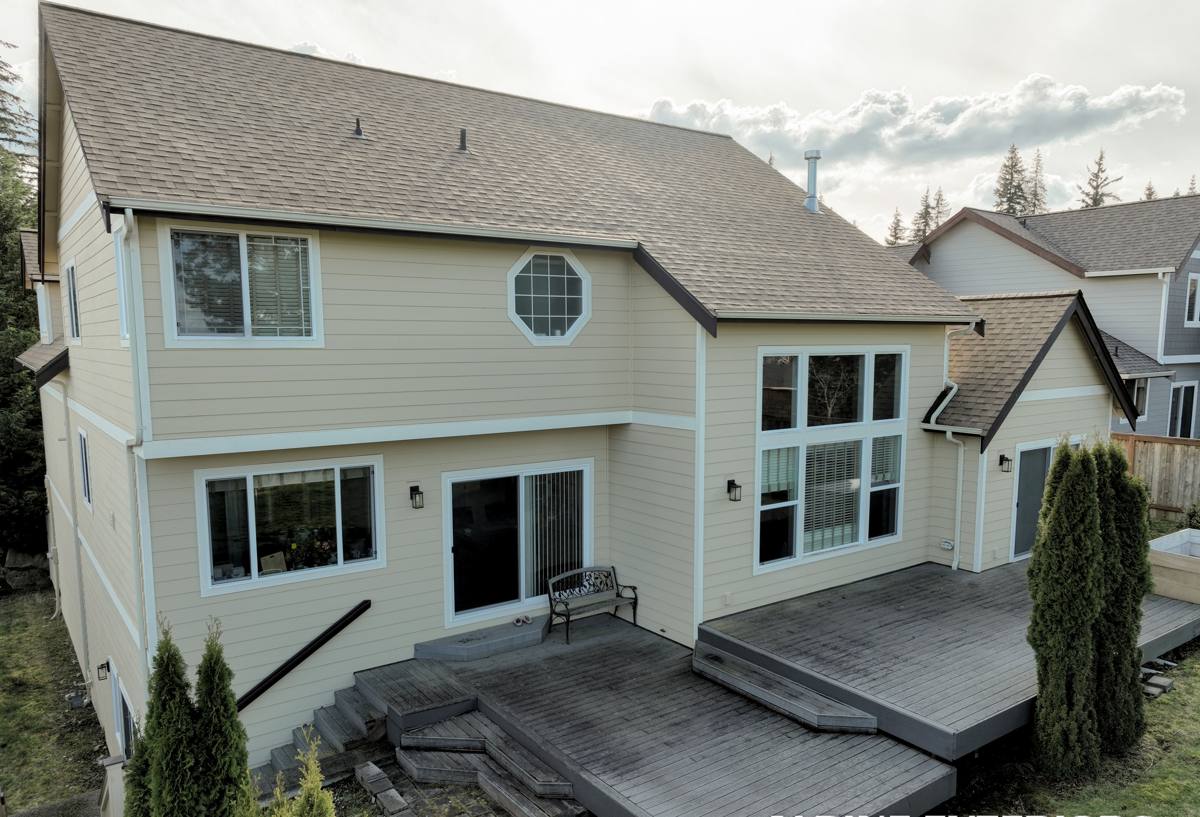
Larrabee sits close enough to the water and the trees that a deck here takes a different kind of beating than one in a dry inland yard. Salt-laden air off the bay corrodes hardware faster than manufacturers' spec sheets assume. Driving rain off Chuckanut's exposed slopes drives moisture sideways into gaps and seams that a calmer climate would never test. And the long wet season, shaded by fir and cedar canopy on a lot of Larrabee properties, keeps deck surfaces damp long enough for moss and algae to take hold. Composite decking can handle all of that better than wood, but only if it's installed with this specific climate in mind, not installed the same way a crew would build a deck in Spokane or Phoenix.
This page is about composite decking specifically for Larrabee homes — what the material needs to do here, what a correct installation looks like, and why local experience matters more with this material than people expect.
What Chuckanut's Climate Actually Does to a Deck
Salt Air
Whatcom County's marine exposure means airborne salt settles on every exterior surface, including decks set back from the water. It doesn't damage composite boards themselves much — the real target is fasteners, brackets, and any exposed steel hardware. Standard zinc-coated screws and joist hangers corrode faster under salt exposure, and once a fastener starts rusting, it stains the board around it and eventually loses holding strength.
Driving Rain
Chuckanut's terrain funnels wind-driven rain in ways flatter areas don't experience. That matters most at the ledger board — where the deck attaches to the house — and at any place two boards butt together or meet a fascia. Water pushed sideways by wind will find a gap that vertical rain never would. If flashing and gapping aren't done correctly, moisture gets behind the decking and into the structure below, even though the surface boards themselves are moisture-proof.
Long Moss Season
Between shade from mature trees and a wet season that runs many months of the year, moss and algae get a long uninterrupted window to establish themselves on any surface that stays damp. Composite decking resists rot, but it's not automatically moss-proof — texture, drainage, and airflow underneath the deck all affect how much moss actually grows on it.
Why Composite Makes Sense for This Property Type
Wood decking can work in Larrabee, but it demands a maintenance schedule most homeowners don't keep up with — annual sealing, spot-sanding, and replacing boards that rot from the underside where nobody looks. Composite decking, done right, removes most of that burden: no sealing, no staining, and a material that doesn't feed rot fungus the way wood fiber does.
That said, composite isn't maintenance-free, and we don't sell it that way. It still needs airflow underneath, proper drainage, and periodic cleaning to keep moss from establishing on the surface. The difference is that the maintenance composite needs is occasional and simple, not structural and urgent.
What a Correct Composite Deck Installation Involves
Composite boards are only as good as what's underneath them. Most complaints we hear about composite decking — sagging, board movement, moisture damage — trace back to the substructure or the flashing, not the decking material itself.
Ledger Attachment and Flashing
The ledger board is the single highest-risk point on any attached deck, and it's where driving rain does the most damage if it's flashed wrong. We use proper flashing that directs water out and away from the house wall, not a bead of caulk pretending to do a flashing's job.
Joist Protection
Composite boards don't rot, but the wood joists underneath them can if they're not protected. We tape the top of every joist with a self-adhering flashing tape before boards go down, so screw penetrations don't become entry points for water into the joist itself.
Fastener Selection
Given the salt exposure here, we don't use standard hardware. Stainless steel or coated fasteners rated for coastal or marine environments cost more per box, but they're the difference between hardware that lasts the life of the deck and hardware that's rust-streaking the boards in five years.
Ventilation and Drainage Underneath
A deck built low to the ground or over a patio needs somewhere for water to go and air to move. Without it, the underside stays damp constantly, which accelerates joist rot and gives moss and mildew a place to start even if the top surface is composite. We plan clearance and drainage slope during framing, not as an afterthought.
Board Spacing and Movement
Composite expands and contracts with temperature more than wood does. Gaps between boards and at butt joints have to be sized for that movement, especially with the temperature swings Whatcom County sees between a cold, damp winter and warmer summer days.
Choosing the Right Composite Board for a Larrabee Lot
Not all composite decking behaves the same in a wet, shaded climate. A few practical distinctions matter more here than they would in a drier region.
Capped vs. Uncapped Composite
Capped composite has a shell around the wood-plastic core that resists moisture absorption and staining much better than older uncapped composite. In a climate with this much sustained dampness, that cap matters — uncapped boards can absorb moisture at cut ends and edges over time.
Grooved vs. Solid-Edge Boards
Grooved boards allow hidden fastener systems, which give a cleaner surface with no exposed screw heads for water or moss to collect around. Solid-edge, face-screwed boards are simpler to repair individually but leave more exposed fastener points.
Surface Texture
A heavily embossed wood-grain texture looks good but can hold more moisture and debris in its grain than a smoother or lightly textured surface, which sheds water and cleans off algae growth more easily.
| Factor | What to Look For | Why It Matters in Larrabee |
|---|---|---|
| Board type | Capped composite | Resists moisture absorption through long wet seasons |
| Fastener system | Hidden clips or stainless screws | Reduces corrosion and rust staining from salt air |
| Surface texture | Moderate texture, not deep embossing | Sheds water and cleans easier where moss pressure is high |
| Substructure | Coated or composite joists, joist tape | Protects the part of the deck that actually rots |
| Underside clearance | Adequate airflow and drainage slope | Prevents constant dampness under low decks |
How Our Process Works
We keep the process straightforward because most deck problems come from skipped steps, not exotic causes.
- On-site assessment of the deck location, sun/shade exposure, drainage path, and existing structure if it's a replacement.
- A written estimate that spells out board selection, fastener type, and any structural work needed — no vague allowances.
- Framing and substructure work: ledger flashing, joist protection, proper spacing for drainage and airflow.
- Composite board installation with fasteners matched to the salt-air exposure at this site.
- Final walkthrough covering how the deck drains, how to clean it, and what to watch for seasonally.
Living With a Composite Deck in a Moss-Heavy Climate
Composite decking cuts the maintenance workload compared to wood, but "low-maintenance" doesn't mean "no attention needed" in a climate like this one. A simple seasonal routine keeps a composite deck looking and draining the way it should.
- Sweep off fir needles and leaf debris regularly — trapped organic matter is what actually feeds moss growth, not the board material itself.
- Rinse the deck surface periodically during the wet season rather than waiting for visible algae to build up.
- Check that gaps between boards stay clear so water keeps draining through instead of pooling.
- Look underneath once or twice a year to confirm airflow paths haven't been blocked by stored items or overgrown landscaping.
- Inspect fastener heads and any exposed hardware for early rust staining, especially near the water side of the property.
- Trim back overhanging branches where practical to reduce shade and debris load on the deck surface.
Why It Matters to Hire a Crew That Works Larrabee Regularly
A lot of what makes a composite deck last here isn't in the manufacturer's install manual — it's knowing how hard the rain drives on a given slope, how much shade a specific lot gets through the year, and how fast salt air corrodes hardware in this exact area versus somewhere twenty miles inland. A crew that only occasionally works this part of Whatcom County will build to a generic spec. A crew that works Larrabee regularly builds to what actually happens here, because they've already seen what fails when it isn't.
We also know the practical side: permitting expectations for decks in this part of the county, typical setback and railing requirements, and how local inspectors want flashing and structural details documented. That familiarity keeps a project moving instead of stalling on a correction that a more experienced local crew would have avoided in the first place.
Get a Straightforward Estimate
If you're planning a new composite deck or replacing tired wood decking on a Larrabee property, we're glad to take a look and give you an honest read on what the site needs. There's a free, no-pressure estimate form below — reach out and we'll walk the property with you before anything is decided.