 Chuckanut
 Roofing in Larrabee: A Different Set of Demands
Larrabee sits close enough to the water that salt air is part of daily life, and the terrain around Chuckanut means homes here catch wind-driven rain from more than one direction depending on the season. Add in a long stretch of overcast, damp months every year, and you've got a climate that is hard on roofs in ways that inland Whatcom County neighborhoods simply don't deal with as much. A roof replacement in this area isn't just about swapping old shingles for new ones — it's about building a roof system that can shrug off salt exposure, shed driving rain without backing up under the edges, and resist the moss and moisture that want to take hold the moment conditions favor them.
Homeowners in Larrabee often come to us after noticing granule loss in the gutters, dark streaking across north-facing slopes, or a contractor telling them a roof is "getting old" without much explanation of what that actually means for the structure underneath. This page covers what a correct roof replacement looks like for a Larrabee home, what our process involves, and why local experience matters more here than in a lot of other places.
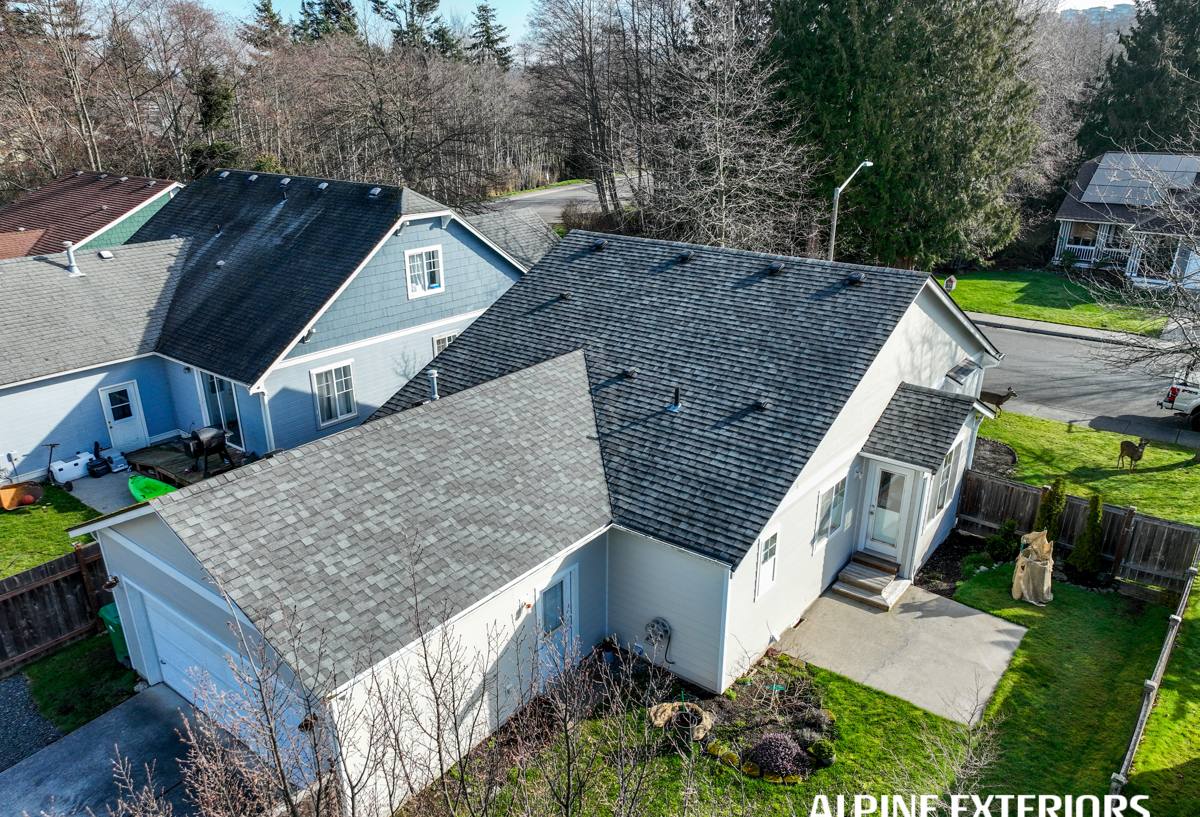
Why Larrabee's Climate Is Hard on Roofs
Salt Air and Metal Fatigue
Proximity to saltwater accelerates corrosion on anything metal — flashing, fasteners, drip edge, vent stacks, and even the metal components inside some shingle systems. Standard fasteners and lower-grade flashing that might last decades inland can start showing rust and pitting years earlier this close to the bay. Roofs in Larrabee need corrosion-resistant materials specified from the start, not as an upgrade added later.
Driving Rain and Wind-Driven Water
Chuckanut's terrain funnels wind in ways that push rain sideways during storms, not just straight down. That means water finds its way under loose or under-lapped shingles, around poorly sealed penetrations, and into any gap in the underlayment that a calmer climate might never expose. A roof that's "fine" in a light rain can still leak under Larrabee's driving-rain conditions if the underlayment and flashing details weren't built for it.
Moss Season
Whatcom County's damp, shaded, cool stretches give moss months to establish itself, especially on north-facing slopes and anywhere tree cover blocks sun and airflow. Moss isn't just cosmetic — it holds moisture against the roof surface, works its way under shingle edges, and can lift shingles enough to let water in. A roof replacement is the right time to address moss-prone areas properly, rather than just planning to scrape and treat every year going forward.
Signs a Larrabee Roof Needs Replacing, Not Patching
- Granules collecting heavily in gutters or at downspout outlets
- Shingles that are cupping, curling, or cracking, especially on south- and west-facing slopes
- Persistent moss or dark algae staining that returns quickly after cleaning
- Rusted or deteriorating flashing around chimneys, vents, and valleys
- Soft spots in the decking felt when walking the roof, or sagging visible from the ground
- Daylight visible through the roof deck from inside the attic
- Multiple past repairs in different areas, suggesting the whole system is aging out together
- A roof approaching or past 20-25 years old with asphalt shingles, or showing wear well before that timeline due to salt and moisture exposure
What a Correct Roof Replacement Includes
A roof replacement done right in this area is a system, not just a covering. Every layer has to do its job for the whole thing to hold up against salt air, driving rain, and moss pressure.
Tear-Off and Deck Inspection
We remove the old roofing down to the deck so we can actually see what's underneath — soft, rotted, or delaminated sheathing has to be found and replaced before anything new goes down. Roofing over a compromised deck just hides the problem and shortens the life of the new roof.
Underlayment Built for Wind-Driven Rain
Given how often rain in this area comes in sideways, we use synthetic or self-adhered underlayment products rated for wind-driven water intrusion, with extra attention to laps, valleys, and eaves rather than relying on minimum-code coverage.
Ice and Water Protection at Vulnerable Points
Eaves, valleys, and any low-slope transitions get self-adhering ice and water barrier membrane. This is the backup layer that keeps water out even if wind pushes rain past the primary shingle line — critical for a site exposed to Chuckanut's weather patterns.
Corrosion-Resistant Flashing and Fasteners
Given the salt air, we specify flashing, drip edge, and fasteners rated for coastal or high-moisture exposure rather than standard-grade materials. This is one of the details that separates a roof that looks fine for five years from one that actually holds up for its full expected lifespan here.
Ventilation That Actually Balances
Proper intake and exhaust ventilation keeps the attic dry and temperature-regulated, which reduces condensation buildup, helps shingles last longer, and reduces the damp, cool conditions moss favors. We check existing ventilation as part of every replacement rather than assuming it's adequate.
Moss-Resistant Details
Where trees shade the roof or north slopes stay damp longer, we can incorporate zinc or copper strips near the ridge, which help suppress moss regrowth over time as rainwater washes trace metal down the slope. It's not a substitute for good ventilation and material choice, but it's a useful layer of long-term protection.
Material Choices for Larrabee Homes
There's no single "best" roofing material for every home — the right choice depends on the roof's slope, the home's exposure to wind and salt air, budget, and how much long-term maintenance the homeowner wants to take on. Here's how the common options compare for this specific climate:
| Material | Salt Air Durability | Moss Resistance | Typical Lifespan Here |
|---|---|---|---|
| Architectural Asphalt Shingle | Good with corrosion-resistant flashing | Moderate — benefits from zinc strips | 20-30 years |
| Standing Seam Metal | Excellent with coastal-rated coatings | Very good — sheds moisture quickly | 40-60 years |
| Synthetic/Composite Shingle | Good | Moderate to good | 30-50 years |
| Cedar Shake | Fair — needs diligent maintenance near salt air | Requires active upkeep to resist moss | 20-30 years with maintenance |
We walk through these trade-offs with every homeowner rather than defaulting to one product. A steep, shaded, north-facing roof close to the water has a very different ideal material profile than a sunny, open, low-slope roof a bit further inland.
Our Replacement Process
1. On-Site Assessment
We inspect the current roof, attic ventilation, decking condition where accessible, and the home's specific exposure to wind, rain direction, and shade. This tells us what the roof actually needs, not just its age.
2. Straightforward Proposal
We walk through material options, what's included at each level, and the reasoning behind our recommendation — no pressure, no inflated urgency.
3. Tear-Off and Deck Repair
Full removal of old roofing, deck inspection, and repair of any compromised sheathing before new materials go down.
4. System Installation
Underlayment, ice and water membrane, flashing, ventilation components, and final roofing material installed in the sequence and detail level the site calls for.
5. Cleanup and Walkthrough
Full site cleanup, including magnetic sweep for stray fasteners, followed by a walkthrough so the homeowner understands what was done and what maintenance, if any, to expect going forward.
What to Ask Before Hiring a Roofing Crew Here
- Do they specify corrosion-resistant flashing and fasteners for homes this close to the water, or use standard-grade materials by default?
- Do they inspect and correct attic ventilation as part of the job, or only replace the roofing surface?
- Will they show you the deck condition during tear-off before closing it back up?
- Do they have experience with the specific wind and rain exposure patterns around Chuckanut and Larrabee?
- Is the warranty tied to proper installation practices they'll stand behind, or just a manufacturer pass-through?
Why Local Experience in Larrabee Matters
A crew that has worked roofs throughout Chuckanut and the surrounding Whatcom County coastline already knows which slopes tend to hold moss longest, which exposures need extra flashing attention, and how driving rain tends to behave against homes in this specific terrain. That's the kind of knowledge that shows up in the details — the extra membrane at a valley that catches wind-driven water, the flashing grade chosen because of salt exposure, the ventilation fix that keeps moss from coming right back. It's the difference between a roof that's built to the code minimum and one that's actually built for where it sits.
Get a Straightforward Estimate
If your Larrabee home's roof is showing its age or you just want an honest opinion on where it stands, we're glad to take a look. We'll give you a clear assessment, explain what we find, and put together a free, no-pressure estimate using the form below.