 Chuckanut
 Storm Damage Roof Repair Built for Larrabee's Climate
Homes in the Larrabee area near Chuckanut sit close enough to the water and the tree line that their roofs take a different kind of beating than roofs further inland. Salt-laden air off the coast works on exposed metal year-round. Wind-driven rain off the Sound doesn't just fall on a roof, it gets pushed sideways into laps, flashings, and vents. And the long, wet moss season that Whatcom County is known for keeps shaded roof sections damp for months at a time. Any one of these is manageable on its own. Together, after a windstorm has already loosened shingles or knocked debris loose from the tree canopy, they turn small damage into a leak fast if the repair isn't done right.
This page is specifically about repairing storm damage on Larrabee roofs — not a general roofing overview. If a recent windstorm, heavy rain event, or falling branch has left your roof looking rough, here's what actually matters in getting it fixed correctly the first time.
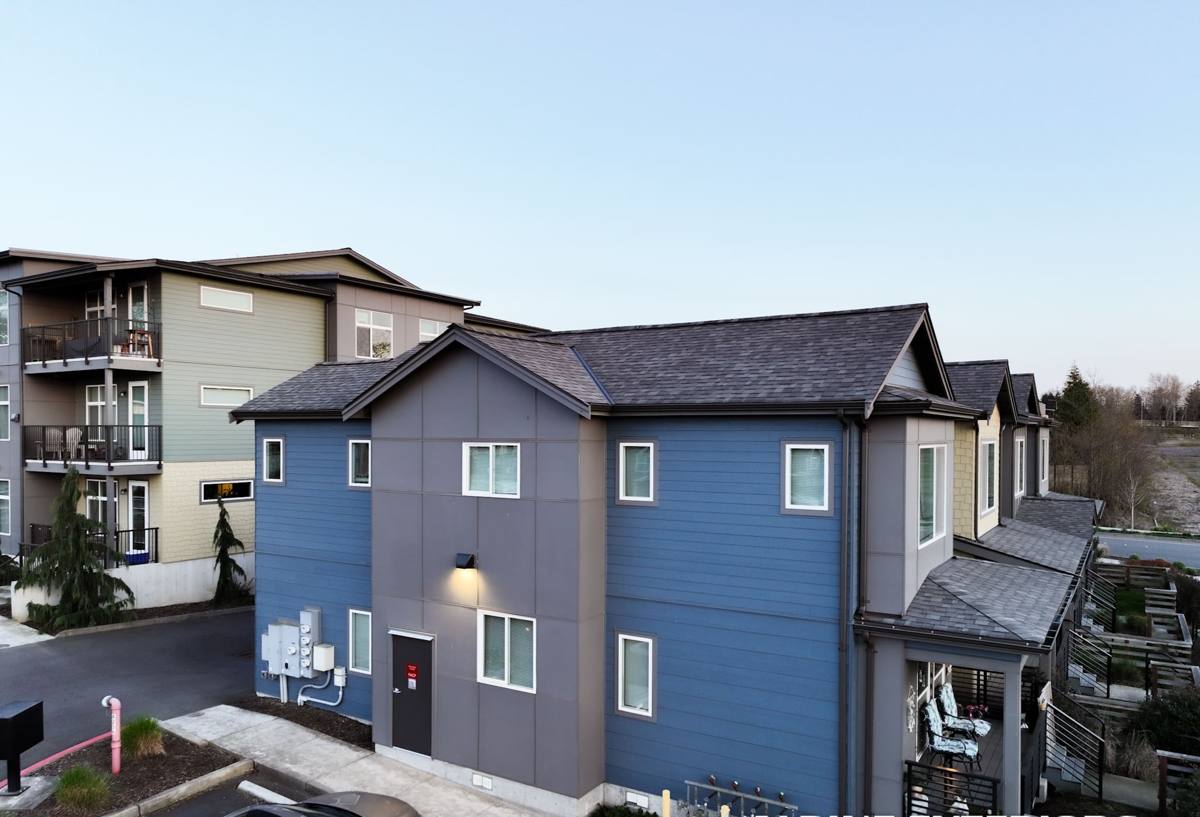
What Storm Damage on a Chuckanut-Area Roof Actually Looks Like
Visible Damage
Some damage announces itself: shingles curled up or torn off, a section of ridge cap missing, a gutter pulled loose, or a branch that came down and cracked or punctured the roof surface. Granule loss that shows up as dark streaks in downspouts or in the gutters after a storm is also a visible sign — it means the protective surface of the shingle has been stripped away, even if the shingle itself is still nailed down.
Hidden Damage
The damage that causes the most trouble is the kind you can't see from the ground. Wind can lift a shingle just enough to break its seal without tearing it off, which leaves a gap that driving rain can work into on the next storm. Flashing around chimneys, skylights, and roof-to-wall transitions can shift slightly and still look fine from a distance while no longer shedding water correctly. On roofs with moss buildup, trapped moisture can already be working under the shingle mat before a storm even hits, so what looks like "storm damage" is sometimes storm damage on top of moisture damage that was already underway.
Why an Honest Inspection Comes Before Any Repair
A correct storm repair starts with a full inspection, not just a look at the obvious problem area. That means checking the whole roof plane, not just the spot visible from the driveway, and paying close attention to flashing, valleys, and any area shaded by trees where moss and moisture tend to concentrate. It also means getting into the attic when possible, since water stains, wet insulation, or daylight showing through the decking tell you things the roof surface alone won't.
We separate storm damage from pre-existing wear honestly. If a roof was already near the end of its service life before the storm, we'll say so — that's a different conversation than a straightforward repair, and it matters for how you handle it with your insurance carrier.
What a Correct Storm Damage Repair Involves
- Removing and replacing damaged shingles or roofing material back to sound, undamaged decking — not just patching over the visible tear
- Inspecting and repairing underlayment beneath the affected area, since wind-driven rain often gets past the shingle layer before it gets past the underlayment
- Re-securing or replacing flashing at chimneys, vents, valleys, and wall transitions rather than just caulking over a gap
- Matching shingle color and style as closely as possible for a repair, understanding that some mismatch is normal on an older roof
- Checking and clearing gutters and downspouts in the repair area so water has somewhere to go once the roof is closed back up
- Removing storm debris from the roof surface and cleaning up branches, granules, and torn material from the yard and gutters
Skipping any of these steps is how a "repaired" roof leaks again in the next storm. A patch job that only addresses the shingle you can see, without checking what's underneath it, is the most common shortcut we see undone and redone.
Repair or Replace: How We Help You Decide
Not every storm-damaged roof needs a full replacement, and not every roof that looks rough after a storm is actually a repair candidate. The right call depends on the roof's age, how widespread the damage is, and what condition the rest of the roof was already in.
| Factor | Repair Usually Makes Sense | Replacement Worth Considering |
|---|---|---|
| Roof age | Roof is under roughly two-thirds of its expected lifespan | Roof is already near or past its expected service life |
| Extent of damage | Damage is limited to one section or slope | Damage is spread across multiple slopes or the whole roof |
| Underlying condition | Decking and underlayment are sound where inspected | Moisture or moss damage found beyond the storm-affected area |
| Material availability | Existing shingle style/color is still reasonably matchable | Existing material is discontinued or heavily faded, making patches obvious |
| Insurance scope | Claim is limited to a defined storm event | Adjuster's scope already points toward full slope or roof replacement |
We'll walk you through where your roof falls on this before recommending either path — our goal is the right fix for the actual damage, not the biggest job we can sell.
Our Process for Storm Repairs in Larrabee
1. Inspection and Documentation
We inspect the full roof, photograph the damage for your records and, if needed, for your insurance claim, and give you a straight assessment of what's storm-related and what isn't.
2. Written Scope and Estimate
You get a clear, written scope of the repair work and cost before anything is scheduled — no verbal promises, no surprise add-ons once we're up there.
3. Weather-Aware Scheduling
Given how often another system rolls through this part of Whatcom County, we schedule repairs with an eye on the forecast and prioritize any active leak or exposed decking so a home isn't left vulnerable between storms.
4. The Repair Itself
We work back to sound material, address flashing and underlayment as needed, and match roofing material as closely as reasonably possible.
5. Cleanup and Walkthrough
We clear debris, check gutters and downspouts in the work area, and walk the repair with you before we call the job done.
Salt Air, Driving Rain, and Moss: The Long-Term Picture
A storm repair is a good moment to think past the immediate fix. Salt air accelerates corrosion on exposed fasteners and lower-grade flashing metal over time, which is why we pay attention to what flashing material is going back on the roof, not just that flashing is present. Driving rain finds any gap left by a rushed repair, so lap and seal details matter more here than they would on a roof in a drier, calmer inland area. And moss doesn't take a season off in this climate — a roof section that was already holding moisture before the storm is a section that will hold moisture again unless it's addressed as part of the repair, not just around it.
None of this means every repair needs to turn into a bigger job. It means the repair should be done with this climate in mind, so the same section isn't back on our schedule after the next storm.
Storm Damage and Insurance: What Homeowners Should Know
Many storm repairs in this area are handled through homeowners insurance. We're not your insurance company and won't promise a claim outcome, but we can document damage clearly, provide a fair written estimate, and answer a contractor's-eye-view of questions your adjuster may not think to raise. Photographing damage promptly, keeping receipts for any emergency tarping or temporary repair, and getting a written scope before repairs begin all put you in a stronger position regardless of how the claim goes.
After a Storm: A Quick Homeowner Checklist
- Check gutters and the ground around your home for granules, shingle pieces, or flashing — a sign something came loose overhead
- Look for water stains on ceilings or ledges in the attic, even if the roof looks fine from outside
- Note any branches or debris resting on the roof, and avoid removing large limbs yourself if they're tangled with roofing material
- Photograph any visible damage from the ground before cleanup begins
- Avoid walking the roof yourself after a storm — wet, moss-covered surfaces are genuinely dangerous
- Call for an inspection promptly; a small gap left open through another rain event is how minor damage turns into a decking or interior repair
Why It Matters That We Already Work in Larrabee
A crew that already works storm repairs in and around Chuckanut and Larrabee knows what these roofs are up against without having to guess. We know moss builds back quickly under the tree cover common to this area, that flashing takes more of a beating from salt air here than it would further from the water, and that a storm system rolling through rarely produces just one problem spot. That familiarity means a faster, more accurate inspection and a repair built for the conditions your roof will actually face again, not a generic fix.
If a recent storm has left your roof damaged, we're glad to take a look and give you a straightforward, no-pressure estimate — use the form below to get started.