 Chuckanut
 Metal Roofing in York: Built for This Stretch of Whatcom County
York sits close enough to Bellingham Bay and Chuckanut Bay that the weather here isn't quite like inland Whatcom County. Homes take on salt-laden air off the water, long stretches of driving rain that comes in sideways during winter storms, and a moss season that can run eight or nine months out of the year under the tree cover common in this area. A roof here has to shed water fast, resist corrosion from airborne salt, and not give moss anything to grab onto. Metal roofing, installed correctly, does all three better than most alternatives — but "installed correctly" is doing a lot of work in that sentence, and it's where a lot of jobs in this region fall short.
This page covers what a metal roof actually needs to hold up in York's climate, what our process looks like, and the honest trade-offs between panel and metal types so you can make a decision that fits your home and budget.
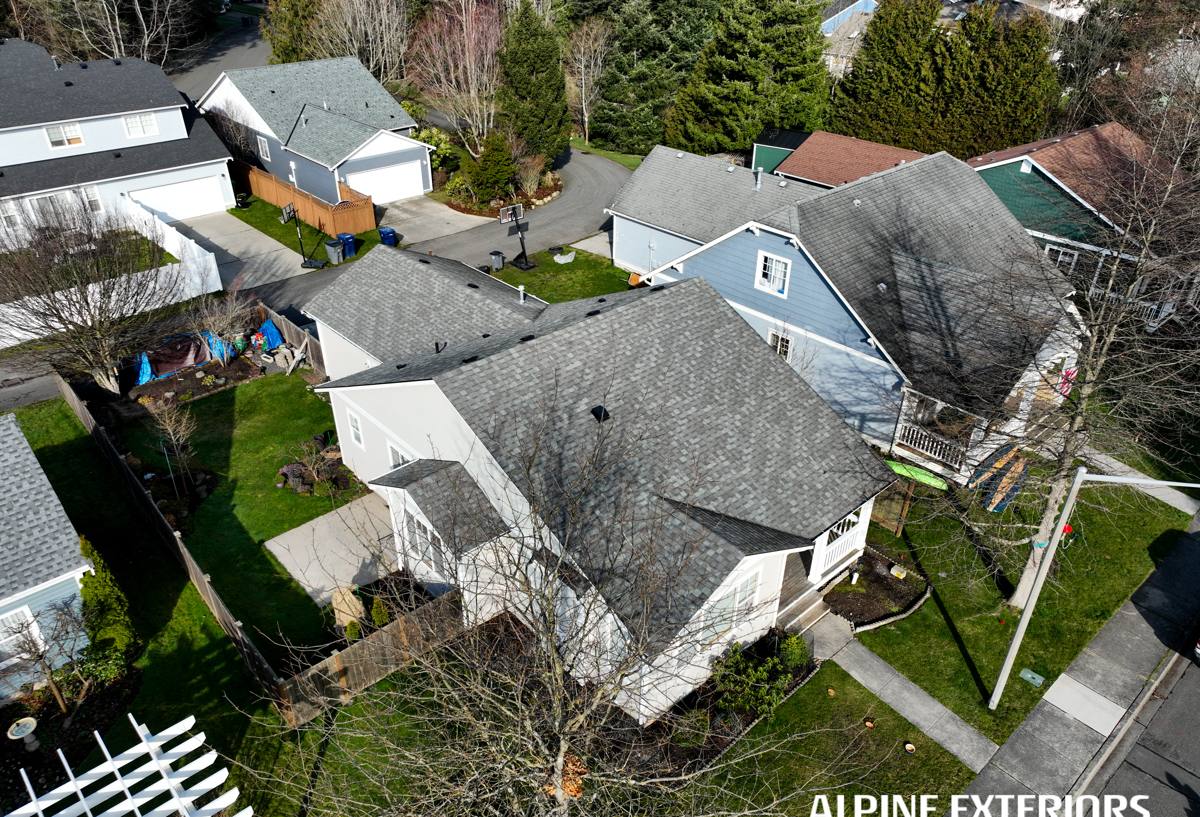
What York's Climate Actually Does to a Roof
Three things drive most of the roofing problems we see in this part of Whatcom County:
- Salt air: Proximity to Bellingham Bay and Chuckanut Bay means airborne salt settles on exposed metal, fasteners, and flashing. Over years, untreated or poorly coated metal corrodes from the outside in, usually starting at cut edges and fastener heads.
- Driving rain: Storms off the water often come in at an angle instead of straight down, which pushes water up under laps, around penetrations, and into any seam that wasn't detailed with wind-driven rain in mind.
- Moss and organic growth: Shade, moisture, and mild temperatures year-round are ideal moss conditions. Moss holds water against roofing material, and on some surfaces it works into the texture and accelerates wear.
None of this is unique to York, but it's more pronounced here than it is a few miles inland, and it changes which materials and details matter most.
Why Metal Holds Up Better Than the Alternatives Here
Metal roofing has a real advantage in this climate for a few concrete reasons, not just marketing:
- Smooth, hard panel surfaces give moss almost nothing to root into, compared to the texture of composition shingles.
- Properly seamed metal roofing sheds wind-driven rain more reliably than shingle systems, because water has fewer edges and laps to work into.
- A quality metal roof has a long service life when the coating and fasteners are matched to a coastal environment — decades longer than composition shingles in this same climate.
The trade-off is that "quality" and "matched to a coastal environment" aren't automatic. The wrong fastener, the wrong panel profile, or a rushed install will corrode or leak in this climate faster than in a drier one.
Panel Types: What We Recommend and Why
| Panel Type | Best For | Coastal Performance |
|---|---|---|
| Standing seam (concealed fastener) | Most York homes, especially anything with water views or heavy wind exposure | Best — no exposed fasteners to corrode, seams mechanically locked against wind-driven rain |
| Exposed-fastener panel | Outbuildings, budget-conscious projects, lower-exposure roof planes | Fair — fasteners and their washers are the weak point and need periodic inspection |
| Metal shingles/shakes | Homes wanting a traditional look with metal's durability | Good — more seams than standing seam, so detailing at laps matters more |
For most full roof replacements in York, we lean toward standing seam. The concealed fastener design removes the single biggest long-term maintenance item — exposed screws working loose or corroding over a couple decades of salt exposure and thermal cycling.
Metal Choice: Steel, Aluminum, and What Salt Air Does to Each
The panel profile is only half the equation. The base metal and its coating determine how the roof actually ages near saltwater.
| Metal | Corrosion Resistance Near Salt Air | Notes |
|---|---|---|
| Galvalume/galvanized steel | Good with proper coating; the coating is doing the work | Cost-effective, widely available, needs a coating rated for coastal/marine exposure |
| Aluminum | Very good — doesn't rust the way steel can | Costs more than coated steel; a common upgrade for homes closest to the water |
| Copper or zinc | Excellent, develops a protective patina over time | Highest material cost; chosen more for longevity and appearance than budget |
We don't install bare or under-coated steel panels on homes with direct salt exposure — it's a maintenance burden we won't hand a homeowner, not because the material is bad everywhere, but because it isn't matched to this specific environment. For most York homes, a marine-grade coated steel or aluminum standing seam system is the right balance of cost and durability.
Moisture Management: The Part You Don't See
A metal roof's visible panels get most of the attention, but the underlayment, flashing, and fastening details underneath are what actually keep water out during a real Whatcom County storm.
What a Correct Install Includes
- A high-temperature, self-adhered underlayment at eaves, valleys, and penetrations — standard felt isn't enough under metal in this climate.
- Closure strips or foam closures at the ridge and eave so wind-driven rain and blowing debris can't work up under the panels.
- Butyl or high-grade sealant at every penetration, not just caulk that will shrink and crack within a few seasons.
- Fasteners rated for the specific metal used, with EPDM washers sized and torqued correctly — overdriven screws are one of the most common causes of leaks on exposed-fastener systems.
- Flashing details around chimneys, skylights, and wall intersections built for the panel profile, not generic trim bent to fit.
Most leaks we're called to diagnose on metal roofs in this area trace back to one of these details being skipped or rushed, not to the metal panels themselves failing.
Moss and Long-Term Maintenance
Metal roofing dramatically reduces moss problems compared to shingles, but it doesn't eliminate the conditions that grow moss — shade, moisture, and debris. A few habits keep a metal roof performing the way it should:
- Clear needles, leaves, and branch debris out of valleys and off the roof surface once or twice a year, especially under mature trees.
- Keep gutters and downspouts flowing — a metal roof shedding water fast does no good if it backs up at a clogged gutter.
- Check exposed fasteners (if that's your panel type) every couple of years for early corrosion at the head or washer.
- Avoid pressure washing metal panels directly — it can drive water under laps and strip protective coatings; a soft wash or gentle rinse is safer.
Our Process for a York Metal Roof
- On-site assessment: We look at your existing roof structure, exposure to weather and salt air, tree cover, and any current problem areas before recommending a panel type or metal.
- Material selection: Based on exposure and budget, we walk through the real trade-offs between steel, aluminum, and panel profile for your specific roof planes.
- Tear-off and deck inspection: We remove the existing roofing and check the deck for rot or soft spots before anything new goes down — this is where hidden moisture damage from years of driving rain often shows up.
- Underlayment and flashing: High-temp self-adhered underlayment at vulnerable areas, then correctly detailed flashing at every penetration and transition.
- Panel installation: Panels installed to manufacturer spec with the right fastening pattern, closures, and sealants for your metal and profile.
- Final walkthrough: We go over the finished roof with you, including what maintenance (if any) your specific system needs.
What Drives Cost
Metal roofing costs more upfront than composition shingles, and pricing varies enough by roof complexity and material that we won't quote a number without seeing the roof. What actually moves the price:
| Factor | Impact |
|---|---|
| Panel type | Standing seam costs more than exposed-fastener panel, largely due to labor and material |
| Metal choice | Aluminum and copper cost more per square foot than coated steel |
| Roof complexity | Valleys, dormers, skylights, and multiple planes add labor and flashing work |
| Tear-off condition | Deck repair from hidden rot or moisture damage adds cost once uncovered |
| Access and pitch | Steep or hard-to-access roofs take longer and require more safety setup |
The honest way to think about it: metal roofing is a longer-term investment than shingles, with a payoff in reduced maintenance and a much longer service life, especially in a climate like this one where shingles take a beating from moss and rain.
Why It Matters to Hire a Crew That Already Works in York
A lot of roofing problems in this area aren't caused by bad materials — they're caused by details that work fine in a drier, calmer climate but fail here. A crew unfamiliar with wind-driven rain off the bay, salt-air corrosion, or the moss cycle in this part of Whatcom County can install a technically correct roof that still underperforms in York's specific conditions. We work in this area regularly, which means we're not guessing at what this climate does to a roof over ten or twenty years — we're building for what we've actually seen happen.
Questions Worth Asking Any Metal Roofing Contractor Here
- What underlayment do you use at eaves and valleys, and is it rated for this climate?
- Which fastener and washer type do you use, and is it matched to the panel metal to avoid galvanic corrosion?
- How do you detail flashing at chimneys, skylights, and wall intersections?
- What's your recommendation for panel and metal type given this home's exposure to salt air and wind?
- What maintenance, if any, will this specific system need over the next 10-20 years?
If you're weighing a metal roof for a home in York, we're happy to take a look and walk you through what your roof specifically needs — no pressure, no upsell, just a straight answer. Reach out for a free estimate using the form below.