 Chuckanut
 Building New in Mount Vernon Means Building for the Weather First
When you're framing a new home in the Mount Vernon area, the windows you choose and how they're installed will do more to determine long-term comfort and durability than almost any other single decision on the exterior. This is a marine climate with salt-laden air moving in off the water, driving rain that comes in sideways during winter storms, and a long stretch of the year where moss, algae, and general dampness are just part of life. Windows installed correctly the first time, during new construction, are far cheaper and far more reliable than windows that get fought with later through a finished wall.
New construction gives us an advantage retrofit work never has: open stud bays, unfinished sheathing, and full access to the rough opening before siding, trim, or interior finish go on. Done right, that access is what keeps water out of a wall assembly for decades. Done wrong — or rushed — it's the reason so many "newer" homes in this region end up with rot around window openings inside of ten or fifteen years.
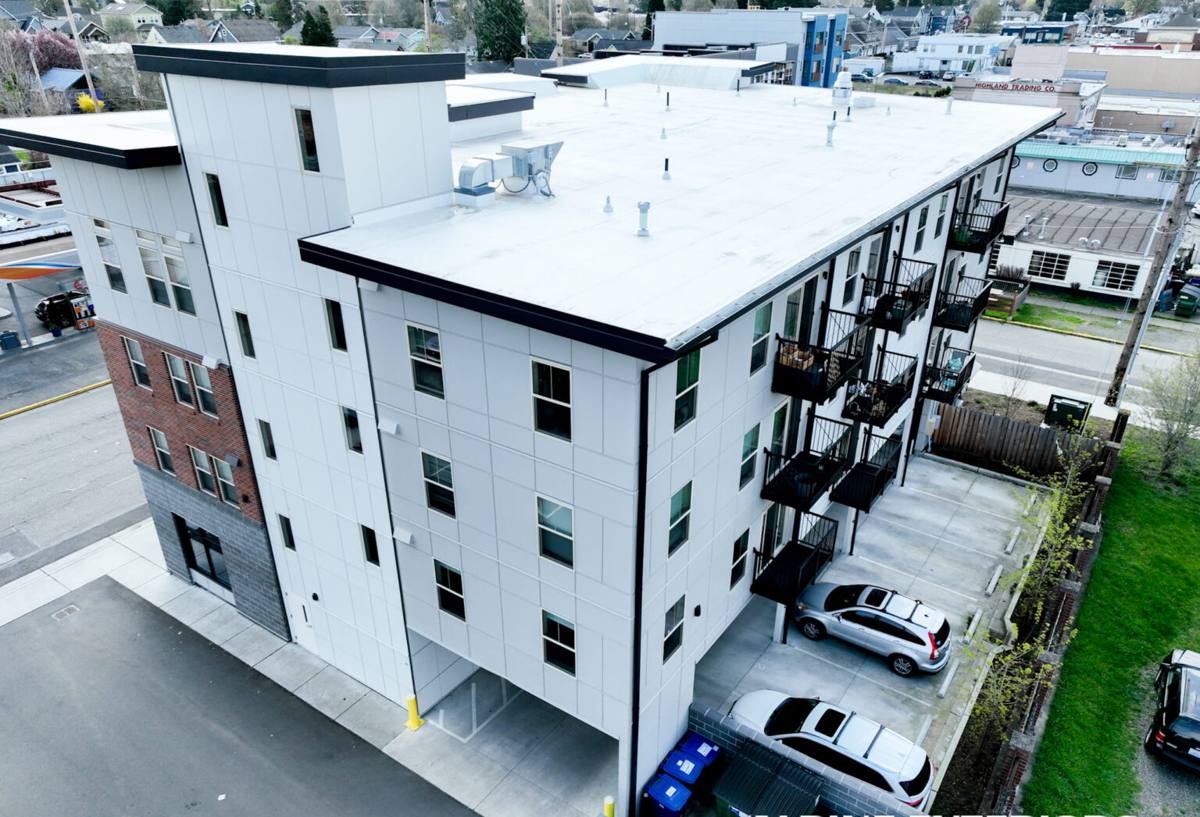
What Mount Vernon's Climate Actually Does to a Window Opening
Salt Air and Metal Fatigue
Proximity to salt water accelerates corrosion on window hardware, fasteners, and some metal cladding finishes. Cheaper aluminum components and lower-grade fasteners break down faster here than they would inland. We factor that into what we spec and how we fasten, not just what looks good on a spec sheet.
Driving Rain and Wind-Driven Water
Rain in this region rarely falls straight down. Wind pushes it sideways and up under trim, sills, and laps in siding. A window opening has to be built assuming water will reach it — the flashing and drainage plane are what stop that water from getting behind the window and into the wall, not the window unit itself.
Long Wet Seasons and Moss
Extended damp periods keep exterior surfaces wet for days at a time. Any gap, reverse-lapped flashing, or missed sealant joint becomes an entry point that has months, not days, to do damage before things dry out again. Moss and algae growth on north-facing and shaded elevations also holds moisture against trim and sills longer than homeowners expect.
What a Correct New-Construction Window Installation Actually Involves
A window is only as good as the opening it sits in. On new builds, we treat the installation as a system, not a single product drop-in:
- Rough opening checked for square, level, and correct dimension before the window ever arrives on site
- Weather-resistive barrier (house wrap) integrated with the opening using a proper shingle-lap sequence, not just stapled around it
- Sill pan flashing installed at every opening, sloped to shed any water that gets past the window back to the exterior
- Window set plumb, level, and square, with shims at the correct load points — not just at the corners
- Head, jamb, and sill flashing integrated in the correct shingle-lap order so water always moves down and out, never behind the layer below
- Backer rod and sealant at the window flange, matched to the cladding type going on over it
- Interior air sealing at the rough opening, which matters as much for energy performance as the exterior flashing does for moisture
Skipping or reordering any one of these steps is how a wall assembly fails years down the road — usually quietly, behind finished drywall or siding, until there's visible staining, soft trim, or a musty smell that means the damage is already done.
Choosing the Right Window for a Mount Vernon New Build
Frame Material
Vinyl, fiberglass, and clad-wood are the three materials we see most often specified on new builds in this region. Each has real trade-offs worth understanding before you commit:
| Frame Type | Moisture Behavior | Maintenance | Typical Fit |
|---|---|---|---|
| Vinyl | Won't rot; performs well in wet climates | Low — occasional cleaning | Budget-conscious builds, rentals, spec homes |
| Fiberglass | Very stable, minimal expansion/contraction | Low | Higher-end new construction, larger openings |
| Clad-Wood | Good if detailed correctly; wood core relies on the exterior clad and flashing to stay dry | Moderate — interior wood finish, exterior clad low-maintenance | Custom homes prioritizing a wood interior look |
Glass Package
For this climate we generally steer new-construction clients toward double-pane, low-E glass with argon fill as a baseline, and we'll walk through triple-pane options where energy performance or noise reduction is a priority. The bigger factor for comfort here is usually air sealing and installation quality, not glass alone — a well-installed double-pane window will outperform a poorly installed premium unit every time.
Why We're Selective About What We Install
We don't install every product line on the market, and that's intentional. Some window systems are more sensitive to installation sequencing, some cladding finishes hold up better to salt air over time, and some manufacturers back their products with warranty terms that are actually usable if a problem shows up. We'd rather stand behind a smaller list of products we trust in this climate than install something that looks fine on day one and becomes a callback in year five.
How Our Process Works on a New-Construction Job
- Plan review: We look at the window schedule and rough opening sizes before framing is finalized, catching sizing or placement issues while they're still easy to fix.
- Pre-install walkthrough: Once openings are framed and wrapped, we verify square, flashing sequence, and drainage plane integration before a single window goes in.
- Installation: Windows are set, shimmed, flashed, and sealed following the same sequence on every opening — no shortcuts based on which wall is "less visible."
- Quality check: Every opening gets checked for operation, air seal, and flashing lap before we move to the next phase of the build.
- Coordination with your builder: We work directly with your general contractor or framer's schedule so window installation doesn't become the bottleneck holding up siding or interior work.
Why Hiring a Crew That Already Works Mount Vernon Matters
New-construction window installation isn't complicated in theory, but it's unforgiving of guesswork — and guesswork is exactly what happens when a crew is installing for a climate they don't normally work in. A crew based elsewhere might default to flashing details and sealant choices suited to a drier region, or might not think twice about a cladding gap that would be fine in a low-rain climate but becomes a problem here after a few wet Whatcom County winters.
Working new-construction openings in this specific area, on this specific coastline, means we're not guessing at how hard the wind-driven rain hits a west-facing wall, or how long moss holds moisture against a north-facing sill. That local pattern recognition is what separates a window installation that just looks finished from one that's actually built to last through the kind of weather this region sees every single year.
Common Mistakes We See on New Builds — and How to Avoid Them
- Flashing installed out of sequence: Even correct materials fail if the shingle-lap order is wrong — water finds the reverse lap eventually.
- Skipping sill pan flashing: A common corner-cut on budget builds; it's cheap insurance against the single most common failure point in a window opening.
- Fastening through the flange incorrectly: Over-driven or misplaced fasteners can distort the frame or create new water paths.
- Sealant used as a substitute for proper flashing: Caulk is a backup layer, not the primary defense — it degrades and it's the first thing to fail in constant wet-dry cycling.
- Rushing installation to keep pace with siding crews: Window installation should set the pace on window walls, not the other way around.
What This Means for Your Build
If you're framing a new home or building in Mount Vernon, the window installation phase is worth slowing down for. It's a short window of time — no pun intended — where the wall is open and every flashing detail is still easy to get right. Get it right here, and you're not thinking about your windows again for a very long time. Get it wrong, and it's usually years before the problem shows itself, by which point it's a repair instead of a five-minute fix during framing.
If you'd like us to look at your plans, walk your framed openings, or just answer questions about what's specified in your build, we're happy to provide a free, no-pressure estimate — just fill out the form below and we'll get back to you.