 Chuckanut
 Roof Repair in Columbia: Built for This Climate
Columbia's roofs don't fail the way roofs fail in drier parts of the country. Out here, the damage is slow and cumulative — a little moss growth this year, a slightly loosened flashing seam next year, a stain on the ceiling the year after that. By the time a homeowner notices a problem, the roof has usually been quietly losing ground for a while. Our roof repair work in Columbia is built around that reality: we're not just patching the spot you're worried about, we're checking the whole system for the early-stage issues that turn into expensive ones.
Chuckanut and the surrounding Whatcom County shoreline sit in a tough spot for roofing. Salt-laden air off the bay accelerates corrosion on metal flashing and fasteners. Driving rain off the water gets pushed sideways under shingles and around penetrations instead of just falling straight down. And the region's long, wet, low-light stretch of the year gives moss and moisture months to work into a roof before a good drying spell ever shows up. A repair that doesn't account for all three of those forces tends to be a repeat visit waiting to happen.
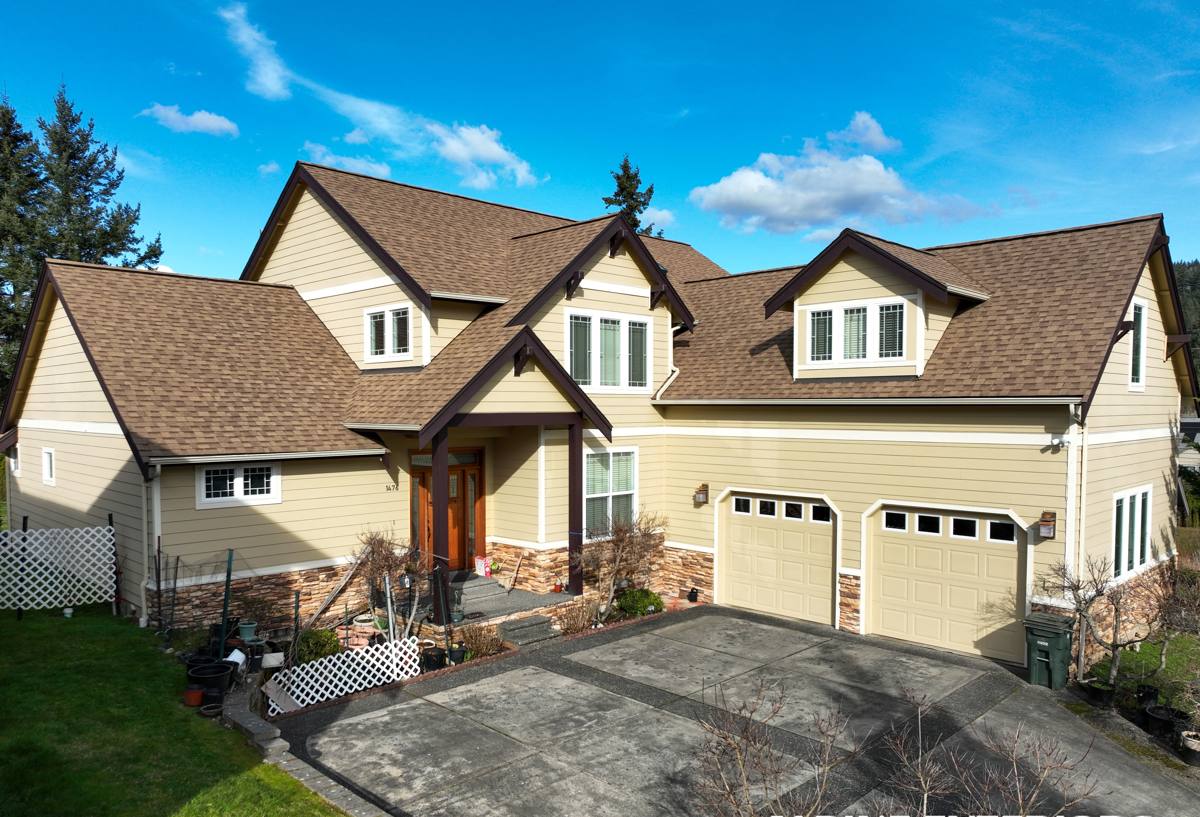
What Columbia's Climate Actually Does to a Roof
Salt Air and Metal Fatigue
Homes closer to Chuckanut Bay deal with airborne salt that settles on every exposed metal surface — nail heads, flashing, gutter hangers, vent caps. Over time this accelerates corrosion, especially on lower-grade or older galvanized materials. A flashing seam that would last decades inland can start showing pinholes and rust streaks years sooner near the water. Repair work in this area needs to use corrosion-resistant fasteners and flashing, not just whatever matches the roof.
Driving Rain and Wind-Driven Water
Rain here doesn't always fall straight down. Wind off the water pushes it sideways and upward under shingle edges, around chimneys, and into any gap in a roof valley or step flashing. Standard repairs that only address the visible surface — without checking underlayment and flashing laps underneath — often miss the actual entry point. We trace leaks back to where the water is actually getting in, not just where it's showing up on the ceiling.
The Long Moss Season
Whatcom County's wet season stretches long, and shaded, north-facing, or tree-covered roof sections rarely get a real chance to dry out. That's ideal growing conditions for moss and algae, which hold moisture against shingles, lift edges, and clog valleys and gutters. Left alone, moss doesn't just look bad — it shortens the life of the roofing material underneath it and creates the exact damp, layered conditions that lead to rot in the decking below.
Common Repair Issues We See in Columbia Homes
- Moss and algae buildup in shaded valleys, north slopes, and along shingle butt edges
- Corroded or lifted flashing around chimneys, skylights, and roof-to-wall transitions
- Wind-driven leaks at ridge caps and exposed edges facing the prevailing weather
- Clogged or sagging gutters pushing water back up under the roof edge (fascia and drip edge damage)
- Soft or stained decking discovered once a shingle or membrane repair is opened up
- Granule loss on aging asphalt shingles accelerated by constant moisture cycling
- Nail pops and lifted shingle tabs from seasonal freeze-thaw and wind stress
What a Correct Repair Actually Involves
A roof repair that holds up in this climate isn't just about swapping a shingle or caulking a seam. It starts with figuring out why that spot failed in the first place — because if the underlying cause isn't addressed, the same failure shows up again a season or two later.
Diagnosis Before Repair
We inspect the roof surface, the flashing details, the attic or roof deck from underneath where accessible, and the drainage path (gutters, valleys, downspouts) as a system. A leak that shows up in one room can easily originate several feet away, following the roof deck or rafters before dripping down. Guessing at the source wastes time and money.
Matching Materials and Fasteners
Given the salt air near the bay, we use corrosion-resistant flashing and fasteners on repair work rather than mismatched or lower-grade material just because it's on hand. Mixing metals (for example, aluminum flashing against galvanized fasteners) can actually speed up corrosion through galvanic reaction — a detail that matters more here than in drier, inland climates.
Addressing the Moisture Path, Not Just the Symptom
If moss or algae contributed to the damage, we remove it properly (not by pressure-washing, which can strip granules and drive water under shingles) and address the conditions that let it take hold — trapped debris, poor airflow, shaded valleys — so the repair doesn't just get reclaimed by growth within a year or two.
Decking and Structure Checks
Any time a repair opens up the roof surface, we check the decking underneath for soft spots or rot. Patching over damaged decking is a shortcut that fails fast; if we find compromised wood, we'll tell you honestly what it will take to fix it right, and we won't recommend replacing more than what's actually damaged.
Our Repair Process
- Inspection and diagnosis — full roof walk (or ground/attic assessment where a walk isn't safe or necessary), tracing the actual leak or damage path
- Honest scope and estimate — what needs repair, what's cosmetic, what to watch and revisit later
- Repair work — moss and debris removal, flashing replacement, shingle or membrane repair, sealant and fastener work matched to Whatcom County conditions
- Drainage check — gutters, valleys, and downspouts cleared so water actually leaves the roof instead of sitting on it
- Cleanup and walkthrough — debris removed, work explained, and photos or notes on anything worth monitoring
Repair vs. Replacement: How to Tell
Not every roof problem in Columbia needs a full replacement, but it's a fair question to ask before paying for a repair. Here's how we generally think about it:
| Factor | Repair Usually Makes Sense | Replacement Worth Discussing |
|---|---|---|
| Age of roof | Under 15–20 years, good overall condition | Approaching or past expected material lifespan |
| Extent of damage | Localized — one flashing detail, one section of moss/wear | Widespread granule loss, multiple leak points, sagging |
| Decking condition | Solid, dry decking found during inspection | Soft, rotted, or repeatedly wet decking in multiple areas |
| Repair history | First or infrequent repair needed | Same areas requiring repeated repairs year after year |
| Underlayment/flashing system | Still intact and serviceable | Aging, brittle, or failing in multiple locations |
When repair is the right call, we'll say so plainly. When a roof is genuinely past the point where more patching makes financial sense, we'll walk through why — never as a pressure sale, just an honest read of the roof in front of us.
Signs You Likely Need a Roof Repair Soon
- Visible moss or algae streaks, especially on shaded or north-facing slopes
- Granules collecting in gutters or at the base of downspouts
- Water stains or discoloration on interior ceilings, especially after wind-driven rain
- Curling, lifted, or missing shingle tabs
- Rust streaks or visibly corroded flashing around chimneys and vents
- Sagging or slow-draining gutters during heavy rain
- Daylight visible through the roof deck from inside the attic
If more than one of these applies, it's worth getting a look before the next heavy rain stretch rather than after.
Why It Matters to Hire a Crew That Already Works in Columbia
Roof repair advice that works for a dry-climate roof doesn't automatically transfer here. A crew that regularly works Chuckanut and the broader Whatcom County shoreline already knows which fastener grades hold up against salt air, which roof orientations collect moss fastest, and how wind off the bay tends to drive water into a roof compared to a straight-down rain event. That local pattern recognition shortens the diagnosis step and reduces the odds of a repair that looks fine going in but doesn't hold through the next wet season.
It also means we're not guessing at code requirements, typical roofing materials used in the area, or how local weather patterns interact with a specific roof's exposure and shading. That's the kind of detail that separates a repair that lasts from one that needs a second visit.
Get a Free, No-Pressure Estimate
If you're dealing with a leak, visible moss, damaged flashing, or just want a second opinion on a roof issue in Columbia, we're happy to take a look. Use the form below to request a free estimate — no pressure, no obligation, just an honest assessment of what your roof actually needs.