 Chuckanut
 Window Installation in South Hill: Built for Chuckanut's Coastal Climate
South Hill properties sit up and out of the low-lying flats around Chuckanut, which gives homes here a real advantage in views and light — and a real disadvantage when it comes to wind exposure. Elevated, more open lots tend to catch weather that a sheltered, tree-lined street a few blocks down never sees the same way. Add in the salt air drifting off the water, the driving rain that Whatcom County gets for a good chunk of the year, and a moss season that can run nearly year-round on shaded elevations, and you've got a climate that is genuinely harder on window installations than most of the country ever deals with. Windows aren't like siding or roofing panels — they're the point in a wall where the building envelope has the most seams, the most moving hardware, and the most opportunities for water to find its way in if the installation isn't done right.
We install windows throughout Chuckanut and the surrounding Whatcom County area, and on South Hill specifically we treat wind exposure and flashing detail as the two things that actually determine whether a window installation holds up. A well-known window brand installed with rushed flashing will leak on an exposed hillside lot. A more modest window installed correctly, with flashing properly integrated into the surrounding wall, will typically outlast it.
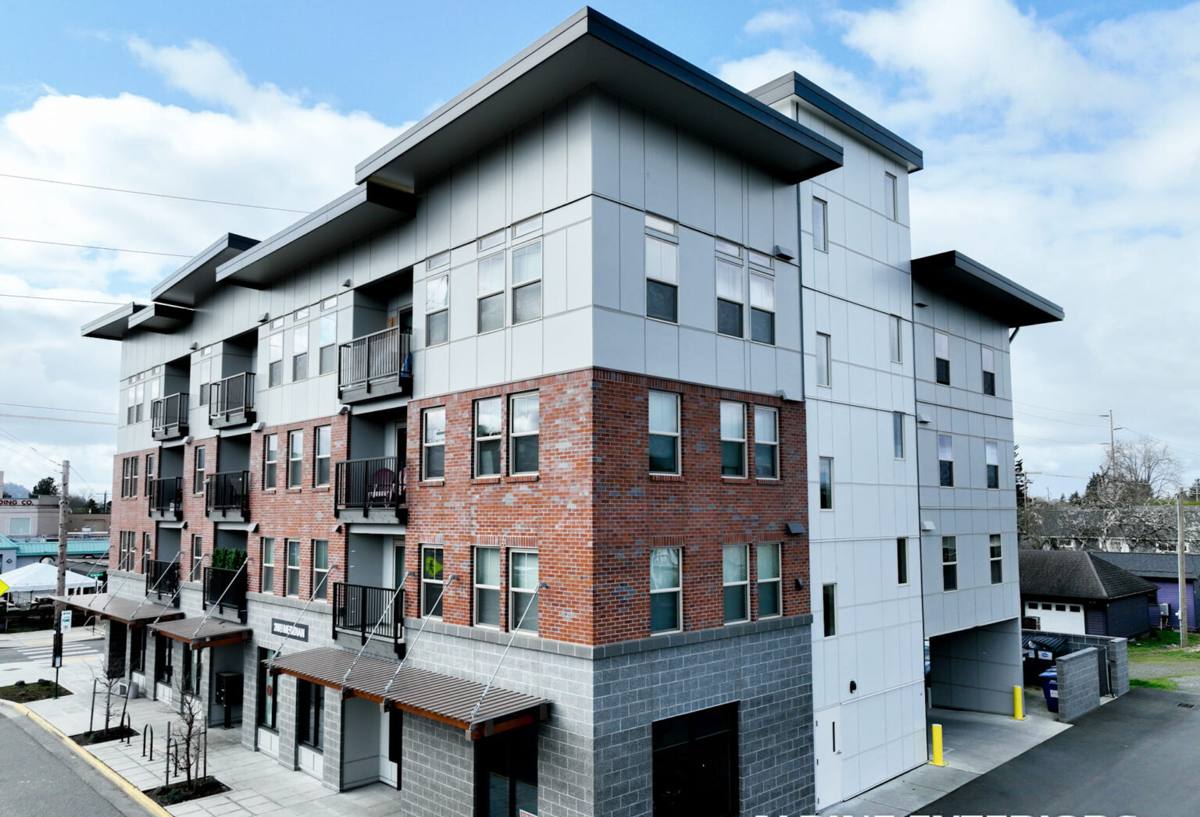
What South Hill's Setting Does to Windows
Elevation and Wind Exposure
Higher, more open ground catches more wind than a sheltered lot lower down, and wind is what turns ordinary rain into wind-driven rain — water pushed sideways into a wall rather than falling straight down onto a roof. That distinction matters enormously for windows, because a window opening that would stay dry under vertical rainfall can still take on water under sideways pressure if the flashing wasn't lapped and sealed correctly. South Hill homes with more exposed siting, especially on south- and west-facing walls, take this kind of pressure more often than homes tucked into a more sheltered pocket of Chuckanut.
Salt Air and Corrosion
Salt-laden air off the water travels further inland than most homeowners expect, and elevated, exposed lots often catch more of it than low-lying, tree-sheltered ones. Over years, that salt air accelerates corrosion on lower-grade window hardware, fasteners, and frame components. It's not usually dramatic — it shows up as hardware that gets stiff, locks that don't turn as smoothly as they used to, or streaking around fasteners that never used to be there.
Long Moss Season and Trapped Moisture
Whatcom County's mild, wet climate supports moss and mildew growth across most of the year, and window sills, trim, and the framing around older windows are common places it settles in. Anywhere water sits instead of draining — a sill with a flat spot, a shaded corner under an eave — becomes a growth surface given enough time. On South Hill, north-facing windows and any elevation shaded by mature trees tend to show this first, even while a sunnier wall on the same house stays relatively clean.
Signs a South Hill Home Needs Window Attention
- Fogging or visible moisture trapped between panes on a double-pane window
- Cold drafts near the frame even when the window is fully latched
- Sills or trim that feel soft, look discolored, or show visible rot
- Hardware that's stiff, corroded, or hard to lock — especially on the more wind-exposed side of the house
- Visible gaps or daylight where the frame meets the siding
- Moss or dark staining building up on sills or lower trim faster than on the rest of the exterior
What a Correct Window Installation Involves
Flashing and Weather Barrier Integration
We spend more time talking about flashing than about window brand names, and on an exposed South Hill lot that emphasis matters even more. Correct installation means the flashing laps in the right order with the weather-resistive barrier and siding around it, water is directed out and away from the rough opening instead of getting trapped behind it, and every seam is sealed with a material rated for sustained wet exposure rather than general-purpose caulk. This is standard on every window we install — not an upgrade a homeowner has to specifically request.
Common Mistakes We See
On repair calls in and around Chuckanut, the window unit itself is rarely the actual point of failure. What we find more often is flashing that was never lapped in the correct sequence, or caulk that was used as the entire weatherproofing strategy instead of a supplement to proper flashing. Caulk alone dries out and cracks over time, especially with the UV and salt exposure a South Hill lot can see, and once it fails it leaves a direct path for wind-driven rain into the wall.
New Openings vs. Existing Wall Retrofits
How a window installation is approached also depends on whether it's going into an existing wall or a new opening. Retrofitting a window into an existing wall means tying new flashing into siding and a weather barrier that's already there, which takes more care to avoid disturbing what's already sealed. A full-frame replacement, where the old frame comes out down to the rough opening, gives more access to inspect and correct flashing that may have been done poorly the first time — which is common on older South Hill homes that haven't had window work done in decades.
| Approach | What It Involves | Best Fit |
|---|---|---|
| Insert / pocket replacement | New window installed into the existing frame; less disruption to siding and trim | Existing frame is sound, dry, and square |
| Full-frame replacement | Old frame removed to the rough opening; flashing and weather barrier reinstalled from scratch | Frame shows rot, past water damage, or poor original flashing |
| New construction opening | Window flashed into a wall assembly with no prior installation to work around | Additions, remodels, or new builds |
Choosing Windows for an Exposed South Hill Lot
We install vinyl and fiberglass window systems suited to a wet, wind-exposed Pacific Northwest climate, and we walk homeowners through the real trade-offs rather than steering everyone toward one brand. What matters most for a South Hill property is a tight, well-engineered frame, a glazing package that handles both energy performance and condensation resistance, and hardware that can take sustained wind and salt exposure without corroding early.
| Factor | Vinyl Frame | Fiberglass Frame |
|---|---|---|
| Upfront cost | Generally lower | Generally higher |
| Rot resistance | Excellent — no organic core | Excellent — no organic core |
| Dimensional stability in temperature swings | Good | Very good — expands and contracts less than vinyl |
| Color and finish flexibility | Limited, typically factory colors only | Can usually be painted or refinished |
| Hardware corrosion resistance | Depends on hardware grade specified | Depends on hardware grade specified |
| Best fit | Budget-conscious replacement projects | Larger openings or homes where long-term stability matters most |
Neither frame material solves wind or salt exposure on its own — hardware grade and installation quality do most of that work. A vinyl window with corrosion-resistant hardware and correct flashing will outperform a fiberglass window installed carelessly, and vice versa.
Our Process
We start with an on-site look at the existing windows: frame condition, seal integrity, hardware function, and how the current flashing ties into the siding around each opening. From there we give a straight read on which windows are reasonable to repair and which make more sense to replace, along with a written scope before anything starts. Flashing and drainage detailing are handled as standard practice on every job we do, not offered as an add-on line item.
A Checklist Before Hiring for Window Work in South Hill
- Ask specifically how they handle flashing integration with the existing siding, not just which window brand they carry
- Confirm current Washington contractor licensing and active liability insurance
- Get a written scope that separates the manufacturer's product warranty from the contractor's installation warranty
- Ask whether each window is a repair or replacement candidate, and why — not a blanket answer for the whole house
- Ask about lead times, since sized-to-opening windows in this region can take several weeks to arrive before installation starts
Why a Crew That Already Works South Hill Matters
A contractor who works this part of Chuckanut regularly already knows how wind and salt exposure behave differently on an elevated, open lot compared to a sheltered street below. That understanding shows up in small decisions that aren't visible after the siding goes back on — how much lap a flashing detail gets, whether caulk is treated as a full seal or a backup, what hardware grade gets specified for a west-facing wall that takes the worst of the weather. Those decisions are what actually separate a window installation that holds up through one wet Whatcom County winter from one that holds up through many.
If you're dealing with drafty, foggy, or hard-to-operate windows on a South Hill property, or you're planning new openings for an addition or remodel, we're happy to take a look and give you a straightforward assessment. Reach out below for a free, no-pressure estimate.