 Chuckanut
 Why Fairhaven Roofs Age Differently
Fairhaven sits close to the water, and that changes what a roof has to put up with year after year. Salt-laden air off the bay works into fasteners, flashing, and exposed metal faster than it does a few miles inland. Add Whatcom County's long wet season — steady driving rain that finds every weak seam — and a moss season that can run most of the year in shaded, north-facing sections, and you have a climate that's genuinely tougher on roofing than the regional average. None of this means a roof is doomed early. It means the materials, the flashing details, and the maintenance plan all need to be chosen with that combination of salt, rain, and moss in mind, not just picked off a generic spec sheet.
A roof replacement done right for this neighborhood looks different from one done for a dry, inland lot. The underlayment, the fastener hardware, the ventilation balance, and the moss-resistance of the shingle itself all matter more here than they would somewhere drier and further from the shoreline.
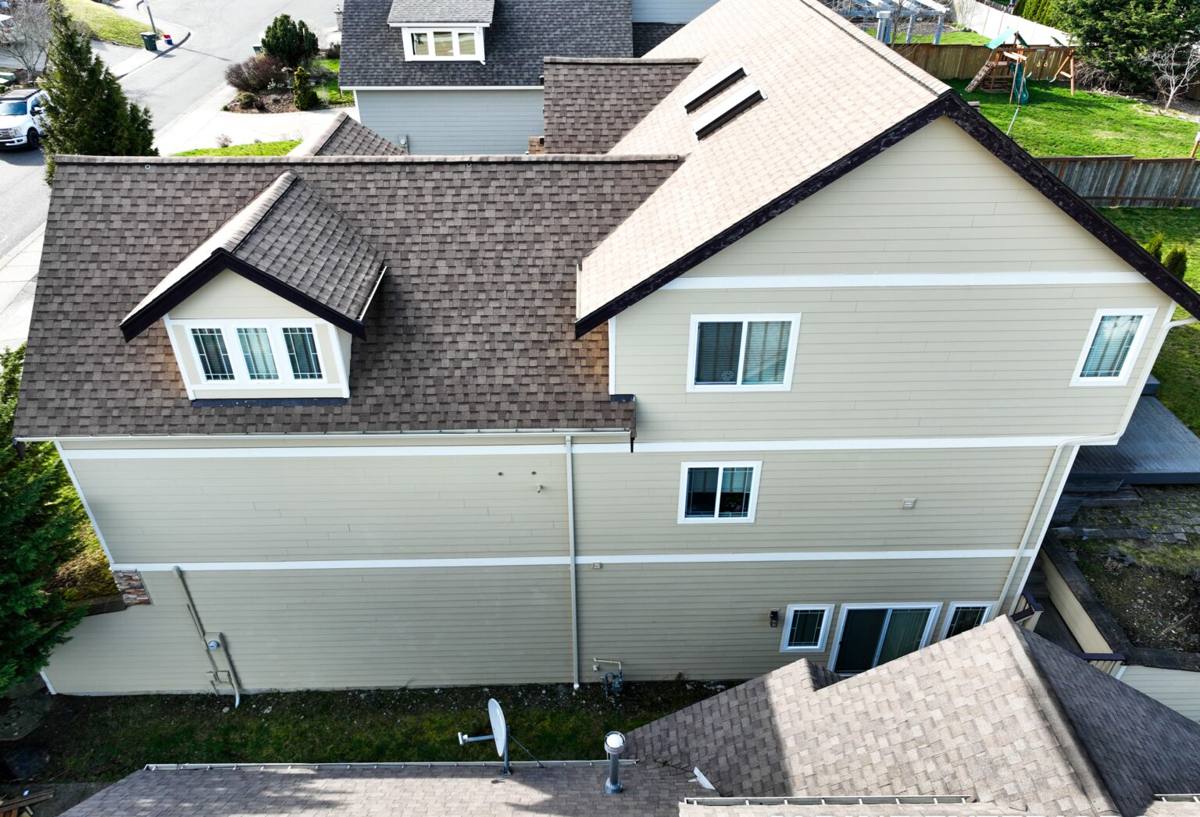
Signs a Fairhaven Roof Is Telling You It's Time
Roofs rarely fail all at once. They give warnings first, and in a wet, salt-exposed neighborhood those warnings often show up earlier than homeowners expect. Watch for:
- Granule loss showing up in gutters or at downspout outlets after storms
- Shingles that are cupping, curling at the edges, or look brittle
- Dark streaking or thick moss growth, especially on shaded slopes
- Soft spots, sagging, or a roofline that no longer looks straight
- Rust staining or corrosion around flashing, vents, or metal valleys
- Daylight visible through the roof deck from the attic
- Water stains on ceilings or in the attic after heavy rain
- Missing or lifted shingles after a windstorm
Any one of these can sometimes be handled with a repair. Several at once, or a roof that's already near the end of its expected service life, usually means replacement is the more honest recommendation — repeated patch repairs on a roof that's structurally tired end up costing more over time than doing the job once, correctly.
What a Correct Roof Replacement Actually Involves
Tear-Off and Deck Inspection
A proper replacement starts with a full tear-off down to the deck, not a layover on top of old shingles. This is the only way to actually see the plywood or OSB underneath — and in a wet climate, that inspection matters. Any soft, delaminated, or water-damaged decking gets identified and replaced before anything new goes down. Skipping this step to save time is one of the most common shortcuts in the trade, and it's the one that causes the most expensive problems five or ten years later.
Underlayment and Water Protection
Underlayment is the roof's real waterproofing layer — the shingles are the weather shell, but the underlayment is what keeps you dry if wind-driven rain ever gets underneath them. For a Fairhaven roof, that means synthetic underlayment across the field and self-adhered ice-and-water membrane at the vulnerable points: eaves, valleys, and any low-slope transitions. This detail matters more here than in a drier inland town, because driving rain off the water can push moisture uphill under shingles in ways a light inland rain never does.
Flashing, Vents, and Penetrations
Flashing is where most roof leaks actually start, not in the open field of shingles. Chimneys, skylights, plumbing vents, and sidewall transitions all need new, correctly lapped flashing — not caulk smeared over old, corroded pieces. In a salt-air environment, the choice of flashing metal matters too; some fastener and flashing materials corrode faster near the water, and part of doing this job correctly is choosing hardware that's rated to hold up to that exposure rather than the cheapest option on the shelf.
Ventilation Balance
A roof needs balanced intake and exhaust ventilation to work as designed. Get it wrong and you trap moisture in the attic, which shortens shingle life from underneath and creates the damp, dark conditions moss and algae prefer. This gets covered in more detail below, because it's one of the most overlooked parts of a replacement.
Choosing Materials for Salt Air and Moss
There's no single "best" roofing material for every home — the right choice depends on the roof's slope, sun exposure, budget, and how much maintenance the homeowner wants to take on. Here's how the common options compare for a coastal Whatcom County home:
| Material | Salt Air Resistance | Moss Resistance | Maintenance Level |
|---|---|---|---|
| Architectural asphalt shingle (algae-resistant) | Good, with proper flashing hardware | Good — copper or zinc granules built in | Low to moderate |
| Standard 3-tab asphalt shingle | Fair | Fair — no built-in algae resistance | Moderate |
| Standing seam metal | Very good, with correct coatings and fasteners | Very good — sheds moisture, little for moss to hold onto | Low |
| Cedar shake | Fair — needs regular treatment near salt air | Poor without diligent upkeep | High |
Our standard recommendation for most Fairhaven homes is an architectural shingle with built-in algae resistance, paired with corrosion-appropriate flashing and fasteners. It gives the best balance of upfront cost, appearance, and low-maintenance performance in this specific climate. Metal is a strong option for homeowners who want the lowest long-term maintenance and are comfortable with the higher upfront cost. We steer most clients away from cedar shake for this location — not because it's a bad product everywhere, but because keeping it performing well this close to the water requires a maintenance commitment most homeowners don't want to sign up for.
Fastener and Flashing Hardware
It's worth calling out separately: two roofs with identical shingles can age very differently based on the hardware underneath. Near the water, we favor stainless or hot-dip galvanized fasteners and corrosion-resistant flashing metals over standard-grade hardware, because standard hardware simply corrodes faster in salt air. It costs a little more up front and pays for itself many times over in avoided rust stains, loosened shingles, and early flashing failures.
Ventilation and Moisture: The Overlooked Half of the Job
Homeowners tend to focus on the shingle color and skip past ventilation, but it's arguably just as important to how long the roof lasts. Warm, moist air rises into the attic and needs somewhere to escape; if it can't, it condenses against the underside of the roof deck. Over a Whatcom County winter, that trapped moisture can rot decking from the inside, and it also creates exactly the cool, damp, shaded conditions moss and algae thrive in.
A correct replacement re-evaluates the whole ventilation system — soffit intake vents, ridge or box exhaust vents, and any obstructions like blown-in insulation blocking the soffits — rather than just replacing the shingles and leaving the old vent setup in place, whether or not it was ever sized correctly for the house.
Moss Prevention and Long-Term Roof Care
Given how long moss season runs in this part of the county, no roof here should be considered "install and forget." A few habits make a real difference in how long a new roof holds its performance and appearance:
- Keep gutters clear so water doesn't back up under the shingle edge
- Trim back overhanging branches to cut down on shade and debris buildup
- Have moss physically removed rather than power-washed off, which can strip granules
- Schedule a roof check after major windstorms, not just once a year
- Watch north-facing and heavily shaded slopes most closely — they moss up first
Zinc or copper strips near the ridge can also help suppress moss regrowth on algae-resistant shingles over time, and we're happy to talk through whether that's worth adding for a particular roof's exposure.
Our Roof Replacement Process
1. On-Site Inspection and Honest Assessment
We start by getting on the roof, not just looking at it from the ground. We check the deck condition where accessible, the current ventilation setup, flashing condition, and how much moss or algae growth is already present, then tell you plainly whether replacement makes more sense than repair.
2. A Clear, Written Estimate
You get a detailed estimate that spells out materials, scope, and price — no vague allowances that turn into surprise add-ons once the tear-off starts.
3. Site Protection and Prep
Landscaping, siding, and gutters get protected before tear-off begins, and debris is contained and hauled off the same day whenever the schedule allows.
4. Tear-Off, Deck Repair, and Installation
Full tear-off, deck inspection and repair as needed, new underlayment and ice-and-water membrane at vulnerable points, new flashing, correct ventilation, and the new roofing material installed to manufacturer specification.
5. Final Walkthrough
We walk the property with you afterward, cover care and maintenance specific to the material installed, and make sure everything — gutters, downspouts, vents — is reconnected and working correctly before we call the job done.
What Drives the Cost of a Roof Replacement
Every roof is different, so we won't quote a number without seeing yours, but these are the factors that actually move the price up or down:
| Cost Factor | Why It Matters |
|---|---|
| Roof size and number of facets | More square footage and more cuts around valleys and hips means more labor and material |
| Deck condition | Rotted or soft decking found during tear-off adds repair cost, but skipping it costs far more later |
| Material choice | Architectural asphalt, metal, and cedar carry different material and labor costs |
| Roof pitch and access | Steep or hard-to-access roofs take longer and require more safety setup |
| Ventilation upgrades | Correcting an undersized or unbalanced system adds modest cost but protects the whole investment |
| Flashing and penetration count | Chimneys, skylights, and multiple vent penetrations each add detail work |
As a broad guide, a straightforward asphalt shingle replacement on an average home typically runs into the low-to-mid five figures, with metal roofing costing more upfront and cedar landing somewhere between the two — but the only reliable number is one based on an actual look at your roof.
Why It Matters That We Already Work in Fairhaven
A crew that's replaced roofs throughout this neighborhood already knows how the salt air, the rain patterns off the bay, and the shade from mature trees behave on these specific homes. That's not a small thing — it means fewer surprises during tear-off, flashing and fastener choices that are already dialed in for this exposure, and a realistic sense of how a given roof's orientation and shade pattern will affect moss growth down the road. It also means we're not guessing at permitting or working through unfamiliar site conditions for the first time on your project. Local, repeat experience in one specific neighborhood adds up to fewer callbacks and a roof that's built for the conditions it will actually face, not generic conditions from a manufacturer's spec sheet.
If your roof is showing its age, or you just want a straight answer on whether repair or replacement makes more sense for your home, we're glad to take a look. Reach out using the form below for a free, no-pressure estimate — no obligation, just an honest read on where your roof stands.