 Chuckanut
 Why Silver Beach Roofs Wear on Their Own Timeline
Silver Beach homes don't age the way a roof three states inland does. Whatcom County's marine climate means this roof is dealing with salt-laden air, long stretches of driving rain off the water, and a moss season that can run most of the year in shaded spots. None of those things show up on a manufacturer's warranty chart, but they're exactly what determines how long a roof actually lasts on this street versus a spec sheet in a catalog.
Salt air accelerates corrosion on exposed metal — fasteners, flashing, vent caps, gutter hardware — faster than it does even twenty or thirty miles inland. Driving rain doesn't fall straight down here; wind off the water pushes it sideways under shingle tabs and into laps that were only ever designed to shed water moving vertically. And moss doesn't just look bad — it holds moisture against the roof deck for weeks at a time, which is where slow rot and premature granule loss actually start. A roof replacement done for a Silver Beach home has to account for all three, not just meet a generic code minimum.
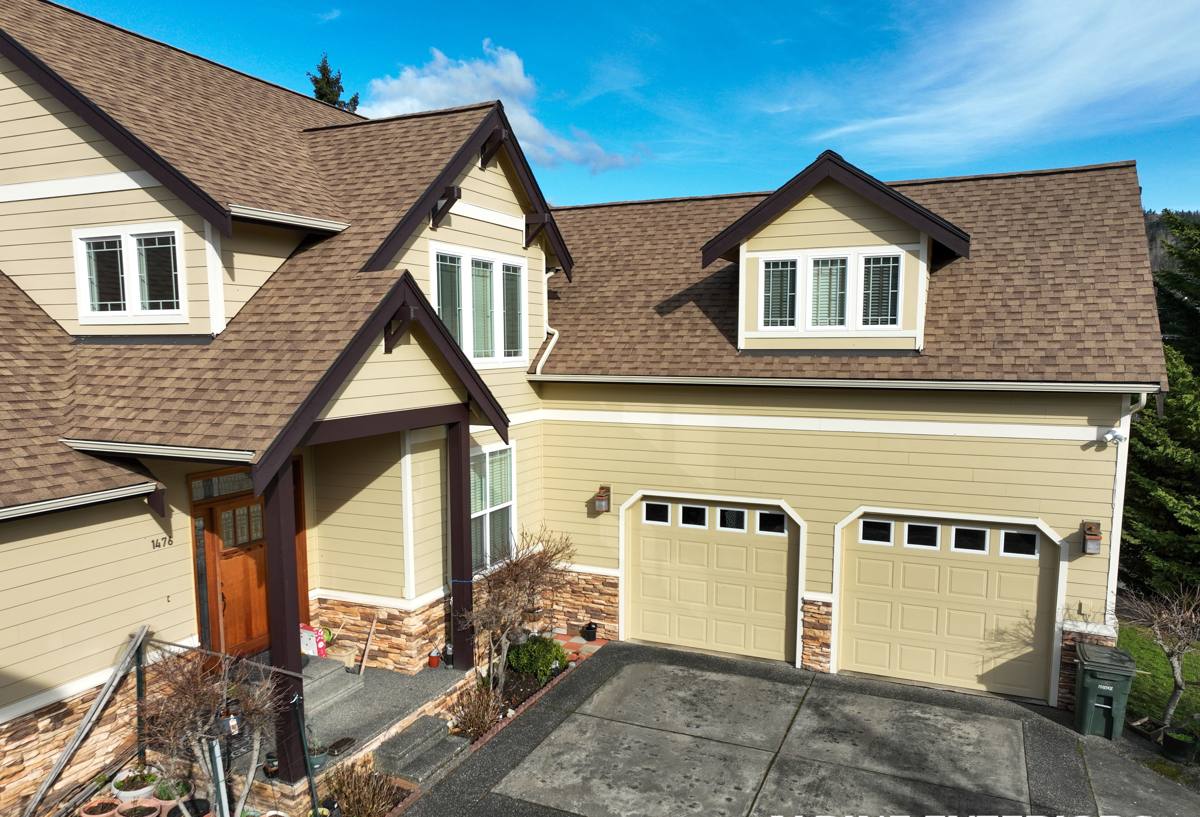
Signs It's Time to Replace, Not Repair Again
Roof repair makes sense when a problem is localized — a cracked pipe boot, a section of lifted shingles after a windstorm. Replacement becomes the honest recommendation when the damage is systemic. Here's how we tell the difference on a Silver Beach roof:
- Granule loss is widespread, not just on one slope — shingles have lost their protective coating and are drying out and curling across most of the roof
- Moss has been scraped or treated more than once and keeps coming back in the same shaded valleys or north-facing slopes
- Flashing around chimneys, vents, or wall intersections is rusted, separated, or was never step-flashed correctly to begin with
- There's daylight or water staining visible in the attic, especially near eaves or valleys — a sign driving rain is getting past the roofing system, not just pooling on top of it
- The roof is 20+ years old and shows the granule and edge wear typical of a shingle roof that's used up its service life in this climate — often faster than the same product would age somewhere drier
If only one or two of those apply, repair is usually still the right call. If several apply at once, patching individual spots just delays a full failure and spends money that would have gone toward the replacement anyway.
What Homeowners Often Miss
The roof surface is the part everyone notices, but the ventilation and underlayment underneath it are what actually determine how well a new roof holds up here. A roof that looks fine from the ground can still be failing from the inside if intake and exhaust airflow were never balanced, or if the underlayment beneath the shingles wasn't rated for the amount of wind-driven moisture this area sees.
What a Correct Roof Replacement Involves
A roof replacement is more than stripping old shingles and nailing down new ones. Done right, for a home in this climate, it includes:
Tear-Off and Deck Inspection
Full removal of the old roofing down to the deck, so the sheathing can actually be inspected — not just assumed sound. Any soft, delaminated, or moisture-damaged plywood gets replaced before anything new goes down. Covering a compromised deck with new shingles just hides the problem for another few years.
Underlayment Suited to Driving Rain
A synthetic or self-adhered underlayment appropriate for wind-driven rain, with extra attention paid to eaves, valleys, and any wall-to-roof transitions where water pressure is highest during a real storm — not just a light drizzle.
Flashing Done Properly
Step flashing at walls and chimneys, correctly lapped valley flashing, and new metal wherever the old flashing shows corrosion from years of salt exposure. Flashing failures are the single most common cause of "mystery" leaks in older homes, and they're the detail most likely to get rushed on a cheap re-roof.
Balanced Ventilation
Matched intake (soffit) and exhaust (ridge or roof vents) so the attic can actually dry out between rain events. This is what keeps moisture from condensing on the underside of the new deck and feeding future moss and rot from below.
Ice-and-Water Protection at Vulnerable Points
Self-adhered membrane at eaves, valleys, and low-slope transitions — the spots most likely to see standing water or wind-driven rain intrusion during Whatcom County's wetter months.
Choosing the Right Roofing Material for This Location
There's no single "best" roofing material — there's the right material for this home's exposure, slope, and budget. Here's how the common options compare for a Silver Beach property dealing with salt air and moss pressure:
| Material | Moss Resistance | Salt Air Durability | Typical Lifespan Here | Notes |
|---|---|---|---|---|
| Architectural asphalt shingle | Moderate — benefits from algae-resistant granules | Good; fasteners and flashing matter more than the shingle itself | 20-30 years | Best balance of cost and performance for most homes |
| Standing seam metal | Excellent — sheds moss and debris well | Good with coated/coastal-rated finishes; fasteners need corrosion-resistant hardware | 40-50+ years | Higher upfront cost, lowest long-term maintenance |
| Synthetic/composite shingle | Good | Good | 30-40 years | Useful where appearance of shake or slate is wanted without the maintenance |
| Cedar shake | Poor without diligent upkeep | Moderate — needs regular treatment near salt air | 15-25 years realistically in this climate | We'll install it if requested, but we're upfront about the maintenance commitment it demands here |
We're not going to tell a homeowner cedar shake is a bad product — plenty of people love the look. But in a climate with this much moss pressure and moisture, it's fair to know going in that it asks for more attention than asphalt or metal, and we'll say so before the contract is signed, not after.
How Our Replacement Process Works
- On-site inspection and estimate. We walk the roof (or use a lift/drone where pitch or access requires it), check the attic for ventilation and moisture signs, and give a written estimate — no pressure, no hard sell.
- Material selection. We go over the trade-offs in plain terms — cost, lifespan, maintenance — so the choice fits the home and the budget, not just what's easiest to sell.
- Scheduling around the weather. Roofing in a marine climate means watching the forecast closely. We plan tear-off in sections when needed so the deck is never left exposed longer than necessary.
- Tear-off and deck repair. Old roofing comes off, the deck gets inspected, and any damaged sheathing is replaced before anything new goes down.
- Underlayment, flashing, and ventilation installed correctly. This is the stage that determines how the roof performs in year 10, not just how it looks in year one.
- New roofing installed to manufacturer spec. Proper nailing patterns, exposure, and fastening — details that matter more for wind and rain performance than they get credit for.
- Final walkthrough and cleanup. Site cleared of debris and nails (magnetic sweep included), and we walk the finished roof with the homeowner before calling the job done.
Cost Factors for a Silver Beach Roof Replacement
Every roof is priced individually, but the same handful of factors move the number up or down on most jobs in this area:
| Factor | Why It Matters |
|---|---|
| Roof size and number of planes/valleys | More cuts, flashing, and seams mean more labor and material |
| Current deck condition | Rotted or delaminated sheathing found during tear-off adds material and labor to replace it |
| Material choice | Asphalt, metal, and synthetic options carry different upfront costs and lifespans |
| Pitch and access | Steep or hard-to-access roofs require more safety setup and time |
| Existing ventilation setup | Adding or correcting intake/exhaust venting is worth the modest added cost to protect the new roof |
| Layers of old roofing to remove | Tear-off of multiple layers takes longer than a single-layer strip |
We'd rather walk a homeowner through these factors on-site and give an honest number than quote a low estimate over the phone that grows once we're up on the roof.
What to Expect During the Project
Most residential roof replacements in this area take one to a few days depending on size and weather. We keep the work area contained, protect landscaping and driveways, and do a final magnetic nail sweep before we consider the job finished. Noise and some debris are unavoidable during tear-off — we let homeowners know the schedule ahead of time so there are no surprises. If weather moves in mid-project, the roof is never left open; sections are protected or completed before we stop for the day.
Why Local Experience in Silver Beach Actually Matters
A roofing crew that works this specific area regularly knows which slopes tend to hold moss longer, which parts of a roof take the worst of the wind-driven rain in a winter storm, and how salt exposure shows up differently on hardware here than it does even a short distance inland. That's not something a crew coming from outside the county picks up on the first visit — it's pattern recognition built from doing this work on homes like this one, in this weather, repeatedly. It affects where we pay extra attention during tear-off, which flashing details we don't cut corners on, and how we talk homeowners through material choices that will actually hold up here rather than just on paper.
Protecting the Investment After Installation
A correctly installed roof still benefits from basic upkeep, especially in a climate that pushes moss and moisture this hard. A simple annual routine goes a long way:
- Clear moss and debris from valleys and north-facing slopes before it has a chance to establish, rather than after it's visible from the street
- Keep gutters clear so water isn't backing up under the lowest course of shingles during heavy rain
- Trim back overhanging branches that keep shaded areas of the roof damp longer than the rest
- Have flashing and roof penetrations (vents, chimneys) visually checked every year or two, since these are the first places a leak tends to start
- Address small issues — a lifted shingle tab, a small moss patch — while they're still small repairs
None of that replaces a professional inspection, but it's the difference between a roof that reaches the top end of its expected lifespan and one that needs attention years early.
If a Silver Beach roof is showing its age or you just want an honest opinion on whether it's a repair or a replacement, we're happy to take a look. The estimate is free, there's no pressure, and you'll get a straight answer either way — the form below gets you on the schedule.