 Chuckanut
 Why Samish Windows Take a Different Kind of Beating
If you live in the Samish area, you already know your windows work harder than windows do most other places. You're close enough to Puget Sound and Chuckanut Bay to get salt-laden air pushing against every south and west-facing wall. You get long stretches of driving, wind-blown rain rather than gentle vertical rain, which finds gaps that a dry-climate window installation would never expose. And you get a moss and mildew season that runs most of the year, not just a few weeks — anything that traps moisture against wood or vinyl stays wet longer here than it does inland.
None of that means you need exotic windows. It means the details of the installation — the flashing, the sealant choice, the way the window ties into your siding and weather-resistive barrier — matter more here than they would in a drier part of the state. A window that's "fine" in Spokane can fail in five years on a Samish-facing wall if it wasn't installed with this climate in mind.
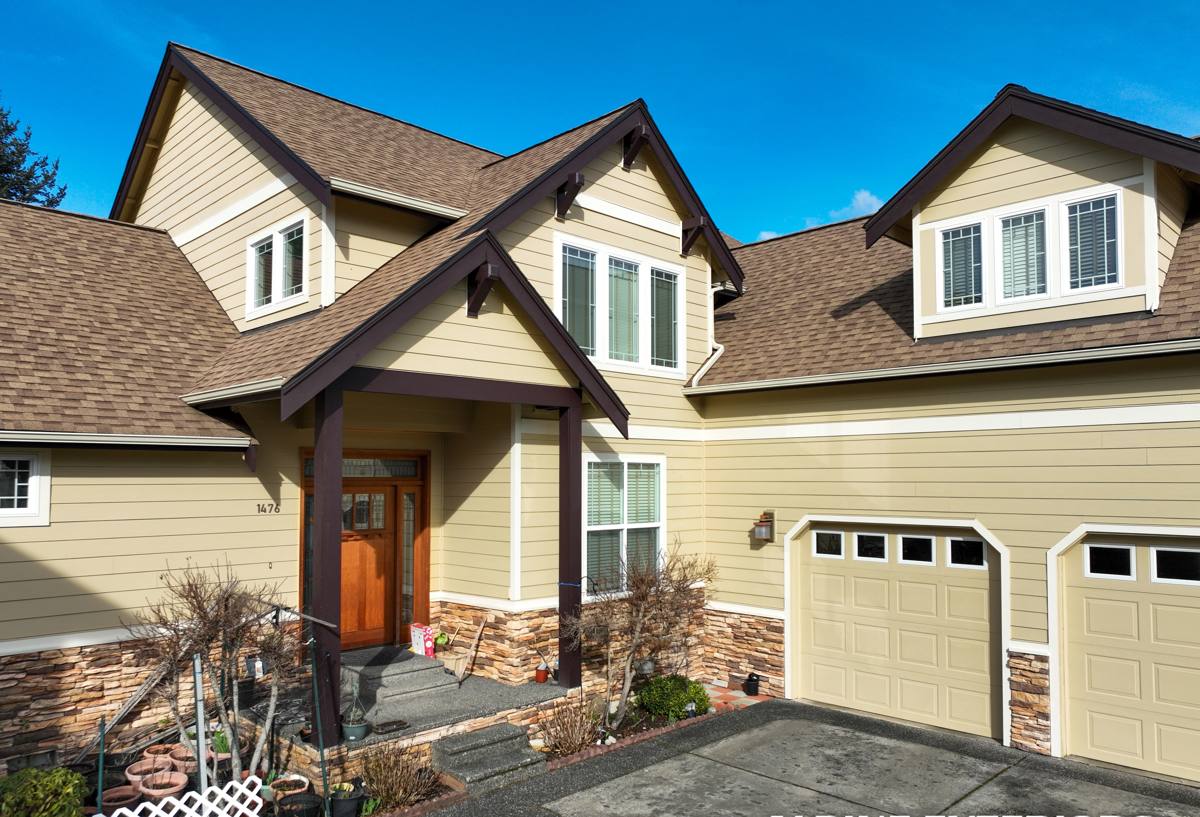
What "Custom" Actually Means on a Job Like This
Custom doesn't have to mean unusual shapes or high-end finishes, though it can. On most Samish homes, custom windows means windows built to the exact rough opening of your house rather than forcing your house to fit a stock size. Older homes in this area, especially anything built before modern window standards, often have openings that are slightly out of square or sized for windows that haven't been made in decades. Custom sizing gets you a tighter, better-sealed fit without cutting into framing you don't want touched.
Retrofit vs. Full-Frame Replacement
There are two honest ways to replace a window, and which one is right depends on the condition of what's underneath the old unit, not on preference:
- Retrofit (insert) replacement — the new window is built to fit inside the existing frame. Faster, less invasive, and often the right call when the surrounding wood is sound and the siding is staying put.
- Full-frame replacement — the old frame comes out entirely, down to the rough opening. This is the right call when there's rot, when the siding around the opening is being replaced anyway, or when the window is undersized and you want more glass.
A contractor who tells you which one you need before opening anything up isn't being thorough — they're guessing. A proper assessment means pulling trim or siding at the opening to actually look at the sheathing and framing before quoting a method.
Frame Material Options
For this climate, the frame material choice is really a moisture-and-maintenance decision more than a style decision. Vinyl, fiberglass, and clad-wood all show up in Whatcom County homes, and each has a different relationship with salt air and constant damp.
Where We See Windows Fail Around Samish
Most window failures we're called out for aren't glass failures — they're installation or sealant failures. The pattern repeats:
- Failed exterior caulk joints letting wind-driven rain behind the trim, which then travels down inside the wall before it ever shows as a visible stain
- Missing or improperly lapped flashing at the head of the window, so water that should shed onto the siding instead gets directed behind it
- Condensation between the glass panes on older insulated units, which usually means the seal on the glass unit itself has failed and the window needs replacing, not just re-caulking
- Soft or rotted framing at the sill, often from years of a marginal seal slowly letting moisture in rather than one dramatic leak
The common thread is that almost none of these show up right away. A poorly flashed window can look fine for two or three winters before the damage underneath becomes visible or the trim starts to feel soft. That's exactly why the installation details matter more than the window brand.
What a Correct Installation Actually Involves
A window is only as good as its integration with the wall around it. The steps that actually determine whether a window performs for the next 20+ years in this climate are:
- Flashing sequence — sill pan flashing first, then jamb flashing, then head flashing, each one lapped over the layer below it so water is always directed outward and down, never trapped.
- Tie-in to the weather-resistive barrier — the window flashing needs to integrate with your house wrap or building paper, not just sit on top of it. This is the step that gets skipped most often on rushed jobs.
- Backer rod and sealant, not sealant alone — a bead of caulk over a gap that's too wide will crack and fail within a season or two. A backer rod sized to the gap gives the sealant something to bond to properly.
- Shimming and squaring — a window that's slightly racked in the opening will bind, won't seal evenly, and will wear its weatherstripping unevenly.
- Interior air sealing — foam or sealant on the interior side of the rough opening stops conditioned air from leaking out and humid indoor air from condensing inside the wall cavity.
Any one of these done wrong can undo the benefit of an expensive, well-made window. This is also why we treat window replacement and siding work as connected — if we're already at the wall, it's the right time to check and correct flashing, not patch around a problem and leave it for the next contractor.
Comparing Frame Materials for This Climate
| Material | Moisture / Salt-Air Resistance | Maintenance | Typical Lifespan |
|---|---|---|---|
| Vinyl | Doesn't rot or corrode; performs well near salt air | Low — occasional cleaning | 20–30 years |
| Fiberglass | Very stable in wet/salty conditions, minimal expansion or contraction | Low | 30+ years |
| Wood-clad (wood interior, metal or vinyl exterior) | Good if exterior cladding and seals stay intact; vulnerable if cladding is breached | Moderate — watch seams and corners | 20–30 years, cladding-dependent |
| Solid wood | Weakest option for direct salt-air and driving-rain exposure without diligent upkeep | High — regular repainting/sealing | Varies widely with maintenance |
We don't push one material on every home. A shaded, wind-protected wall can carry a wider range of options than a wall that takes the brunt of weather off the water. Part of the estimate conversation is walking your house and being honest about which walls need the more forgiving material and which can work with whatever fits your budget or style.
Our Process, Start to Finish
- On-site assessment — we look at existing window condition, framing, and how each wall is exposed to weather before recommending anything.
- Honest scope — retrofit vs. full-frame, and which walls (if any) need extra attention to flashing or siding tie-in.
- Written estimate — materials, method, and timeline spelled out, no surprise change orders for things we could have caught during assessment.
- Installation — proper flashing sequence, sealing, and shimming as described above, with siding patched or integrated cleanly around the new unit.
- Walkthrough — we check operation, look at the finished exterior seal, and make sure everything closes and locks the way it should before we call it done.
What Drives the Cost
Broad ranges only, since every house and opening is different, but the factors that actually move the price are:
- Retrofit vs. full-frame replacement — full-frame costs more but is sometimes the only correct fix
- Frame material and glass package (standard double-pane vs. upgraded low-E or gas-filled units)
- Condition of the framing once opened up — hidden rot adds cost, but it's cheaper to fix now than to seal over
- Number of windows done at once — doing several on the same wall or same trip is more efficient than one-offs
- Trim and siding work needed to finish the opening cleanly
Why It Matters to Hire a Crew That Already Works in Samish
Window installation isn't regionally exotic, but the judgment calls are. Knowing that a west-facing wall near the water needs a more conservative sealant approach than a sheltered wall on the same house, knowing what condition to expect when you open up a wall on an older Whatcom County home, and knowing how local moss and moisture patterns actually behave over a full year rather than a single dry summer — that's the kind of thing you learn by working houses in this specific area, not from a general contracting background. It also means we're not guessing at permitting or inspection expectations for Chuckanut and the surrounding county — we've been through it before.
Signs It Might Be Time to Replace, Not Just Reseal
- Visible fog or moisture between glass panes (failed insulated glass seal)
- Soft, spongy, or discolored wood at the sill or jamb
- Windows that are difficult to open, close, or lock properly
- Noticeable draft or cold spot near the window even when it's fully closed
- Paint or caulk that keeps failing in the same spot within a year or two of being redone
- Visible daylight or gaps around the frame from outside
If you're only seeing one or two of these and the framing underneath is sound, a repair or reseal may genuinely be all you need — we'll tell you that instead of upselling a full replacement you don't need yet.
If you're weighing whether your Samish home needs custom window replacement, a repair, or just a closer look, we're glad to come take an honest look and give you a straightforward, no-pressure estimate — use the form below to get started.