 Chuckanut
 Why Roofs in Samish Wear Faster Than You'd Expect
Samish sits close enough to open water and shoreline weather that roofs here take a different kind of beating than roofs twenty miles inland. It's not one big storm that does the damage — it's the steady combination of salt-laden air, wind-driven rain, and a moss season that runs longer than most homeowners realize. Individually, none of these is dramatic. Together, year after year, they shorten the useful life of a roof that wasn't built or installed with this specific climate in mind.
Salt air is the one people underestimate most. It doesn't just affect homes right on the water — moisture carrying salt travels inland on prevailing winds and settles on metal flashing, fasteners, and vent components. Over time it accelerates corrosion on anything that isn't rated for coastal exposure, which is exactly the kind of detail that gets skipped on a rushed install. Add Whatcom County's wet season, when rain comes sideways as often as it comes straight down, and you've got a climate that punishes weak flashing, undersized underlayment, and poor ventilation faster than a drier region would.
Then there's moss. Samish gets enough shade, humidity, and cool, damp stretches that moss isn't an occasional nuisance — it's a recurring maintenance item for most homes in the area. A roof system that doesn't account for airflow and drainage from day one will grow moss faster, hold moisture longer, and need more frequent intervention than one that was installed with this climate in mind from the start.
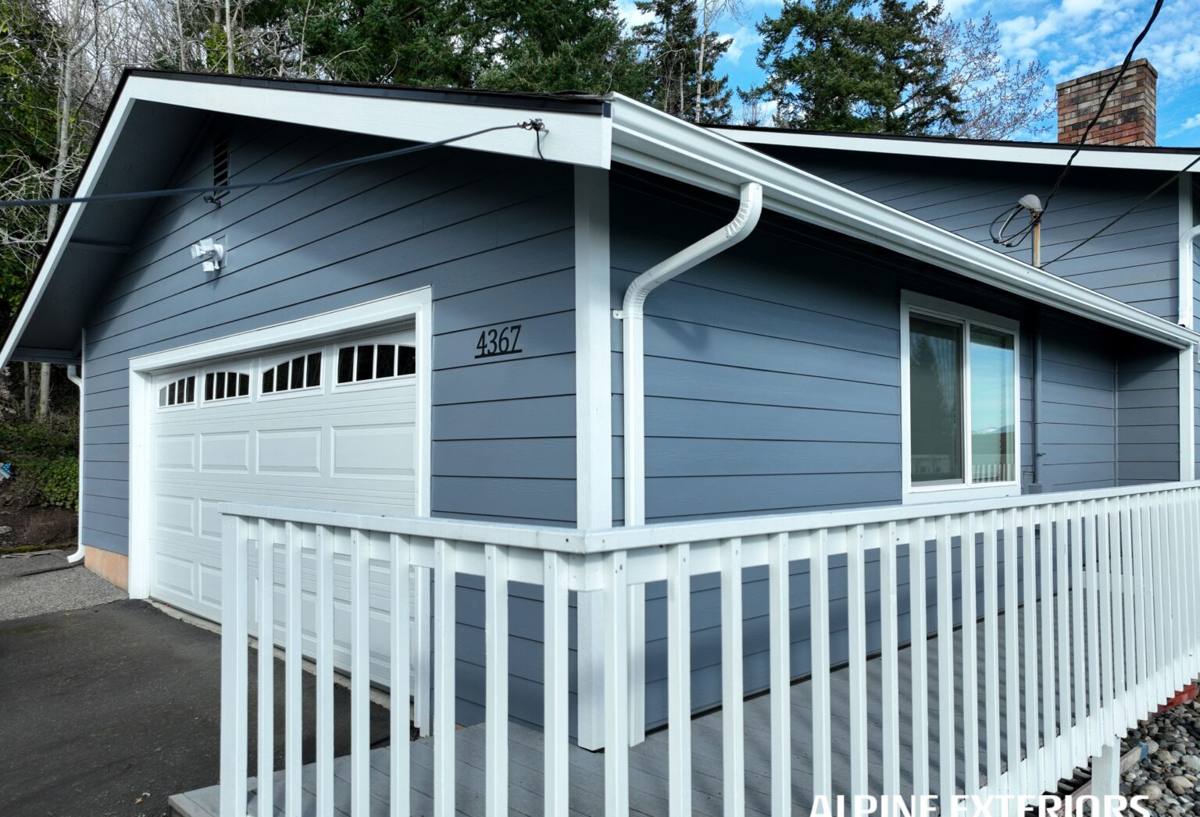
What a Correct New Roof Installation Actually Involves
"New roof" sounds simple, but a correct installation is really a sequence of smaller decisions, each of which matters more here than it would in a milder climate. Skipping or rushing any one of them is how a roof that looks fine on installation day starts leaking, staining, or growing moss within two or three winters.
Tear-Off and Deck Inspection
We remove the old roofing down to the deck rather than layering over it. Layering hides problems — soft spots, old leaks, rot around penetrations — and traps moisture between layers, which is the last thing you want in a climate this wet. Once the deck is exposed, we inspect it for water damage and replace any sheathing that's soft, delaminated, or otherwise compromised before anything new goes down.
Underlayment and Water Protection
This is the layer that actually keeps a home dry when wind drives rain up under the shingle or panel edges — which happens regularly here. We use synthetic underlayment rated for the exposure, with self-adhered ice-and-water membrane at vulnerable points: eaves, valleys, and around any roof penetration. In a driving-rain climate, this layer is doing more of the real work than most homeowners assume.
Flashing Details That Matter Near Salt Air
Flashing around chimneys, skylights, sidewalls, and valleys is where most roof leaks actually start — not in the open field of the roof. Near salt air, the fastener and flashing material matters as much as the installation technique. We use corrosion-resistant flashing and fasteners appropriate for coastal exposure rather than standard-grade hardware that can start rusting within a few seasons.
Ventilation to Fight Moisture and Moss
Proper intake and exhaust ventilation keeps the underside of the roof deck dry and regulates temperature, which slows moss growth and prevents the kind of trapped moisture that leads to rot and mold in the attic. A roof that "breathes" correctly also helps shingles last longer, since heat and moisture trapped under the deck cook a roof from underneath just as much as weather beats it from above.
Matching the Roofing Material to Samish's Climate
There's no single "best" roofing material — the right choice depends on your home's exposure, roof pitch, budget, and how much long-term maintenance you're willing to do. Here's how the common options generally compare for a home in this climate.
| Material | Upfront Cost | Moss & Moisture Behavior | Salt Air Durability | Typical Lifespan |
|---|---|---|---|---|
| Architectural asphalt shingle | Moderate | Good with proper ventilation; needs periodic cleaning | Good, with corrosion-resistant flashing/fasteners | 25–30 years |
| Standard three-tab shingle | Lower | Fair; wears faster in constant damp shade | Fair; more sensitive to wind uplift | 15–20 years |
| Standing seam metal | Higher | Excellent; sheds moisture, resists moss | Very good with coastal-rated coatings | 40–50 years |
| Cedar shake | Higher | Requires diligent maintenance to resist moss/rot | Fair; needs regular treatment | 20–30 years with upkeep |
For most Samish homes, we lean toward architectural asphalt shingle or standing seam metal, depending on the roof's exposure and the homeowner's budget and maintenance preferences. We're upfront about the trade-offs of each rather than pushing whatever happens to be easiest to install — cedar shake, for example, can look great, but it demands a level of ongoing maintenance in this climate that not every homeowner wants to sign up for.
Our New Roof Installation Process
Homeowners tend to worry most about surprises — unexpected costs, delays, or a crew that disappears mid-project. Our process is built to avoid all three.
- On-site inspection and estimate. We look at the existing roof, the deck condition where visible, ventilation, and any problem areas before quoting anything.
- Material selection. We walk through the realistic options for your roof's pitch and exposure, with honest pros and cons rather than a single default recommendation.
- Weather-aware scheduling. Given how much rain this area gets, we plan tear-off days around forecasts and stage the work so your home is never left exposed longer than necessary.
- Tear-off and deck inspection. Old roofing comes off, the deck gets inspected, and any needed repairs are addressed before new materials go down.
- Installation. Underlayment, flashing, ventilation, and the roofing material go in, following manufacturer specifications and details suited to coastal exposure.
- Final walkthrough and cleanup. We inspect the finished roof with you, answer questions, and make sure the property is cleared of debris and stray fasteners before we leave.
Fighting Moss and Moisture for the Long Haul
A well-installed roof is the foundation, but a few ongoing habits make a real difference in how long it stays that way in a moss-prone climate like this one.
- Keep overhanging branches trimmed back so the roof gets more sun and airflow, which discourages moss growth.
- Clear gutters and valleys of debris regularly — trapped leaves and needles hold moisture against the roof surface.
- Have moss growth removed gently (not pressure-washed) as soon as it appears, rather than letting it establish and spread.
- Check attic ventilation isn't blocked by insulation or debris, since poor airflow is one of the biggest drivers of moss and premature aging.
- Schedule a roof check after major windstorms to catch lifted shingles or damaged flashing early, before a small issue becomes a leak.
Cost Factors for a New Roof in Samish
Every roof is different, so we don't quote a number without seeing the job, but a few factors consistently move the price up or down:
- Roof size and complexity — more valleys, dormers, and penetrations mean more flashing work and labor time.
- Deck condition — hidden rot or soft sheathing found during tear-off adds material and labor that couldn't be quoted from the ground.
- Material choice — asphalt shingle, metal, and cedar carry different material and installation costs, as shown above.
- Roof pitch and access — steep or hard-to-access roofs take longer and require more safety setup.
- Ventilation and flashing upgrades — bringing an older roof's ventilation or flashing up to current standards adds some cost but pays off in fewer moisture problems later.
We'd rather walk you through these factors honestly during an on-site estimate than throw out a broad range that doesn't reflect your actual roof.
Common Reroofing Mistakes We See — and Avoid
Part of doing this work in Samish for a while is seeing what goes wrong on roofs that weren't installed with this climate in mind. A few patterns show up again and again:
- Standard-grade fasteners near salt exposure. They corrode faster than coastal-rated hardware, leading to streaking and eventually loosened flashing.
- Layering new shingles over old ones. It saves a day of labor but traps moisture and hides deck damage that will eventually resurface as a leak.
- Skimping on ventilation. A roof that looks fine from the ground can be cooking and sweating itself from underneath, shortening its life without any visible warning.
- Minimal flashing at valleys and walls. These are the highest-risk leak points on any roof, and they're exactly where corners get cut when a crew is trying to move fast.
None of these mistakes are dramatic on their own, which is part of the problem — they don't show up as a failure until a few winters in, by which point the fix is more expensive than doing it right the first time would have been.
Why Local Experience in Samish Matters
A roofing crew that mostly works drier, inland areas doesn't always think about salt-rated fasteners or moss-conscious ventilation as a default — because they don't have to, where they usually work. A crew that's used to Whatcom County's coastal exposure builds those decisions into every job without being asked, because we've seen what happens when they're skipped.
Local experience also means realistic scheduling around this area's weather patterns, knowing which materials genuinely hold up here versus which ones just perform well in the showroom, and being reachable afterward if a question comes up — not a crew that's moved three counties away by the time your first heavy rain season tests the work.
Signs Your Samish Roof May Be Due for Replacement
Not every roof problem calls for full replacement, but a few signs suggest it's time for a real evaluation rather than another round of patching:
| Sign | What It Usually Means |
|---|---|
| Shingles curling, cracking, or losing granules | Material is past its effective service life |
| Persistent moss returning within months of cleaning | Underlying moisture retention or ventilation issue |
| Daylight visible through the attic roof deck | Gaps or deterioration serious enough to need immediate attention |
| Staining on interior ceilings after heavy rain | Active leak, often at flashing or a worn field area |
| Sagging roofline or soft spots underfoot | Possible deck or structural damage — needs prompt inspection |
If you're seeing one or more of these, it's worth having someone look at the roof before the next wet season rather than after.
If you're weighing a new roof for your Samish home, we're happy to take a look and walk you through what we see — no pressure, no pushy sales pitch, just a straight assessment and a written estimate you can think over. Reach out using the form below to get started.