 Chuckanut
 Roofing in Sedro-Woolley: A Different Kind of Wear
A roof in Sedro-Woolley doesn't fail the same way a roof does in a dry climate. Out here, the damage is slow and cumulative. Salt-tinged marine air works into fasteners and flashing metal. Driving rain off the Sound finds every gap in a shingle line or a poorly lapped underlayment. And moss season isn't really a season anymore — on a shaded, north-facing slope it can run nearly year-round, holding moisture against the shingle surface long after the rest of the roof has dried out.
None of that means a roof in this area is doomed to a short life. It means the replacement has to be done with this specific climate in mind, not with a generic approach that happens to work fine somewhere drier. That distinction — building for driving rain and sustained moisture rather than just for looks — is the difference between a roof that makes it to year 12 with problems and one that goes the full distance of its material's rated life.
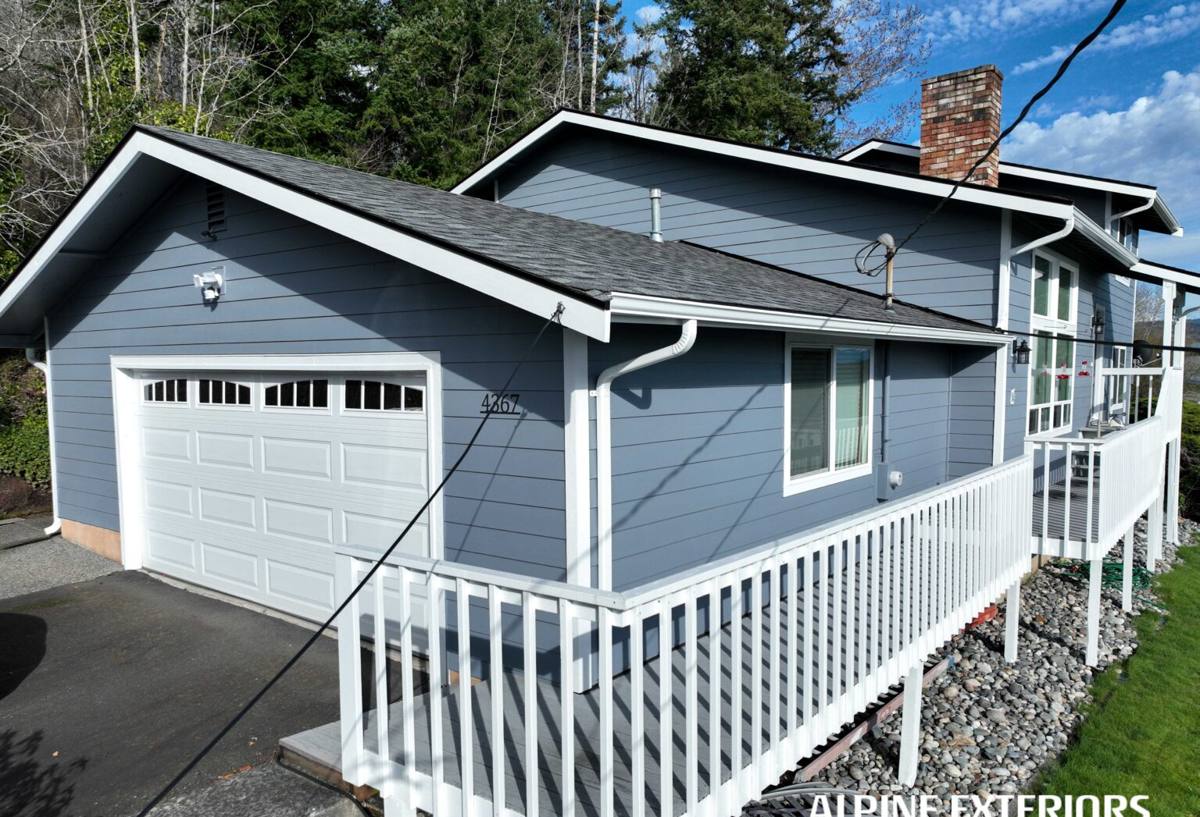
Signs Your Roof Is Telling You It's Time
Most roofs don't fail all at once. They send signals for a year or two before a leak actually shows up inside the house. Homeowners in the Sedro-Woolley area should watch for:
- Granules collecting in gutters or at downspout outlets — a sign the shingle surface is wearing thin
- Shingles that look cupped, curled at the edges, or cracked, especially on south- and west-facing slopes
- Dark streaking or thick moss growth that doesn't rinse off and keeps coming back within a season
- Soft spots in the roof deck when walked, or sagging visible from the ground
- Daylight or water stains in the attic around chimneys, vents, or skylights
- Flashing that's rusted, lifted, or loose around any roof penetration
- A roof that's simply reaching the end of its material's expected service life, even without obvious damage
Any one of these on its own might just mean a repair. Several together, or a roof already past 18–20 years on standard asphalt shingle, is usually the point where a full replacement is the more honest recommendation than another round of patching.
What Actually Happens During a Full Roof Replacement
A correct roof replacement is a system, not a single product. Every layer has a job, and skipping or shortcutting one layer to save time undermines the whole roof — even if the shingles on top look perfect.
Tear-Off and Deck Inspection
Old roofing comes off completely so the deck underneath can be checked. This is the one part of the job that can't be done from the ground or from photos. Soft, delaminated, or water-stained decking needs to be replaced before anything new goes down — laying new shingles over a compromised deck just hides the problem for another buyer or another storm to find.
Underlayment and Ice-and-Water Protection
In a region that sees sustained, driving rain rather than short downpours, underlayment quality matters more than it does in drier climates. Synthetic underlayment across the full roof, with self-adhering ice-and-water membrane at eaves, valleys, and around penetrations, gives the roof a second line of defense if wind-driven rain ever gets past the shingle surface itself.
Ventilation
A roof deck that can't breathe traps moisture from both directions — humid air rising from the living space below and dampness sitting on top from the climate outside. Balanced intake and exhaust ventilation keeps the deck dry from underneath, which matters as much for moss and algae resistance as anything applied to the shingle surface itself.
Flashing and Penetrations
Chimneys, skylights, vent pipes, and roof-to-wall transitions are where the vast majority of roof leaks actually start — not in the open field of shingles. New, properly lapped flashing at every one of these points is not optional, even when it would be faster to reuse the old flashing.
Choosing a Roofing Material That Can Handle This Climate
There's no single "best" roofing material for every home, but some perform more predictably than others under sustained moisture, moss pressure, and salt-air exposure. Here's how the common options compare for a home in this area:
| Material | Moisture & Moss Resistance | Typical Lifespan | Maintenance Burden |
|---|---|---|---|
| Standard 3-tab asphalt | Fair — moss takes hold faster on flatter granule surface | 15–20 years | Regular moss/debris removal recommended |
| Architectural (laminated) asphalt | Good — thicker profile sheds water and moss more readily | 25–30 years | Moderate |
| Standing seam metal | Very good — smooth surface resists moss adhesion | 40–50+ years | Low |
| Cedar shake | Fair to poor without diligent upkeep — absorbs and holds moisture | 20–30 years with maintenance | High |
We install and stand behind architectural asphalt and standing seam metal as the two options that consistently perform well for this climate. Cedar shake can look excellent, but its tendency to hold moisture in a region with this much sustained rain and shade-driven moss growth means it demands a level of ongoing maintenance many homeowners underestimate when they choose it — that's a trade-off worth going into with clear eyes, not a knock on the material itself.
Our Roof Replacement Process, Step by Step
- On-site inspection — we get on the roof, check the deck where accessible, and look at attic ventilation and any existing leak history before quoting anything.
- Written estimate — material options, scope, and price laid out clearly, with any deck-repair contingencies explained up front rather than surprise-billed later.
- Scheduling around the weather — in this climate, timing a tear-off matters. We plan for dry-window installation and use tarping protocol if weather turns mid-job.
- Tear-off and deck repair — full removal of old roofing, deck inspection, and replacement of any damaged sheathing.
- Underlayment, flashing, and ventilation installed — the layers that do the real long-term work, done before the finish material goes down.
- Finish roofing installed to manufacturer specification, which matters for both performance and warranty validity.
- Cleanup and final walkthrough — magnetic sweep for stray fasteners, gutter check, and a walkthrough so you know exactly what was done.
What Affects the Cost of a Roof Replacement
Every roof is different, and we don't quote sight-unseen numbers, but these are the factors that most commonly move the price up or down:
| Factor | Why It Matters |
|---|---|
| Roof size and number of stories | More square footage and steeper access both add labor time |
| Roof pitch and complexity | Multiple valleys, dormers, and penetrations take more time per square than a simple gable |
| Deck condition | Rotted or soft sheathing found during tear-off adds material and labor not visible from a curb estimate |
| Material choice | Standard asphalt, architectural asphalt, and metal carry different material and installation costs |
| Layers of existing roofing | Removing multiple old layers takes longer than a single tear-off |
| Ventilation and flashing upgrades | Bringing older ventilation or flashing up to current standards adds scope but reduces future risk |
As a broad range, most full asphalt roof replacements on a typical single-family home in this region land somewhere in the mid five figures, with metal roofing running higher due to material and labor costs. The only way to get a number that means anything for your specific roof is an on-site look.
Why a Crew That Already Works Sedro-Woolley Matters
Roofing crews who work this specific area regularly know things a traveling estimator doesn't — which slopes tend to hold moss the longest based on tree cover and sun exposure, how far the driving rain off exposed areas actually reaches into a roof system, and which underlayment and flashing choices have held up over years of real seasons here rather than in a spec sheet. That local pattern-recognition shows up in small decisions — how much ice-and-water shield to use, where extra flashing attention pays off, how ventilation should be balanced — that add up to a roof that performs the way it's supposed to for its full rated life.
Chuckanut Siding works roofs throughout the Sedro-Woolley area and the surrounding Whatcom County region as a regular part of our business, not as an occasional out-of-territory job. That means when we quote a timeline, a material recommendation, or a maintenance expectation, it's based on what we've actually seen hold up locally — not a national average.
Keeping Your New Roof Performing
A correctly installed roof still needs basic upkeep to hit its full expected lifespan in this climate. After replacement, we recommend:
- Clearing gutters and downspouts at least twice a year, more often under heavy tree cover
- Removing moss buildup before it thickens — a light, early removal is far gentler on shingles than scraping off years of growth
- Trimming back overhanging branches to reduce shade and debris that feed moss growth
- Walking the roof (or having it checked) after major windstorms to catch any lifted flashing or shingles early
- Watching the attic for any new moisture signs, especially after the first few heavy-rain seasons
- Scheduling a periodic professional check-in rather than waiting for a visible leak
None of this is complicated, but skipping it is the most common reason a well-installed roof underperforms its rated lifespan in this part of the state.
If your roof is showing wear, you're not sure whether it needs repair or full replacement, or you just want an honest look before deciding anything, we're glad to come take a look. Use the form below to request a free, no-pressure estimate for your Sedro-Woolley home.