 Chuckanut
 Metal Roofing in Sehome: Built for What This Climate Actually Does to a Roof
Sehome homes deal with a specific combination of weather stress: salt-laden air drifting in off the water, long stretches of driving rain, and a moss season that seems to start earlier and last longer every year. Any roofing material can survive a mild week. Very few hold up to years of that combination without maintenance headaches. Metal roofing, installed correctly, is one of the few systems that genuinely fits this part of Whatcom County rather than just tolerating it.
This page covers what metal roofing needs to look like for a Sehome home specifically — the materials, the installation details that matter most in this climate, what it costs, and what ongoing care actually looks like. We're not going to tell you metal roofing is the right choice for every house or every budget. It isn't. But where it fits, it's a genuinely good long-term investment, and we'd rather explain the real trade-offs than oversell it.
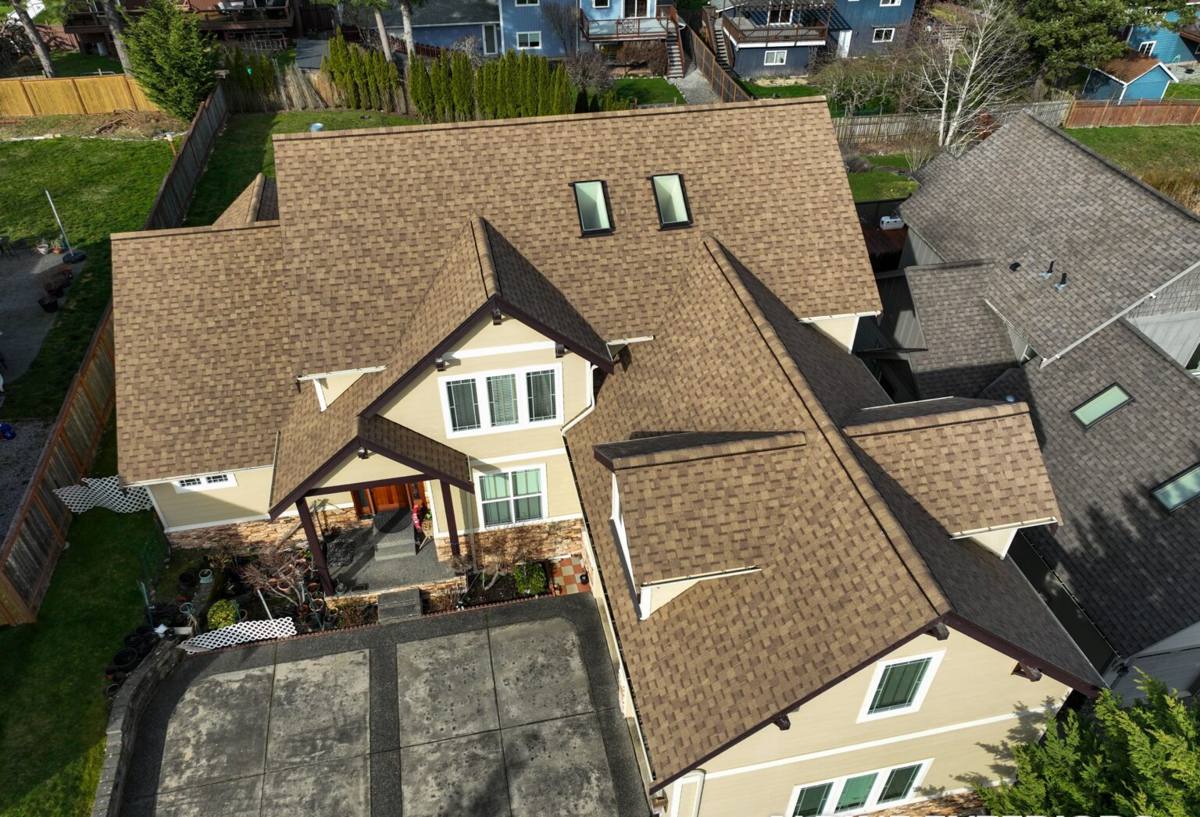
What Salt Air and Driving Rain Do to a Roof Over Time
Coastal-influenced air carries fine salt particulate that settles on exterior surfaces and accelerates corrosion on anything metal — fasteners, flashing, gutters, and unprotected panel edges. It's slow, but it's constant, and it doesn't take a storm event to happen. Ordinary wind off the water on an average afternoon is enough over enough years.
Driving rain adds a second, different problem: wind-driven water doesn't just fall straight down, it pushes sideways and upward under laps, around penetrations, and into any gap that wouldn't matter in a calmer climate. A roof detail that would be fine in a low-wind, low-rain region can leak here within a few seasons if it wasn't built with that lateral water movement in mind.
Put those two together and you get the real failure pattern we see on older or poorly installed roofs in this area: corrosion starting at fastener heads and cut edges, combined with water intrusion at flashing points that weren't sealed or lapped for wind-driven rain. Metal roofing done right addresses both — but "metal roofing" as a category doesn't automatically solve either problem. The materials and the installation both have to be matched to the exposure.
Why This Matters More in Sehome Specifically
Homes closer to the water catch more salt-laden air than homes further inland, even within the same neighborhood. It's not usually dramatic enough to notice year to year, but it shows up over a decade in the condition of exposed fasteners, gutter corners, and any galvanized steel that wasn't properly coated. A roofing plan for this area should account for that exposure from the start rather than treating it as an afterthought.
Metal Roofing Systems We Install
Not all metal roofing is the same product wearing different colors. The panel type and fastening method make a real difference in how the roof performs against wind-driven rain and salt exposure specifically.
| System | How It's Fastened | Best Fit For |
|---|---|---|
| Standing seam | Concealed clips, no exposed fasteners on the field | Homes with high wind/rain exposure or close proximity to salt air — our default recommendation for most of Sehome |
| Exposed fastener panel | Screws through the panel face into decking | Lower-exposure sites, secondary structures, or tighter budgets, with a clear maintenance plan for fastener checks |
| Metal shingle / shake profile | Interlocking panels, concealed or partially concealed fasteners | Homeowners wanting a traditional roofline look without exposed-fastener maintenance |
Standing seam costs more upfront because of the labor and the concealed clip system, but it removes the single biggest long-term weak point of metal roofing in a coastal-influenced climate: exposed screw heads that eventually corrode, back out slightly, or lose their washer seal. On a driving-rain roof, that's often where the first leak shows up. Exposed fastener panels aren't wrong for every situation, but we tell homeowners plainly when a lower-cost option is going to mean more maintenance down the road, not less cost overall.
Getting the Details Right: Flashing, Fasteners, and Underlayment
The panel itself is rarely where a metal roof fails. The failures happen at the edges, the penetrations, and the connections — and this is where installation quality matters more than product selection.
- Underlayment: A high-temp, self-adhered synthetic underlayment at eaves, valleys, and penetrations gives a backup water barrier if wind-driven rain ever gets past the panel laps.
- Fastener material: Fasteners have to be metallurgically compatible with the panel to avoid galvanic corrosion — mixing the wrong metals accelerates rust at every screw or clip location.
- Panel laps and seams: Laps need enough overlap and, on standing seam, properly mechanically or hand-crimped seams so wind-driven rain can't work its way upward under the panel edge.
- Flashing at valleys, walls, and chimneys: These are the highest-risk points on any roof, metal or otherwise. Step flashing, counterflashing, and valley metal all need to be sized and lapped for sideways-driven rain, not just vertical runoff.
- Ventilation: Proper ridge and soffit ventilation keeps moisture from condensing under the deck, which matters as much for a metal roof's underside as it does for any other roofing material.
A metal roof installed with generic, one-size-fits-all details will often look fine for a few years and then start showing problems exactly where the shortcuts were taken. This is the main reason two "metal roofing" quotes can be far apart in price and not actually be comparable jobs.
Moss, Algae, and Roof Debris on a Metal Roof
One of the real advantages of metal roofing in this region is that moss has a much harder time establishing itself on a smooth metal surface compared to asphalt shingles or wood shakes, where it can root into the texture. That doesn't mean a metal roof is maintenance-free during moss season.
Debris — needles, leaves, moss fragments carried by wind — still collects in valleys and against any obstruction, and standing organic debris holds moisture against the panel finish longer than the panel is designed to sit wet. Left long enough, that can lead to surface staining or, at fastener locations on exposed-fastener systems, localized corrosion. The fix is simple and doesn't require chemical treatments: keep valleys and gutter lines clear, especially heading into the wetter months.
Algae Streaking
Homes shaded by trees or facing north can develop algae or biofilm staining on metal roofing over time, similar to what shows up on siding in shaded, damp conditions. It's cosmetic, not structural, and a mild wash on a normal maintenance schedule keeps it from building up.
Our Installation Process
- On-site assessment: We evaluate your existing roof deck, ventilation, and exposure — including how close the home sits to salt air and how wind typically hits the roof planes — before recommending a system.
- System and material selection: Based on that assessment, we recommend a panel type and gauge suited to your specific exposure, not a default product.
- Tear-off or overlay evaluation: We check whether your existing roof and deck can support a metal overlay or whether a full tear-off is the right call for long-term performance.
- Deck prep and underlayment: Any damaged decking gets replaced before underlayment goes down, with self-adhered membrane at all critical water points.
- Panel installation: Panels are installed with fasteners and clip systems matched to the panel material to avoid galvanic corrosion.
- Flashing and detail work: Valleys, walls, chimneys, and penetrations get built up in layers, not caulked over as an afterthought.
- Final walkthrough: We walk the finished roof with you, explain what maintenance it actually needs, and answer questions before we consider the job done.
Cost Factors for Metal Roofing in Sehome
Metal roofing costs more upfront than asphalt shingles, but the comparison depends heavily on which factors are driving your specific project. Here's what actually moves the price, in rough order of impact:
| Factor | Why It Matters |
|---|---|
| Panel system (standing seam vs. exposed fastener) | Standing seam requires more labor and specialized tools; exposed fastener is faster to install but has a longer-term maintenance tail |
| Roof complexity | Valleys, dormers, and multiple roof planes all add flashing labor, which is where most installation quality actually lives |
| Tear-off vs. overlay | Removing an existing roof adds cost but allows full deck inspection and repair, which matters more in a wet climate |
| Panel material and gauge | Heavier gauge and corrosion-resistant coatings cost more but matter directly in a salt-air environment |
| Ventilation upgrades | Adding or correcting ridge/soffit ventilation during the reroof is far cheaper than doing it later |
We give straightforward, itemized estimates so you can see what you're actually paying for rather than a single lump number. If a lower-cost option makes sense for your situation, we'll say so.
Maintenance Checklist for Sehome Metal Roof Owners
- Clear valleys, gutters, and any debris-catching areas at least once before the wet season sets in
- Do a visual check of exposed fasteners (if applicable) every year or two for early signs of corrosion or backing-out screws
- Rinse off accumulated moss fragments or organic debris rather than letting it sit wet against the panel
- Watch for algae or biofilm streaking on shaded roof faces and wash gently when it appears
- Have flashing at valleys, chimneys, and walls inspected periodically, since that's where the majority of real leaks originate
- Trim back overhanging branches that drop debris directly onto the roof or hold moisture against panel surfaces
Why Hiring a Crew That Already Works in Sehome Matters
Metal roofing is unforgiving of generic installation. A crew that mostly works in drier, less exposed regions can install a technically correct roof that still underperforms here, because the details that matter in a low-wind, low-salt climate aren't the same ones that matter in Whatcom County. Fastener choice, flashing lap width, underlayment placement, and ventilation all need to be judged against local exposure, not a national average spec sheet.
We work on homes throughout Sehome and the surrounding Chuckanut area regularly, which means we're not guessing at how salt air and driving rain behave on a given roof plane or which corners tend to take the worst of the wind. That local pattern recognition is what separates a metal roof that looks good on installation day from one that's still performing well fifteen years later.
If you're weighing metal roofing for a home in Sehome, we're glad to walk your roof, talk through what your specific site actually needs, and give you a clear, no-pressure estimate — use the form below to get started.