 Chuckanut
 Alger Homes Face a Specific Kind of Weather
Homes around Alger sit in a corner of Washington where the weather doesn't do anything halfway. Moist air moving off the water meets the Chuckanut foothills, and the result is long stretches of driving rain, heavy seasonal dampness, and a nearly year-round humidity level that keeps wood, moss, and mildew in business. Add in the salt air that drifts inland off the Sound on windy days, and you've got a climate that is genuinely hard on exterior building materials — harder than most manufacturers' warranty language admits.
Siding installation done for Alger has to account for all three of those stressors at once: constant moisture load, salt exposure that accelerates corrosion and finish breakdown, and a moss season that can run eight or nine months out of the year on north-facing walls and anywhere tree cover blocks the sun. A siding job that would hold up fine in a dry inland climate can fail here in a fraction of the time if it's installed without those realities in mind.
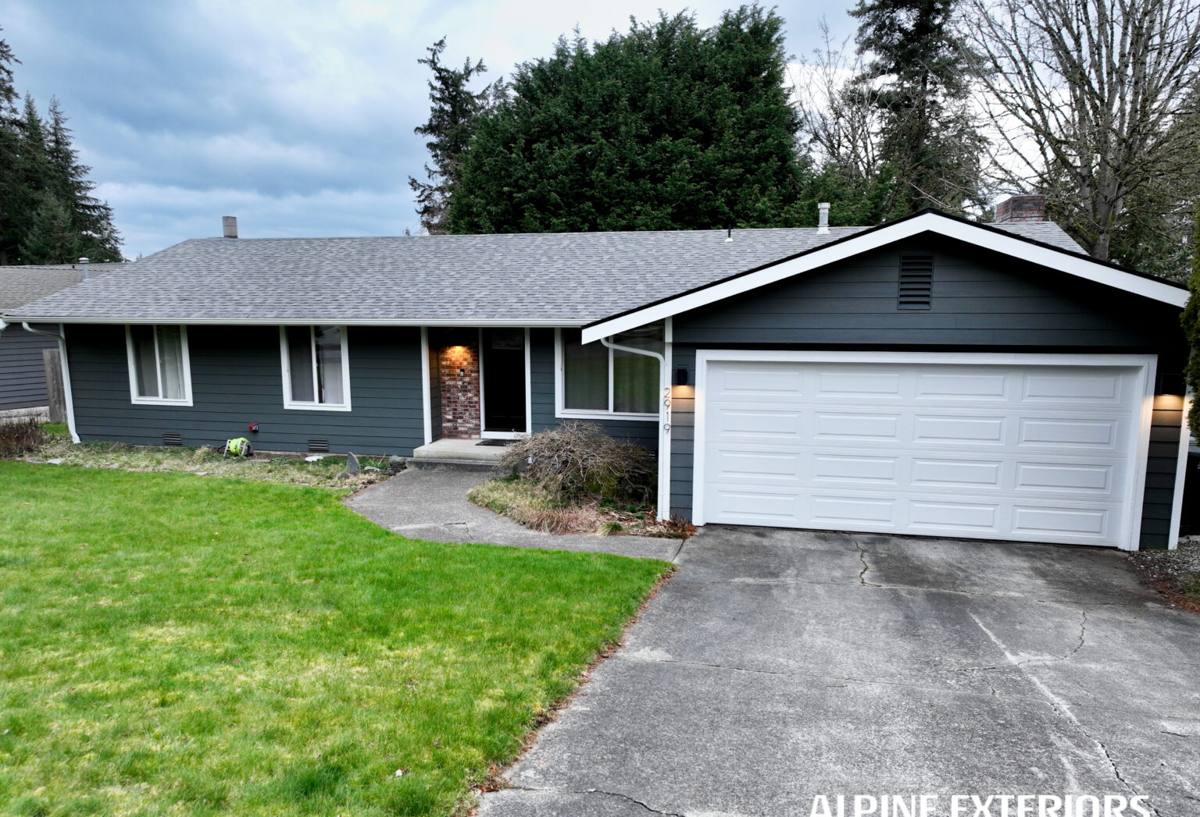
What "Correct" Siding Installation Actually Means Here
Siding installation isn't just fastening panels to a wall. The siding itself is the least important part of keeping water out of a house — the water management system behind it is what actually does the work. For Alger's climate, that system needs to be built with extra margin, not the bare minimum a manufacturer's spec sheet allows.
The layers that matter
- Weather-resistive barrier: a continuous, properly lapped house wrap or building paper installed shingle-style so every seam sheds water downward, not into the wall.
- Flashing at every penetration: windows, doors, hose bibs, light fixtures, and vents all need step or Z-flashing that ties into the weather barrier — not just caulk, which fails long before the siding does.
- A drainage gap: a rainscreen or furring strip system so any water that does get behind the siding has somewhere to go, and so the siding itself can dry out after a soaking rain instead of staying damp against the sheathing.
- Correct fastening: the right nail type, spacing, and depth for the specific siding product — over-driven or under-driven fasteners are one of the most common causes of early siding failure we see.
- Proper clearances: siding kept clear of grade, roofing, and decks by the margins the manufacturer specifies, so splash-back and standing moisture don't sit against the bottom courses.
Skip any one of these and the siding on top can look perfect for a year or two while the wall behind it is already taking on water. That's the failure mode we get called out to diagnose most often, and it's almost always a water management problem, not a "the siding wore out" problem.
Why We Install Only James Hardie Fiber Cement
We made a deliberate choice to install one siding system — James Hardie fiber cement — and not vinyl, not LP SmartSide, not cedar, and not other fiber cement brands. That's not a marketing position, it's a standard we hold because of what we see in this climate over time.
Vinyl siding is inexpensive and low-maintenance, but it's a thin plastic product that can warp in sustained heat, crack in cold snaps, and it has seams and gaps that give moisture an easy path inward — a real liability in a climate this wet. Engineered wood products like LP SmartSide perform well when kept dry and sealed, but they're wood at their core, and wood-based siding is only as good as its ongoing maintenance in an area with this much year-round moisture. Cedar is a beautiful, genuine material, but it demands regular refinishing, is a combustible material, and is one of the more moisture-sensitive claddings available — a tough combination for the Chuckanut foothills' rain and moss load.
James Hardie fiber cement is cement, sand, and cellulose fiber — it doesn't rot, it isn't a food source for moss and mildew the way wood is, and it's non-combustible. Hardie's HZ10 product line is specifically engineered for wet, moderate climates like ours, and every board comes with a factory-applied ColorPlus finish that resists fading and chipping far better than field-applied paint. It's the product we're willing to put our name behind on homes that have to stand up to salt air and driving rain for decades, not years.
How the main siding options compare for this climate
| Material | Moisture behavior | Salt air / corrosion | Maintenance |
|---|---|---|---|
| James Hardie fiber cement | Non-organic, does not rot or absorb moisture like wood | Not affected by salt corrosion; factory finish resists chalking | Occasional wash; repaint only if desired, decades out |
| Vinyl | Seams and laps allow water intrusion behind panels | Can chalk and become brittle faster near salt air | Low, but cracks/warping aren't repairable, only replaceable |
| LP SmartSide | Wood-based; performs well only if fully sealed and maintained | No inherent resistance; relies on coating integrity | Requires consistent recoating and edge sealing |
| Cedar | Naturally moisture-sensitive; prone to cupping and checking | No corrosion, but finish breaks down faster in salt-laden air | Highest — regular refinishing to prevent decay |
Our Installation Process for Alger Properties
Every job starts with an honest look at what's actually happening on the wall, not just what the existing siding looks like from the driveway.
- On-site assessment: we check the sheathing, existing water management, trim condition, and any moisture staining or soft spots before we quote anything.
- Tear-off and sheathing inspection: old siding comes off and we inspect the wall assembly underneath — this is where hidden rot or past shortcuts get found and addressed, not covered over.
- Weather barrier and flashing: a new, continuous weather-resistive barrier goes on, properly lapped, with flashing detailed at every window, door, and penetration.
- Rainscreen installation: furring strips create the drainage gap that lets the wall assembly dry, rather than trapping moisture against the sheathing.
- Hardie installation to spec: panels or planks installed with manufacturer-specified fastener type, spacing, and clearances — not shortcuts to save labor time.
- Trim, caulking, and final detailing: corners, trim boards, and joints sealed correctly so water sheds the way it's supposed to.
- Final walkthrough: we go over the finished work with the homeowner before calling the job done.
What We Often Find on Older Alger Homes
When we tear off older siding in this area, a handful of issues show up again and again:
- Moss and algae growth built up behind lap siding where drainage gaps were never installed.
- Caulk used as the primary defense at window and door flashing instead of proper step flashing.
- Fastener corrosion where the wrong nail type was used for the original siding material.
- Soft or delaminating sheathing on north-facing and shaded walls where moisture had nowhere to escape.
- Grade or landscaping built up too close to the bottom of the siding, keeping it damp long after rain stops.
None of these are unusual for the climate — they're what happens when siding goes in fast, without the water management details that this much rain and moss pressure actually demands.
A Practical Checklist Before You Hire
- Ask what weather-resistive barrier and flashing details will be used, not just what siding brand.
- Ask whether a rainscreen or drainage gap is included, or if siding goes directly against the wrap.
- Ask to see the manufacturer's fastening and clearance specs and confirm the crew follows them.
- Ask how they handle existing moisture damage or soft sheathing if it's found during tear-off.
- Ask about the manufacturer's warranty terms and whether it's transferable if you sell the home.
- Get a written scope of work, not just a total price — the details are where corners get cut.
Why a Crew That Already Works This Area Matters
Siding installation done right depends on understanding the specific conditions a wall will face, and that's local knowledge as much as it is technical skill. A crew that regularly works in and around the Chuckanut foothills and the Alger area already knows which wall orientations take the worst of the driving rain, where moss builds up fastest, and how much extra margin the details need compared to a drier inland job. That's the difference between a crew following a generic install manual and one building for the actual weather your house will face for the next thirty years.
It also means faster, more accurate estimates — we're not guessing at conditions from a photo, we've seen what this climate does to siding up close, on homes not far from yours.
After Installation: Keeping It Looking Right
James Hardie siding is low-maintenance, not no-maintenance. In this climate, a periodic rinse to keep moss and organic buildup from taking hold — especially on shaded or north-facing walls — goes a long way. Keep an eye on caulking at trim joints over the years, and keep grade and plantings from crowding the bottom courses. Beyond that, the ColorPlus finish and non-combustible fiber cement core are built to handle the salt air and rain without the recoating cycle wood or vinyl products need.
If your Alger home needs new siding, or you want a second opinion on whether your current siding is doing its job, we're happy to take a look. Reach out for a free, no-pressure estimate — we'll tell you honestly what we see and what it would take to get it right.