 Chuckanut
 Siding Built for Silver Beach's Weather, Not Just Its Curb Appeal
Silver Beach homes deal with a specific combination of punishment: salt-laden air off the water, wind-driven rain that hits walls sideways instead of falling straight down, and a moss season that can stretch from October well into spring. Any siding installed here has to hold up to all three at once, year after year, without babysitting. That's a different design problem than siding installed twenty miles inland, and it's why a generic siding job — even a well-intentioned one — often falls short within a few years.
We install siding across Whatcom County, and Silver Beach is one of the areas where we see the clearest gap between siding that was installed "correctly" on paper and siding that was installed correctly for this specific microclimate. This page covers what that distinction actually means, what a proper installation involves, and how we approach it.
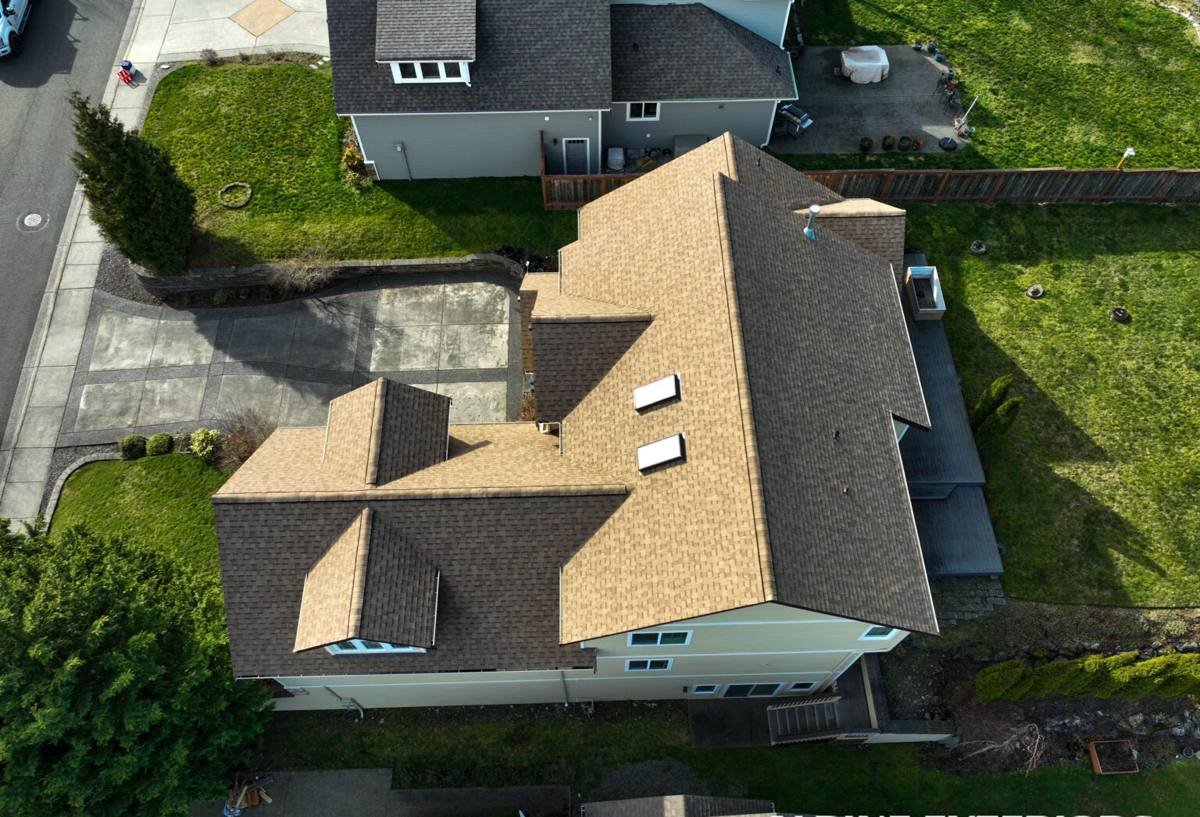
What Silver Beach's Climate Actually Does to Siding
Salt air and corrosion
Airborne salt doesn't just affect homes sitting right on the waterline. Wind carries fine salt particles well inland, and over time that salt settles on siding surfaces and works into fasteners, trim edges, and any exposed metal. On products with weaker factory finishes, this shows up as premature fading, chalking, or a dull, worn look years before it should appear. On fasteners and flashing that aren't corrosion-resistant, it shows up as rust streaking and eventual failure.
Driving rain, not just rain
Whatcom County gets a lot of rain, but the more damaging factor for siding is wind-driven rain — moisture pushed horizontally against walls, forced up under laps and around trim, rather than simply running down a vertical surface. Siding systems and installation details that work fine in calmer climates can let water past the surface here, where it gets trapped behind the cladding and causes rot in the wall assembly long before anything looks wrong from the street.
A long moss and algae season
Shaded walls, north-facing elevations, and anything near overhanging trees stay damp for extended stretches. That moisture supports moss and algae growth on porous or absorbent siding materials, and once it takes hold it's a recurring maintenance chore — pressure washing, treating, repainting — rather than a one-time fix. Some siding materials resist this far better than others simply because of how the material and finish are built.
Why We Only Install James Hardie Fiber Cement Here
We standardized on James Hardie siding for every home we work on, and in a climate like Silver Beach's, the reasoning is practical rather than a matter of brand preference.
- Fiber cement composition: Hardie siding is made from cement, sand, and cellulose fibers. It doesn't absorb and swell with moisture the way wood-based or wood-fiber products can, which matters directly in a wind-driven rain climate.
- ColorPlus factory finish: The baked-on finish is engineered to resist fading and hold color longer than field-applied paint, which matters when salt air and UV exposure are working against the surface constantly.
- Climate-engineered product lines: James Hardie makes HZ5 products specifically formulated for regions with damp, freeze-thaw, and moisture-heavy conditions like the Pacific Northwest — it's not a one-size-fits-all product nationwide.
- Non-combustible material: Fiber cement doesn't contribute fuel to a fire the way wood-based sidings can, which is a meaningful, permanent difference in risk profile.
- Long track record when installed to spec: Hardie's performance depends heavily on correct installation — which is the next section.
We won't install vinyl, LP SmartSide, cedar, primed spruce, or other fiber cement brands on the homes we work on. That's not because those products have no merit — it's because we've made a professional decision about what we're willing to put our name behind in this climate, and Hardie is it.
What a Correct Installation Actually Involves
Siding failures in this area are rarely about the material itself — they're almost always about installation details that were skipped or rushed. A correct James Hardie installation in Silver Beach includes:
A drainage plane and rain screen gap
Water-resistive barrier goes on first, correctly lapped and sealed at every seam, penetration, and window opening. Behind the siding itself, a rain screen gap allows any moisture that does get past the surface to drain and the wall to dry out, rather than sitting trapped against the sheathing.
Flashing at every transition
Windows, doors, roof-to-wall intersections, and deck ledgers are all places where water wants to find a way in. Proper step flashing, head flashing, and kick-out flashing at rooflines are not optional extras — they're where most water intrusion problems actually originate when they're missing or installed wrong.
Correct fastening and clearances
Hardie specifies fastener type, spacing, and placement for a reason — get it wrong and you risk cracking, buckling, or reduced wind resistance. Siding also needs proper clearance from grade, roofing, and decking so it isn't sitting in standing water or trapped moisture at ground level.
Caulking only where Hardie specifies it
Over-caulking is as much of a problem as under-caulking. Sealing joints that are designed to allow drainage or movement traps moisture instead of letting it escape, which defeats the rain screen system entirely.
Our Installation Process
| Step | What Happens |
|---|---|
| Assessment | We inspect the existing wall assembly, sheathing condition, and any moisture or rot issues before quoting the job — not after tearing into it. |
| Prep & removal | Old siding is removed, sheathing is repaired or replaced where needed, and the wall is prepped for a proper drainage plane. |
| Weather barrier & flashing | Water-resistive barrier, flashing, and rain screen furring are installed at every seam, window, and penetration. |
| Hardie installation | Siding, trim, and accessories are installed to James Hardie's fastening and clearance specifications. |
| Final inspection | We walk the full exterior checking caulk lines, clearances, and finish work before calling the job complete. |
Signs Silver Beach Homeowners Should Watch For
- Moss or dark streaking on north-facing or shaded walls that keeps returning after cleaning
- Soft, spongy, or visibly warped siding panels, especially near the ground or roofline
- Paint that's peeling, bubbling, or fading unevenly across the same wall
- Rust staining running down from fasteners or trim pieces
- Gaps opening up at seams, corners, or around window and door trim
- Interior signs like musty smells or discoloration on walls that share an exterior wall
Any one of these on its own isn't necessarily an emergency, but they're worth having looked at before they turn into a sheathing or framing problem underneath.
Cost Factors for a Silver Beach Siding Project
| Factor | Why It Matters Here |
|---|---|
| Existing wall condition | Rot or moisture damage found during tear-off adds repair scope before new siding can go on |
| Home size and wall complexity | More corners, dormers, and trim transitions mean more flashing detail and labor time |
| Siding profile and accessories | Lap width, trim style, and color selection affect material cost within the Hardie product line |
| Access and site conditions | Slopes, mature landscaping, and limited staging area affect labor time on many Silver Beach lots |
| Removal and disposal | Stripping old siding and hauling it off is a real cost, separate from the new material |
We give firm, written quotes after an in-person assessment rather than ballpark numbers over the phone — too much of the cost depends on what's actually underneath the existing siding.
Why a Crew That Already Works Silver Beach Matters
Installation quality is the single biggest factor in how long siding lasts, and that quality is driven by whether the crew understands the specific conditions they're building for. A crew that's worked homes in this part of Whatcom County knows to size the rain screen gap for driving rain rather than the minimum spec, knows which elevations tend to hold moisture and need extra attention at flashing details, and isn't guessing at how salt air and moss season will treat different finish choices over time. That local pattern recognition is hard to shortcut, and it's the difference between siding that looks good at handoff and siding that still looks good in fifteen years.
What to Ask Before Hiring Anyone for Siding Work
- Are you a James Hardie certified or preferred installer, and can you explain their fastening spec?
- Will you install a rain screen gap, and how is it detailed at this house specifically?
- Who handles flashing at windows, doors, and roof intersections — is it subcontracted or done by your crew?
- What happens if you find rot or moisture damage once the old siding comes off?
- Is the quote written, itemized, and does it specify the exact Hardie products and colors?
- What does the warranty cover — material, finish, and labor — and who do you call if something needs attention?
If your Silver Beach home needs new siding, or you're not sure whether what's on the walls now is doing its job, we're happy to take a look. We offer free, no-pressure estimates — walk the exterior with you, point out anything we see, and give you a straight answer about what the job actually involves. There's a form below if you'd like to get one scheduled.