 Chuckanut
 Bow sits along the water just south of Chuckanut, in Skagit County, which means the same forces that wear on siding up and down this shoreline — salt air off the bay, storms that drive rain sideways instead of straight down, and a moss season that barely takes a break — hit Bow homes just as hard. Siding repair here isn't just about patching whatever cracked or came loose. It's about understanding why that damage happened in the first place, so the repair actually holds instead of becoming next year's callback. This page covers what siding repair should look like for a home in Bow, and why it matters that the crew doing it already knows this stretch of coastline.
What Bow's Waterfront Climate Does to Siding
A home in Bow takes on a different kind of weather stress than one further inland. Salt-laden air off the water works on caulk, fasteners, and finishes year-round, not just during storm season. Wind off open water doesn't just bring rain — it pushes that rain sideways into walls, forcing water into seams, joints, and any gap in flashing that would stay dry on a more sheltered lot. And because so much of the area sits under tree cover or in the shadow of the bluffs, walls that get hit with rain also stay damp longer afterward, which is exactly what moss and mildew need to take hold and spread.
Why Moss Season Runs Long Here
In a lot of the country, moss is a seasonal nuisance. On north- and east-facing walls in Bow, it can be a near year-round tenant. Moss holds moisture directly against the siding surface, and that sustained dampness is what turns a cosmetic problem into a structural one — it softens caulk, corrodes fasteners, and on wood-based products, it can work moisture into the substrate itself. A siding repair that only addresses the visible crack or gap, without dealing with the moss and moisture pattern that caused it, tends to fail again within a season or two.
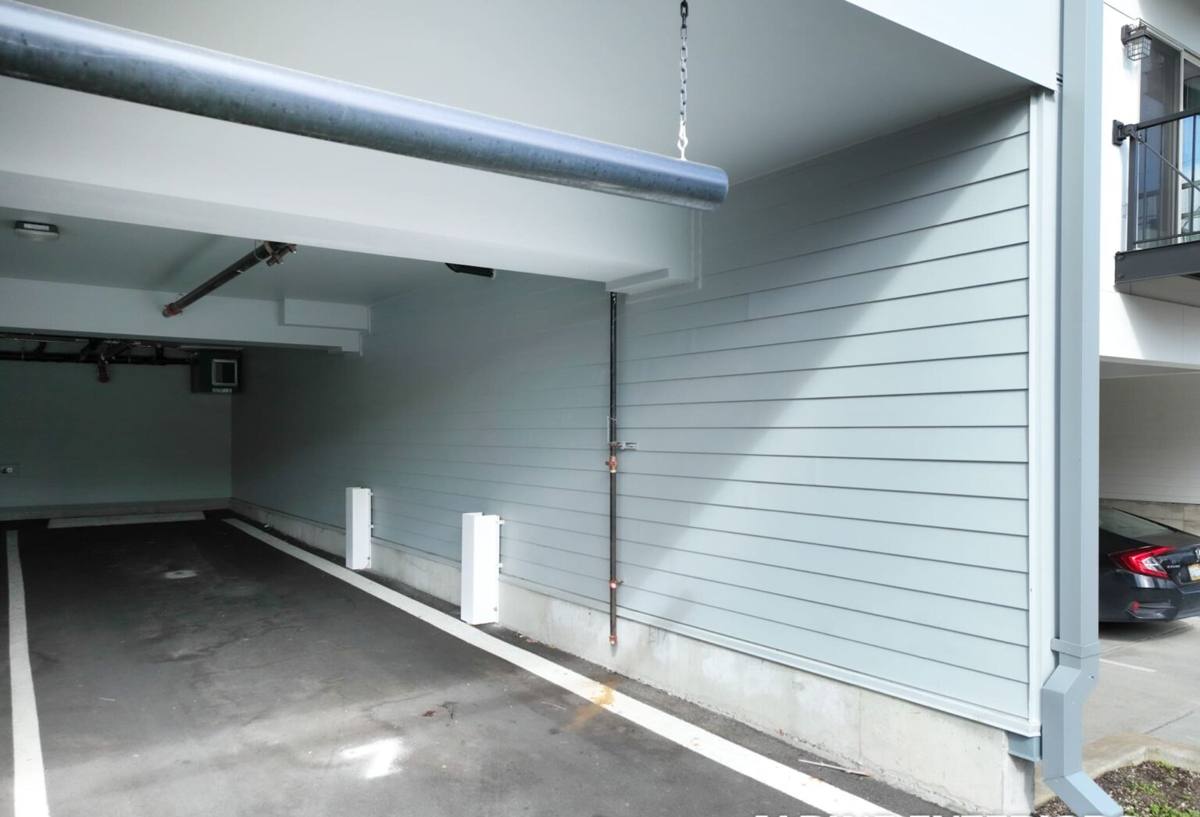
Signs Your Siding Needs Repair, Not Just a Cleaning
Homeowners in Bow often assume a stained or streaked wall just needs a pressure wash. Sometimes that's true. Other times, what looks like surface grime is actually a sign that water has already gotten past the finish. Before scheduling a cleaning, look for these signs that point to an actual repair need:
- Soft or spongy spots when you press on the siding, especially near the bottom courses or under windows
- Cracked, missing, or shrunken caulk at butt joints, corners, and trim
- Visible gaps or separation where boards meet at seams
- Persistent moss or dark streaking that returns quickly after cleaning
- Bubbling, peeling, or chalky finish that exposes the substrate underneath
- Rust streaks from corroding fasteners, or nail heads that have backed out
- Warping, cupping, or visible daylight gaps at panel edges
Any one of these can be isolated and minor. Several of them together, especially clustered on one wall, usually means water has been getting behind the siding for a while — and that changes what kind of repair actually solves the problem.
What a Correct Repair Actually Involves
A repair that's done right starts with figuring out how far the damage actually extends, not just fixing what's visible from the ground. That means checking behind the affected boards for signs of moisture intrusion into the sheathing or framing, inspecting the flashing at the nearest window, door, or roofline, and confirming that whatever caused the original failure — a caulk gap, a clearance issue, a flashing detail — gets corrected as part of the repair, not just covered over.
| Repair Scope | What It Involves | When It's the Right Call |
|---|---|---|
| Spot repair | Replacing individual boards or panels, resealing joints, re-fastening loose sections | Damage is isolated, substrate underneath is dry and sound |
| Section replacement | Removing and replacing a full wall section, including underlying flashing or house wrap as needed | Damage is concentrated on one elevation or clustered around a specific failure point |
| Full re-side | Removing all existing siding, correcting underlying issues, installing new cladding | Damage is widespread, the existing product is at the end of its service life, or repeated repairs haven't held |
Skipping the diagnostic step is how a repair ends up being redone within a year or two. It's also how a homeowner ends up paying for the same problem twice — once for the visible fix, and again later for the water damage that kept spreading behind it.
Repair or Replace? How We Make the Call
Not every damaged wall needs a full re-side, and we're not going to tell a Bow homeowner they need one just because it's a bigger job. The honest answer usually comes down to a few practical questions: how much of the wall is actually affected, how old is the existing siding, and has this same spot failed before.
| Factor | Favors Repair | Favors Replacement |
|---|---|---|
| Extent of damage | Isolated to one or two boards or a single joint | Spread across multiple walls or elevations |
| Age of existing siding | Well within its expected service life | Near or past the age where recurring issues are common |
| Repair history | First time this area has needed attention | Same spot or wall has been patched more than once |
| Underlying substrate | Dry, sound sheathing and framing behind the siding | Evidence of moisture intrusion into the wall assembly |
| Material match | Matching material is readily available | Original product is discontinued, faded, or no longer made |
When a wall checks most of the boxes on the left, a targeted repair is the right, cost-effective answer, and we'll say so plainly. When it lands on the right, we'll explain why patching it would likely just delay the same conversation.
Matching Materials: Why Repairs on Older Siding Get Complicated
Here's where we're upfront about something that affects every repair estimate we give in Bow: we install James Hardie fiber cement siding exclusively. We don't stock or install vinyl, LP SmartSide, cedar, or other fiber cement brands. That's not a problem when the siding needing repair is already Hardie — we can match boards, profiles, and ColorPlus finish colors directly, and the repaired section blends in cleanly.
It's a different conversation when the existing siding is something else. If a home has aging cedar, older vinyl, or a discontinued fiber cement product, an exact material match often isn't possible, and even a careful color match can look slightly different once it weathers unevenly next to the older material. We'll always tell you honestly what a patch on non-Hardie siding will and won't look like once it's done, rather than making a promise we can't back up.
When We Recommend a Larger Repair Section
In cases where an exact match isn't realistic, we'll often suggest replacing a full wall section or elevation with Hardie rather than trying to blend a mismatched patch into an aging, non-uniform surface. It's a bigger scope than a spot repair, but it avoids leaving a home with a visibly patched wall that still won't hold up the way the rest of the siding is failing to hold up already.
Our Siding Repair Process for Bow Homes
Every repair we take on follows the same sequence, whether it ends up being a single-board fix or a full section replacement:
- On-site inspection of the damaged area and a check of the surrounding wall for related issues
- Assessment of what's behind the siding — sheathing, flashing, and house wrap condition where accessible
- A straight explanation of what caused the damage, and whether a repair or a larger replacement makes sense
- A written scope and price before any work starts, so there are no surprises partway through
- Correction of the underlying cause — flashing, clearance, or joint detail — not just replacement of the visible material
- Final check of caulking, fastening, and finish match before we consider the job done
We don't skip the diagnostic steps to get to a faster estimate. A repair that doesn't address why the damage happened in the first place isn't really a repair — it's a delay.
Why a Crew That Already Works in Bow Matters
Siding repair isn't a one-size-fits-all trade. A wall on an exposed, water-facing lot in Bow takes on a different amount of wind-driven rain and salt exposure than a similar-looking wall a few miles inland, and a crew that's worked this specific stretch of coastline knows what to expect before they even climb a ladder — which walls tend to hold moisture longest, where moss comes back fastest, and what a flashing detail needs to handle here that it might not need to handle somewhere drier. That local familiarity shortens the diagnostic part of the job and reduces the chance of missing a related issue nearby.
It also means a more realistic estimate. A contractor who hasn't worked this coastline before might quote a repair based on what that kind of damage usually means somewhere else, then find out mid-job that the moisture problem runs deeper than expected. We'd rather get that assessment right the first time, on the first visit.
What to Expect From an Honest Estimate
If you're dealing with soft spots, recurring moss, cracked caulk, or a wall that just doesn't look right anymore, the first step is having someone look at it who can tell you plainly what's actually going on — not just quote you a number. We're glad to come take a look at your Bow home, walk the affected area with you, and give you a straight answer about whether it needs a repair, a larger section replacement, or nothing at all. Reach out for a free, no-pressure estimate.