 Chuckanut
 Why Decks Take a Beating in Silver Beach
A deck in Silver Beach doesn't age the way a deck in a dry inland climate does. The marine-influenced air that moves through this part of Whatcom County carries salt and moisture that settle into wood grain, work their way around fasteners, and slowly break down finishes that would otherwise last for years. Add in driving rain that comes in sideways during winter storms, and a moss season that can stretch from fall through spring in shaded yards, and you've got a structure that's under constant low-grade attack even when it looks fine from the porch.
Most of the damage we find isn't dramatic. It's slow: a ledger board that's been wicking moisture for two winters, fasteners that have started to corrode under the decking, a joist that's gone soft where two boards meet and water sits. By the time it's visible — a spongy board, a wobble in the railing, green film that won't scrub off — the underlying problem has usually been building for a while. That's the nature of deck damage in this climate, and it's why we treat every repair call as a chance to check more than just the spot the homeowner is worried about.
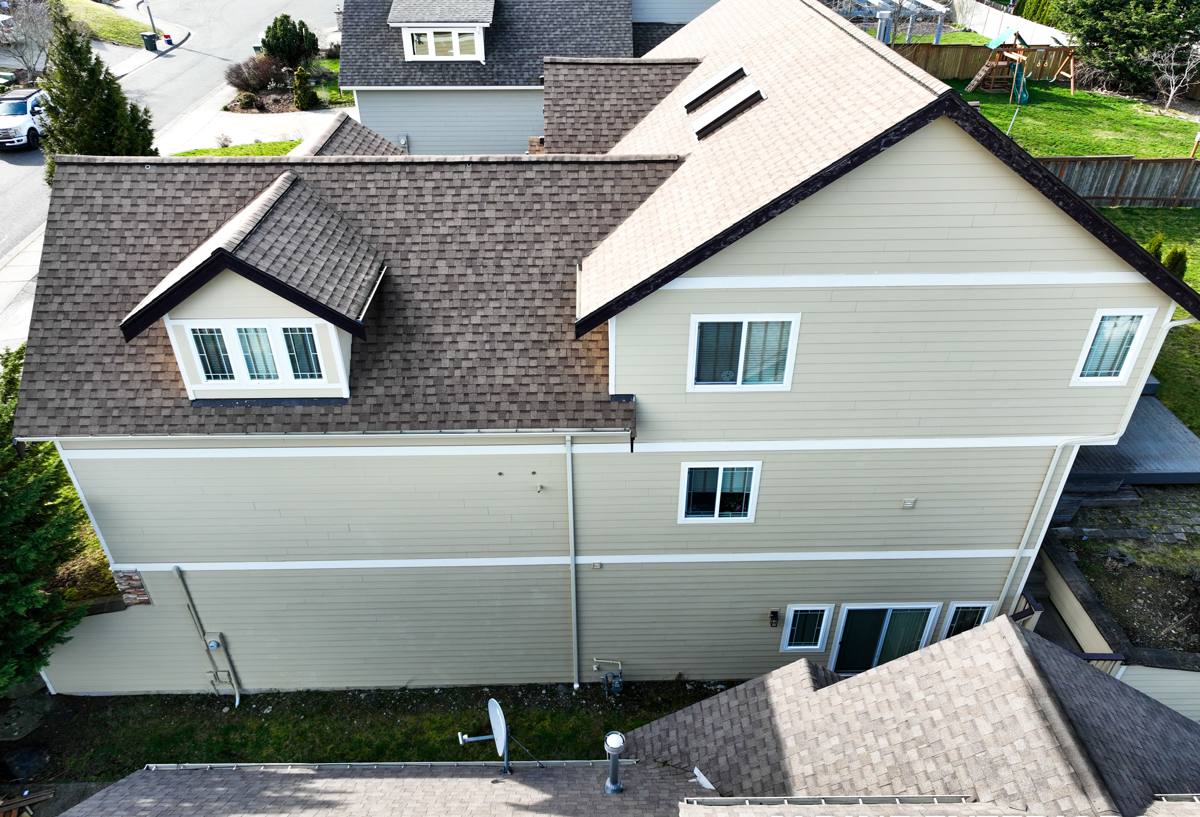
Signs Your Silver Beach Deck Needs Repair
Some of these are obvious. Others get ignored because the deck still "feels fine" underfoot. Both categories matter.
- Boards that feel spongy, flex more than they should, or have visible cupping
- Persistent moss or dark green-black staining that returns within weeks of cleaning
- Railings or posts that wiggle when you push on them
- Rust streaks running down from screw or nail heads
- Gaps opening up where the deck meets the house (the ledger board connection)
- Stairs that feel bouncy or have visibly sagging stringers
- Standing water that doesn't drain within an hour or two after rain stops
- Any visible daylight or separation between structural framing members
If you're seeing more than one or two of these at once, it's worth having someone look underneath the deck, not just at the surface boards. Surface problems and structural problems often show up together, but they don't always get fixed together — and that's where a lot of "repairs" fall short.
What a Correct Deck Repair Actually Involves
Structure First
Before we touch a single board on top, we check what's holding the deck up: the ledger board where it attaches to the house, the posts and footings, and the joists underneath. This part of the deck rarely gets inspected during routine maintenance because it's out of sight, but it's also the part that fails in ways that matter most. A rotted ledger connection or an undersized post footing is a safety issue, not a cosmetic one.
Decking and Fasteners
Individual board replacement is straightforward when the framing underneath is sound. We match spacing and fastening patterns to the rest of the deck so repaired sections don't stand out or trap water differently than the surrounding boards. Fastener choice matters more here than people expect — the wrong screw or nail in a damp, salt-influenced environment corrodes faster and can stain the wood around it.
Railings and Guardrails
Loose railings are one of the most common repair calls we get, and they're also one of the easiest to under-fix. A railing that wiggles because a single bracket loosened is a quick job. A railing that wiggles because the post itself has rotted where it meets the frame needs the post addressed, not just the connection tightened. We check both before deciding which repair applies.
Stairs
Deck stairs take abuse from foot traffic and weather at the same time, and stringers hidden under the treads are a common spot for hidden rot. Bouncy or uneven stairs almost always trace back to a stringer problem, not just worn treads.
Repair or Replace? How We Help You Decide
Not every deck problem needs a full rebuild, and not every repair is worth doing if the underlying structure is compromised. We walk homeowners through this honestly rather than defaulting to whichever option is bigger.
| Factor | Leans Toward Repair | Leans Toward Replacement |
|---|---|---|
| Framing condition | Solid, dry, no soft spots | Rot at ledger, posts, or multiple joists |
| Extent of damage | Isolated boards or connections | Widespread across the deck surface |
| Deck age | Under 15 years, built to current standards | Older deck, outdated fastening or framing methods |
| Cause of damage | Wear, weathering, isolated leak | Long-term moisture trapped in structure |
| Cost relative to rebuild | Repair cost is a fraction of rebuild cost | Repairs would approach or exceed rebuild cost |
As a general rule, if the framing is sound and the damage is limited to surface boards, railings, or stairs, repair is the honest recommendation. If we find rot at the ledger board or multiple structural members, we'll tell you that plainly rather than patching around it — a deck's safety depends on what you can't see as much as what you can.
Common Problems We See in Silver Beach Specifically
Because we work decks throughout this area regularly, certain patterns show up more often here than they would in a drier climate:
- Ledger board moisture intrusion — the connection point between deck and house is the single most common failure point we find, especially on older decks built before improved flashing details became standard practice
- Moss buildup on north-facing or heavily shaded sections — moss holds moisture against the wood surface and accelerates decay in exactly the spots that already get the least sun to dry out
- Corroded fasteners — older nails and screws that weren't rated for this kind of exposure corrode faster than the wood around them fails, leading to loose boards well before the deck looks "old"
- Under-ventilated framing — decks built low to the ground or with poor airflow underneath stay damp longer after storms, which shortens the life of the framing significantly
Materials: What We Use for Repairs and Why
Material choice for a repair should match the rest of the deck and hold up to the same conditions that damaged the original. We're upfront about the trade-offs of each option rather than pushing whichever is easiest for us to install.
| Material | Best For | Trade-offs to Know |
|---|---|---|
| Pressure-treated lumber | Structural framing, cost-conscious board replacement | Needs periodic sealing/staining to perform well long-term in this climate |
| Cedar | Visible board replacement on a cedar deck, natural appearance | Softer wood, more sensitive to moisture without regular maintenance |
| Composite decking | Board replacement where low maintenance matters most | Higher material cost, and matching an existing composite line can be difficult if it's been discontinued |
For structural repairs — framing, ledger boards, posts — we default to pressure-treated lumber rated for ground contact where appropriate, because that's what standard building practice calls for and what inspectors expect to see. For visible decking repairs, the right material depends on what's already there and how much long-term maintenance the homeowner wants to take on.
Our Deck Repair Process
- Inspection — we check the full deck, including underneath, not just the area you called about
- Honest assessment — we explain what we found in plain terms, including anything that's fine and doesn't need work
- Written scope and estimate — a clear description of what's being repaired and why, before any work starts
- Repair work — structural issues addressed first, then decking, railings, and stairs as needed
- Final check — we walk the deck with you when it's done and point out what to watch going forward
We don't upsell repairs into replacements to pad a job, and we don't patch over structural problems to keep a job small. The goal is a deck that's actually safe and sound when we leave, not one that looks fixed until the next hard winter.
Why a Crew That Already Works in Silver Beach Matters
Deck repair isn't just carpentry — it's carpentry that accounts for how a specific climate treats wood and fasteners over time. A crew that regularly works decks in Silver Beach and the surrounding Chuckanut area already knows where problems tend to hide: which connection details fail first in this kind of moisture exposure, how fast moss returns on shaded sections, and what fastener and material choices actually hold up here versus what only holds up on paper. That local pattern recognition is the difference between a repair that solves the problem and one that just replaces the symptom.
It also matters for practical reasons — knowing typical lot conditions, working efficiently around the region's wet-season scheduling windows, and being straightforward about what's realistic to get done before the weather turns. None of that comes from a general contractor working the area for the first time.
Keeping a Repaired Deck in Good Shape
A repair holds up longer when a few basic habits follow it. These aren't complicated, but they make a real difference in this climate:
- Sweep debris and standing water off the deck surface regularly, especially in fall
- Address moss as soon as it appears rather than letting it establish over a season
- Keep gutters and downspouts near the deck clear so runoff isn't landing on it
- Re-seal or re-stain wood decking on the manufacturer's recommended schedule, not just when it looks faded
- Have the deck looked at every couple of years, even if nothing seems wrong, since ledger and framing issues are easy to miss from the top
If your deck in Silver Beach is showing any of the signs above — or you just want an honest read on where it stands — we're happy to take a look and give you a straightforward, no-pressure estimate. Use the form below to get started.