 Chuckanut
 Why Silver Beach Roofs Take a Different Kind of Beating
Silver Beach sits close enough to the water that homes here deal with a combination most inland Whatcom County neighborhoods don't have to think about: salt-laden air, wind-driven rain coming off the bay, and a moss season that runs longer than most homeowners expect. Any one of those on its own is manageable. Together, they shorten the life of a roof that wasn't built or installed with this exposure in mind.
Salt air is slow but relentless. It settles on exposed metal, fasteners, and flashing, and over years it accelerates corrosion in anything not rated for coastal exposure. Driving rain isn't just about volume — it's about angle. Wind off the water pushes rain sideways and up under laps, edges, and flashing details that would shed water fine in a calm downpour. And moss doesn't need much encouragement in this climate. Shaded north slopes, tree cover, and near-constant damp air give it a long growing season, and once it takes hold it holds moisture against the roof surface far longer than bare shingles would dry on their own.
A metal roof handles this combination better than most other roofing materials, but only when the material, fasteners, and details are chosen for this specific exposure — not a generic install pulled from a catalog spec sheet.
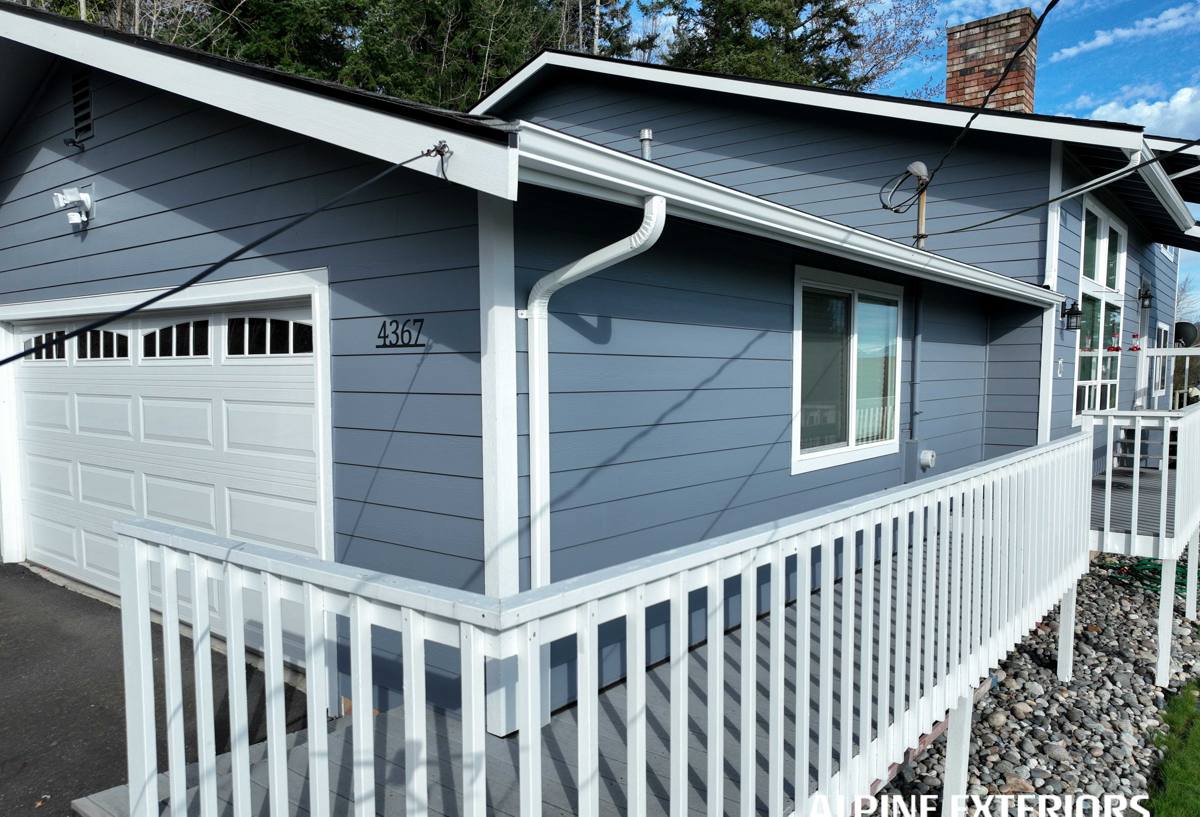
Why Metal Roofing Makes Sense for This Location
Metal isn't the right fit for every home or every budget, but for a property exposed to salt air and heavy wind-driven rain, it solves problems that other materials struggle with long-term.
Corrosion Resistance, If the Right Materials Are Used
Steel and aluminum panels with a quality factory finish resist salt corrosion far better than untreated or poorly coated products. The panel itself is only part of the story — the fasteners, flashing, and any exposed hardware need to match that same level of corrosion resistance, or they become the weak point that fails first.
Steep Water-Shedding, Fewer Places for Wind-Driven Rain to Get In
A well-installed metal roof sheds water fast and has far fewer horizontal laps and exposed seams than shingles, which matters when rain is coming in sideways off the water instead of straight down.
A Surface Moss Struggles to Hold Onto
Moss needs a rough, porous surface and standing moisture to establish itself. Smooth metal panels give it much less to grip, and proper panel slope and drainage keep water moving instead of sitting.
Longevity That Offsets the Higher Upfront Cost
Metal roofing costs more upfront than asphalt shingles, but a properly installed system in this climate typically outlasts shingle roofing by decades, which changes the real cost comparison once you factor in one or two shingle re-roofs over the same span.
Standing Seam vs. Exposed Fastener Panels
Not all metal roofing is built the same way, and the choice between panel types matters more in a coastal-exposure location like Silver Beach than it would somewhere drier and more sheltered.
| Feature | Standing Seam | Exposed Fastener |
|---|---|---|
| Fastener exposure | Concealed under the seam | Visible, penetrates the panel face |
| Long-term weather sealing | No exposed penetrations to fail | Depends on gasket condition over time |
| Upfront cost | Higher | Lower |
| Best fit for this exposure | Full-time coastal exposure, longer service life | Lower-budget projects, secondary structures |
| Maintenance over time | Minimal fastener-related maintenance | Periodic fastener/gasket inspection recommended |
Exposed fastener panels aren't a bad product, but every screw penetration is a potential leak point once the rubber gasket under the screw head ages and hardens — something that happens faster with sun and salt exposure. Standing seam eliminates that specific failure mode by keeping fasteners hidden under a folded seam instead of driven through the panel face. For a home taking the full brunt of Silver Beach's wind and salt exposure, that difference is worth discussing directly rather than defaulting to the cheaper option.
What a Correct Metal Roof Installation Actually Involves
The panel material gets most of the attention, but panels are only as good as what's underneath and around them. A metal roof installed without attention to the details below will underperform regardless of how good the panels themselves are.
Underlayment That Handles Moisture, Not Just Wind
A synthetic or self-adhered underlayment rated for the full roof deck — not just the eaves — gives you a second line of defense if wind-driven rain ever gets past the panel laps or works its way in around a penetration.
Fasteners and Flashing That Match the Panel's Corrosion Rating
This is where a lot of installations quietly cut corners. Mismatched metals between panels, fasteners, and flashing create galvanic corrosion — one metal accelerates the breakdown of another when they're in contact and exposed to moisture. Near salt air, that reaction happens faster. Every fastener and flashing piece should be compatible with the panel metal, not just whatever was in the truck.
Ventilation That Keeps Moisture From Getting Trapped
Metal roofs need proper intake and exhaust ventilation underneath, the same as any roof system. Without it, moisture gets trapped in the attic space, which can lead to condensation on the underside of the panels — a problem that has nothing to do with the roof surface and everything to do with what's happening below it.
Edge, Valley, and Penetration Details
Drip edges, valleys, and any roof penetrations (vents, chimneys, skylights) are where the majority of roof leaks originate, on metal or any other material. These details need to be built to shed water even when it's moving sideways in the wind, not just when it's falling straight down.
How Moss and Coastal Debris Get Managed on a Metal Roof
Metal roofing resists moss far better than shingles, but "resists" isn't "immune." Overhanging branches, shaded north-facing slopes, and organic debris buildup in valleys can still give moss and algae a foothold over time, especially through Whatcom County's wetter months.
The fix isn't chemical treatments or aggressive pressure washing, which can damage panel finishes and void warranties. It's built into good design and occasional low-impact maintenance:
- Panel slope and layout designed to keep water moving instead of pooling in low spots
- Keeping valleys and gutters clear of needles, leaves, and organic debris that hold moisture against the surface
- Trimming back overhanging branches that shade the roof and drop debris
- Periodic visual inspection rather than reactive cleaning after growth is already established
- Avoiding pressure washing on factory-finished panels; a soft wash or gentle rinse is enough when cleaning is actually needed
Our Process for a Silver Beach Metal Roof Project
The process itself isn't unusual, but the details we check are shaped by working this specific area repeatedly.
Site Assessment
We look at the roof's actual exposure — how close it sits to open water, prevailing wind direction, tree cover, and existing moss or corrosion patterns on the current roof. That tells us how much of the coastal-exposure detailing actually matters for your specific property versus a home a few blocks further inland.
Tear-Off and Deck Inspection
Removing the old roofing lets us check the deck underneath for any moisture damage that's been building unseen — something more likely on a property that's had years of wind-driven rain finding its way under aging materials.
Underlayment and Flashing First
We get the underlayment, edge metal, and flashing details right before a single panel goes down, since these are the parts you can't easily inspect or fix after the roof is finished.
Panel Installation
Panels go on with fasteners and clips matched to the panel material, following the manufacturer's spacing and attachment specs — not shortcuts to save time on a job the client won't see the difference on until years later.
Final Walkthrough
We walk the finished roof with you, cover what maintenance (if any) it actually needs, and make sure you know what a normal-looking roof versus a developing problem looks like going forward.
A Simple Maintenance Checklist for Metal Roof Owners Here
- Clear gutters and valleys of debris at least twice a year, more often under heavy tree cover
- Do a visual check from the ground each fall and spring for developing moss patches or streaking
- Trim back branches that overhang or touch the roof surface
- Watch for any rust streaking near fasteners or flashing, which can signal a mismatched or failing component
- Skip pressure washing; use a soft wash if the surface needs cleaning
- Have any storm damage inspected promptly rather than waiting for the next dry season
Why Local Experience on This Coastline Matters
Silver Beach's exposure isn't identical to every other neighborhood in Whatcom County, and a crew that mainly works drier, more sheltered inland properties won't automatically know to spec coastal-grade fasteners, extra underlayment coverage, or the flashing details that matter most here. That knowledge comes from doing the work in this specific environment repeatedly — seeing which details hold up after a few winters of wind-driven rain off the water and which ones don't.
It also means we're familiar with the practical side of working in this area: typical lot access, the tree cover common to the neighborhood, and the kind of weather windows that make sense for a tear-off and install without leaving a deck exposed longer than it should be.
Getting Started
If you're weighing a metal roof for a Silver Beach property, we're happy to take a look, talk through what your specific exposure calls for, and give you a straight, no-pressure estimate — no obligation, just an honest read on what your roof actually needs.