 Chuckanut
 Siding Repair in Silver Beach: A Different Kind of Job
Homes in the Silver Beach area near Chuckanut don't age the same way homes do twenty miles inland. Between the salt-laden air coming off the water, the long stretches of driving rain that define a Whatcom County winter, and a moss season that can run eight months out of the year under tree cover, exterior siding here works harder than almost anywhere else in the region. A repair that would hold up fine in a dry inland neighborhood can fail again within a season if it doesn't account for what this specific microclimate does to a wall system.
That's the difference between a patch job and an actual repair. We've spent years working on homes throughout the Chuckanut and greater Bellingham area, and the lessons learned on one Silver Beach house tend to apply directly to the next one down the road — because the exposure, the moisture patterns, and the failure points repeat themselves block to block.
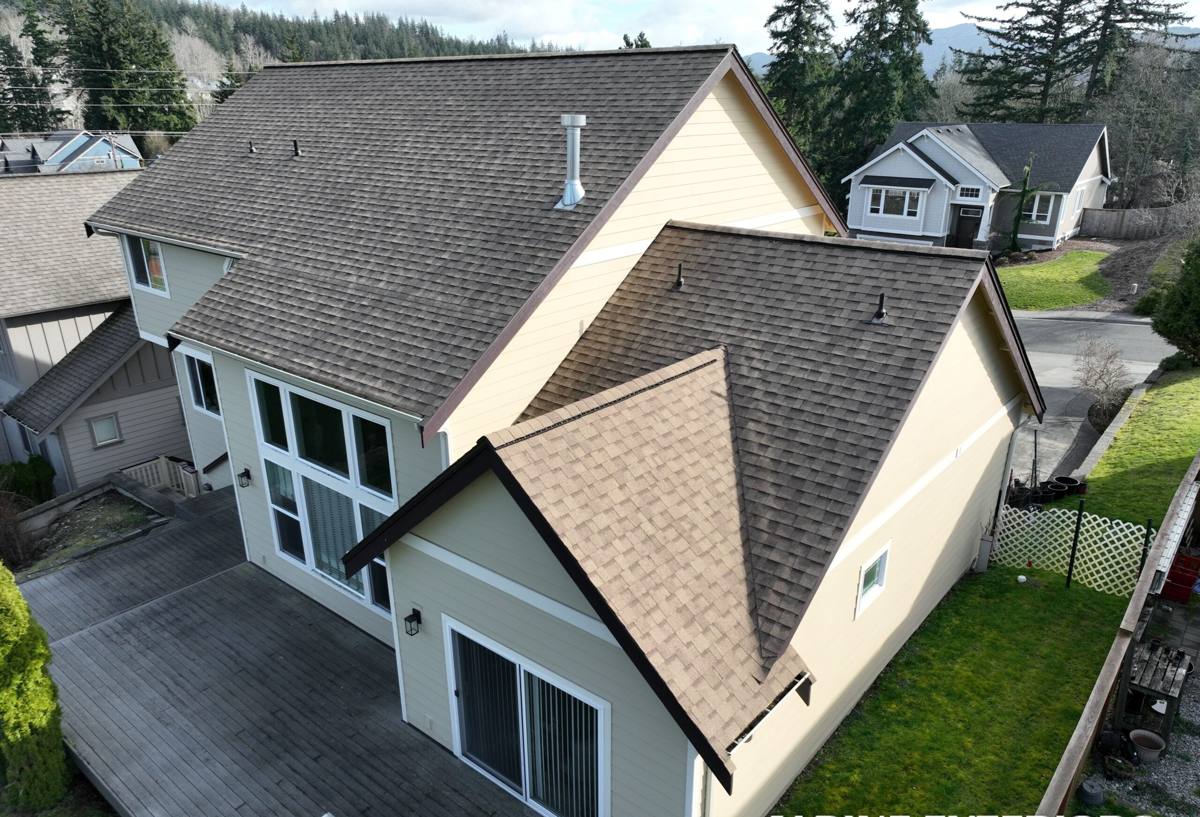
Signs Your Siding Needs Repair, Not Replacement
Most homeowners call us after noticing one obvious problem, but a proper inspection usually turns up two or three related issues. Here's what tends to show up first in this area:
- Soft or spongy spots when you press on a wall, especially near ground level or below windows
- Persistent black or green streaking that comes back within weeks of being cleaned
- Cracked, bubbled, or peeling paint concentrated on the north or west-facing walls
- Gaps opening up at seams, corners, or trim where caulking has failed
- Visible warping, cupping, or separation of boards, particularly on older wood-based products
- Rust streaking around nail heads or fasteners
Any one of these can be a localized repair. Several of them together, especially spread across multiple walls, usually mean the siding system as a whole is past the point where patching makes financial sense.
Why Localized Damage Spreads Fast Here
In a drier climate, a small crack or gap might sit for years without causing real damage. In Silver Beach's climate, that same gap is an entry point for driving rain almost every month of the year, plus the ambient moisture that salt air holds against the wall surface. Once water gets behind the siding, it doesn't dry out quickly — the humidity and tree cover common in this area slow evaporation, which is exactly the condition rot and moss need to take hold.
What's Actually Driving the Damage
Salt Air
Airborne salt accelerates the breakdown of fasteners, flashing, and paint film. It also holds moisture against surfaces longer than dry inland air does, which is part of why we see faster paint failure and corrosion on homes closer to the water.
Driving Rain
Wind-driven rain doesn't just fall on siding — it gets pushed sideways and upward into seams, under trim, and around penetrations like hose bibs and light fixtures. Repairs that don't address the water management behind the siding (not just the visible surface) tend to fail again in the next storm season.
Moss and Organic Growth
Extended damp shade, common on lots with mature tree cover, feeds moss and algae growth on siding surfaces. Beyond the cosmetic issue, moss holds moisture against the material continuously, which is a slow but steady contributor to rot in wood-based products and finish breakdown on any material that isn't built to handle it.
What a Correct Repair Actually Involves
A repair that's done right starts before anyone touches the damaged board. We look at the whole picture, not just the spot the homeowner pointed out.
1. Diagnose the Cause, Not Just the Symptom
We check flashing, caulking, and the water-resistive barrier behind the siding wherever we open up a repair area. If the underlying cause is a flashing gap or a failed sealant joint, replacing the board alone just buys a little time before the same spot fails again.
2. Match the Material and Profile
A repair should be invisible once it's painted and weathered in. That means matching board width, exposure, and texture, not just grabbing whatever's on the truck. On homes with older or discontinued siding products, this step can be the hardest part of the job, and it's one reason we're upfront with homeowners when a repair isn't a realistic long-term fix.
3. Address Moisture Before Closing the Wall Back Up
Any wet sheathing or insulation found during a repair needs to dry out or be replaced before new siding goes back on. Closing damp material behind new siding just relocates the rot problem a few years down the road.
4. Finish and Seal Properly
Cut edges, seams, and fastener heads all need to be sealed and finished to the same standard as the original installation. This is a common corner that gets cut on rushed repair jobs, and it's usually the first place the repair fails.
Repair vs. Replacement: How We Help You Decide
| Factor | Favors Repair | Favors Replacement |
|---|---|---|
| Extent of damage | Isolated to one or two areas | Present on multiple walls or elevations |
| Age of existing siding | Newer, otherwise sound material | Original siding is decades old or discontinued |
| Underlying structure | Sheathing and framing are dry and solid | Rot has spread into structural framing |
| Material match | Matching boards are available | Product is no longer manufactured or sold |
| Recurrence | First repair in this area of the home | Same spot has failed and been patched before |
We'll tell you honestly which side of that table your home falls on. Sometimes a targeted repair is the right, cost-effective answer. Other times, spending money on a repair to a wall system that's already failing elsewhere in this climate just delays a bigger expense.
Our Process for Silver Beach Repair Calls
- On-site inspection — we look at the reported damage plus the rest of the exterior, since related problems often hide nearby
- Moisture and structural check — we test for hidden water intrusion, not just visible surface damage
- Written scope and estimate — a clear explanation of what's damaged, why, and what the repair (or replacement) will involve
- Repair work — removal of damaged material, correction of the underlying cause, proper flashing and sealing, and material matching
- Finish work — painting or finish matching so the repair blends with the surrounding siding
We don't upsell repairs into full replacements when they don't need to be. We also won't quietly patch over a moisture problem that's going to resurface in a year. Our goal is a repair that actually holds up through the next several wet seasons.
Why We Only Install James Hardie Fiber Cement
When a repair area needs new material, or when a homeowner decides a full re-side makes more sense than another round of patching, we use James Hardie fiber cement exclusively. We don't install vinyl, LP SmartSide, cedar, or primed wood siding, and in a climate like Silver Beach's, that's not a brand preference — it's a practical one.
Fiber cement is non-combustible and doesn't swell, rot, or delaminate the way wood-based products can when they take on repeated moisture exposure. Hardie's ColorPlus factory finish is baked on and engineered to hold color and resist the fading and peeling that's common on field-painted siding exposed to salt air and sun. Hardie also makes climate-specific HZ product lines built around moisture exposure and temperature range, which matters in a maritime climate like this one. It carries a strong transferable warranty when installed to manufacturer specification, which is part of why we treat correct installation, not just the material choice, as the real foundation of a lasting repair or replacement.
Choosing a Contractor Who Actually Knows This Area
Siding repair contractors who mostly work inland don't always account for the specific combination of salt exposure, wind-driven rain, and moss that defines this part of Whatcom County. Here's what's worth asking before you hire anyone:
- Do they inspect for hidden moisture damage, or just patch the visible spot?
- Can they explain what caused the damage, not just what they're replacing?
- Do they have direct experience with homes in this specific area's climate conditions?
- Will they put the scope of work and materials in writing before starting?
- Do they stand behind the repair with a clear warranty on both labor and material?
A contractor who's worked on multiple homes in the Silver Beach area has already seen how this climate behaves on real walls, which shortens the diagnostic guesswork and reduces the odds of a repeat repair call.
After the Repair: What to Expect
Once a repair is complete, a small amount of ongoing maintenance goes a long way in this climate. Keeping gutters clear, trimming back vegetation that shades and dampens siding, and doing a yearly visual check of caulking and paint condition will catch small issues before they become another repair call. Homes closer to the water or under heavy tree cover should expect to check on moss and moisture signs more often than homes further inland.
If you're noticing soft spots, staining, or recurring paint failure on your home in the Silver Beach area, we're happy to take a look and give you an honest read on what's actually going on. We offer free, no-pressure estimates, and if a simple repair is the right call, that's exactly what we'll recommend.