 Chuckanut
 Why Silver Beach Windows Take More Punishment Than Most
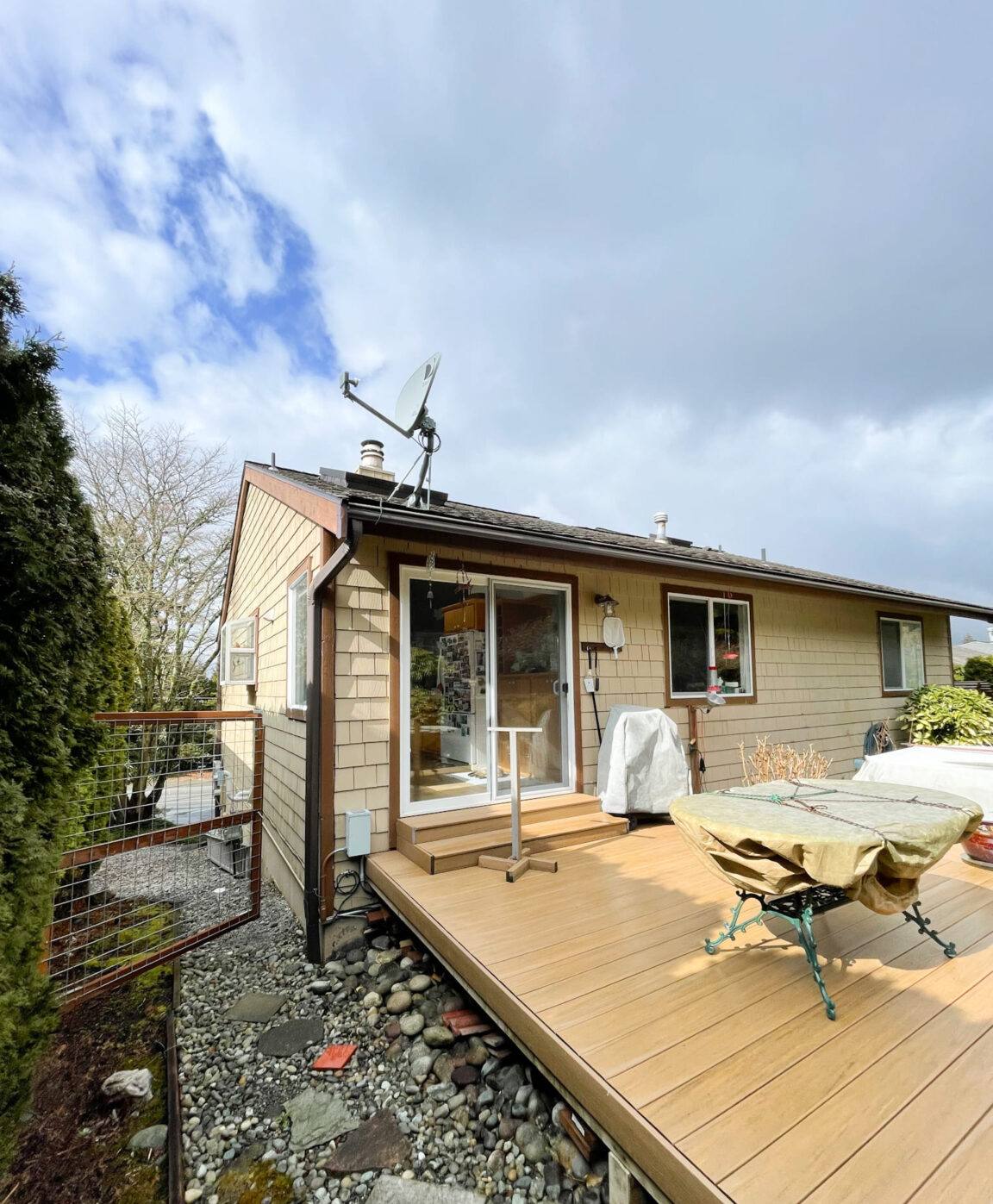
Homes in Silver Beach sit close enough to the water that salt-laden air is a daily companion, not an occasional visitor. That air, combined with the driving rain that rolls through this stretch of Whatcom County for much of the year, works on window frames, hardware, and seals in ways that homes further inland rarely have to deal with. Add a moss season that can run from early fall well into spring, and you have a climate that finds every weak point in a window and its installation and exploits it, year after year.
None of this means windows here are doomed to fail early. It means the margin for error during installation is smaller. A window that's slightly out of level, sealed with the wrong bead of caulk, or flashed with a shortcut will show it in Silver Beach faster than it would in a drier, more sheltered part of the county. That's the practical reality we design our installation process around.
What the Salt Air, Rain, and Moss Actually Do to a Window
Salt air and hardware
Salt in the air accelerates corrosion on anything metal — hinges, locks, balance systems, and the fasteners holding the frame to the structure. Hardware or fasteners that aren't rated for a marine-influenced environment can start showing pitting and stiffness years before they should, long before the glass or frame itself becomes a problem.
Driving rain and water intrusion
Wind-driven rain doesn't fall straight down — it gets pushed sideways and upward under trim and into any gap that isn't properly sealed and flashed. A window that would hold up fine in a calm, drizzly climate can leak in Silver Beach simply because the installation didn't account for rain hitting it at an angle, repeatedly, for months at a time.
Moss and prolonged moisture
A long moss season means extended stretches where wood trim, sills, and siding around a window stay damp instead of drying out between rain events. Moss and algae hold moisture against the surface, which is hard on paint, caulk, and any wood that isn't properly primed and protected. Over time, that constant dampness is what turns a small gap in the flashing into a rot problem.
Signs Your Current Windows Are Losing the Battle
Most window failures in this climate don't show up as a dramatic leak. They show up as small, easy-to-dismiss signs first. Worth a look if you notice any of these:
- Fogging or a hazy film between the panes of a double-pane window — the seal has failed and the gas fill is gone
- Soft or spongy wood trim around the window frame, especially at the bottom corners
- Paint that keeps bubbling or peeling in the same spot no matter how many times it's touched up
- Moss or dark staining building up on the sill or trim below the window faster than on the rest of the siding
- A noticeable draft near the window even when it's fully latched
- Windows that are harder to open, close, or lock than they used to be
- Visible daylight or a gap where the frame meets the siding or trim
Any one of these can be minor on its own. Two or three together, especially on a window facing the prevailing wind and rain, usually means water has already found a way in behind the trim.
What a Correct Installation Actually Involves
Window installation looks simple from the outside — remove the old unit, set the new one, trim it out. The part that actually determines whether a window performs for twenty-plus years in a climate like this happens before the new window ever goes into the opening.
Flashing comes before the window, not after
The opening has to be flashed so that any water getting past the exterior trim or siding is directed back out, not down into the wall framing. That means flashing tape or membrane at the sill, jambs, and head, installed in the correct shingle-lap order — sill first, then jambs, then head — so water always sheds downward and outward rather than pooling or getting trapped.
The window has to be set level, plumb, and square
A window that's slightly racked in the opening puts uneven stress on the frame and hardware, which shows up over time as a unit that's hard to operate or that develops gaps a level, square window wouldn't have. This is also where corner-cutting tends to happen on rushed jobs — it takes real time to shim and check a window properly on all four sides.
Sealant is backup, not the primary defense
Caulk and sealant are meant to be the last line of defense, not the main water barrier. Sealant alone breaks down, especially given the amount of rain and temperature swing this area sees, and once it fails, there's nothing behind it if the flashing wasn't done right in the first place. We treat sealant as a finishing step on top of a mechanically sound, properly flashed installation — never as a substitute for it.
Insulation and air sealing around the frame
The gap between the window frame and the rough opening needs to be filled with an appropriate low-expansion foam or backer rod and sealant, not stuffed with fiberglass batting that does little to stop air and moisture movement. Done right, this step also cuts down on drafts and helps the window perform closer to its rated efficiency.
Choosing a Window for a Coastal Whatcom County Home
Frame material matters more here than in a drier, inland climate because it determines how well the window handles years of salt air and sustained moisture. There's no single right answer for every home — it depends on budget, the look you want, and how much upkeep you're willing to do. Here's how the common options generally compare for a home in this kind of environment:
| Frame Material | How It Handles Salt Air & Moisture | Maintenance | General Cost Position |
|---|---|---|---|
| Vinyl | Won't corrode or rot; performs well in coastal air | Low — occasional cleaning | Most affordable |
| Fiberglass | Excellent — very stable, resists moisture and salt exposure well | Low | Mid to higher |
| Aluminum | Prone to corrosion and pitting in salt air unless heavily treated | Moderate to high | Mid |
| Wood (unclad) | Attractive but vulnerable to rot without diligent upkeep | High — regular painting/sealing | Higher |
| Wood, aluminum- or fiberglass-clad | Good — cladding shields the wood from the elements | Low to moderate | Higher |
Our general standard for homes exposed to this kind of salt air and rain is to steer clients toward vinyl, fiberglass, or clad-wood options and away from bare aluminum or unclad wood in high-exposure spots — not because those materials are without merit, but because the maintenance burden and moisture risk are simply higher in this specific environment. We'd rather set that expectation honestly upfront than have it become a surprise five years in.
Full-Frame Replacement vs. Insert Replacement
Once you know what material you want, the next decision is how the window gets installed: full-frame or insert (sometimes called pocket) replacement. Both are legitimate approaches — which one is right depends on the condition of your existing frame and trim.
| Factor | Full-Frame Replacement | Insert (Pocket) Replacement |
|---|---|---|
| Best when | Existing frame, sill, or trim shows rot, water damage, or is out of square | Existing frame is sound, square, and dry |
| Access to flashing/wall | Full access to re-flash and inspect the opening and sheathing | Limited — relies on the existing frame's condition and flashing |
| Exterior trim | Trim is removed and typically replaced or rebuilt | Existing trim usually stays in place |
| Labor and cost | More labor-intensive, generally higher cost | Faster, generally lower cost |
| Long-term risk in this climate | Lowest, since hidden moisture damage gets found and addressed | Higher if the existing frame has hidden rot or a flashing problem |
Given how much moisture this area sees, we're cautious about recommending insert replacement on a window where we can't verify the condition of the existing frame and flashing. An insert installed over a hidden problem doesn't fix that problem — it just covers it up for a while. Where the existing opening checks out, insert replacement is a perfectly sound, more economical option.
Our Window Installation Process
- On-site assessment. We look at each window's exposure, current condition, and the state of the surrounding trim and siding before recommending anything.
- Material and product selection. We walk through frame material, glass options, and full-frame vs. insert based on what we find, plus your budget and priorities.
- Careful removal. The old window and any compromised trim come out without unnecessary damage to surrounding siding.
- Opening inspection and repair. Any soft wood, rot, or prior flashing mistakes get addressed before a new window goes in — not covered over.
- Flashing, in the correct order. Sill, then jambs, then head, so water is always directed out and down.
- Setting the window. Shimmed level, plumb, and square, then fastened per the manufacturer's specifications.
- Insulation and air sealing. Low-expansion foam or backer rod around the frame, not compressed batting.
- Exterior trim and sealant. Trim reinstalled or rebuilt, then sealed as the final layer of protection, not the only one.
- Final check and cleanup. Every window operates smoothly, locks properly, and the site is left clean.
Why a Crew That Already Works Silver Beach Matters
Window installation isn't one-size-fits-all across Whatcom County. A crew that mostly works drier, more sheltered neighborhoods can do fine work there and still make choices that don't hold up on a home exposed to Silver Beach's wind, rain, and salt air — not from lack of skill, but from not having had to solve for this specific combination of conditions over and over.
Working in this area regularly means we've seen how flashing details, hardware choices, and sealant products actually perform here over years, not just on installation day. It also means we're familiar with the kind of permitting and inspection expectations that come up with Whatcom County projects, and we know what to look for when we open up an old window and find out how — or whether — the last installation accounted for this environment at all.
Keeping New Windows Performing Through Moss Season
A correct installation does most of the work, but a little seasonal attention extends the life of any window in this climate. Worth building into your routine:
- Rinse or gently brush moss and algae off sills and nearby trim before it builds up and holds moisture against the surface
- Check that weep holes (the small drainage openings at the base of the frame) stay clear of debris and moss
- Look over exterior caulk lines once a year and have any cracked or shrunken sealant redone before the next wet season
- Keep gutters and downspouts clear so water isn't sheeting down past windows more than it should
- Trim back vegetation that keeps foliage or branches in constant contact with window trim
None of this is a substitute for a properly installed window — it's maintenance on top of a good foundation, not a fix for a bad one.
Get a Straight Answer About Your Windows
If you're dealing with drafty, foggy, or hard-to-operate windows in Silver Beach, or you're planning ahead for a full-house replacement, we're happy to take a look and give you an honest assessment — no pressure, no upsell. Use the form below to request a free estimate, and we'll walk you through what we see and what your realistic options are.