 Chuckanut
 Storm Damage Roof Repair Built for South Hill's Weather
South Hill sits close enough to the water and the hills around Chuckanut that its roofs take a different kind of beating than roofs further inland. Salt-laden air moves through on the marine breeze, driving rain comes in sideways during winter fronts, and the shaded, damp lots that make this area attractive to live in are exactly the conditions moss and moisture love. None of that is dramatic on its own, but stacked together over a Whatcom County winter, it wears roofs down faster than most homeowners expect. Storm damage rarely shows up as one obvious event — it's usually the accumulation of small hits that finally break through during one bad storm.
This page is about one thing: storm damage roof repair for homes in and around South Hill. Not a general roofing overview, not a sales pitch — a straight explanation of what local roofs are up against, what a correct repair looks like, and how we handle the job when your roof takes a hit.
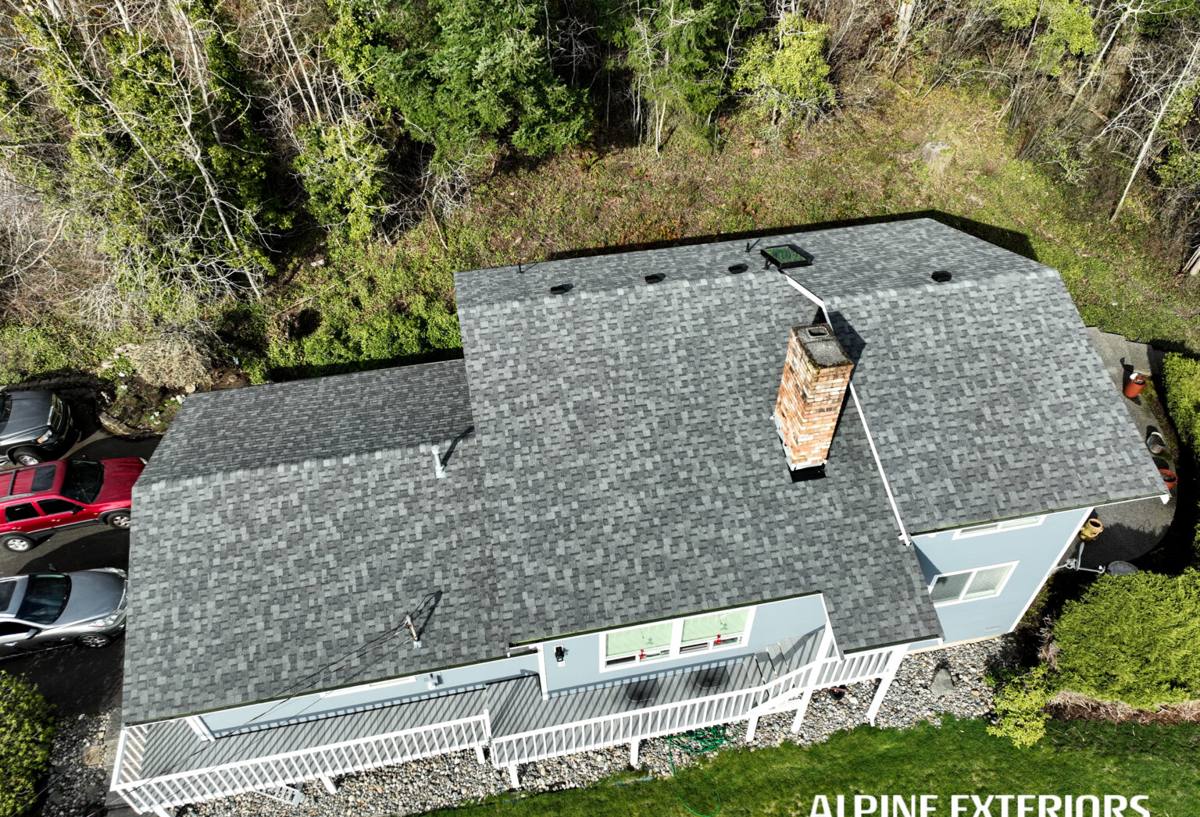
What Actually Damages Roofs Here
Storm damage in this part of Whatcom County comes from a short list of repeat offenders, and understanding them helps explain why some repairs hold up and others fail again within a season or two.
Wind-Driven Rain
Straight-down rain is rarely the problem. Wind-driven rain that gets pushed sideways and upward under shingle tabs, around flashing, and into any gap in the underlayment is what causes hidden leaks. A roof that looks fine from the ground can still be taking on water at every vulnerable edge during a windstorm.
Salt Air and Corrosion
Being near the water means metal components — flashing, fasteners, gutter hardware, vent caps — corrode faster here than they would further inland. Corroded flashing is one of the most common hidden causes of a "mystery leak" after a storm, because the metal fails quietly long before it looks obviously bad.
Moss and Trapped Moisture
Whatcom County's long, wet moss season means moss doesn't just sit on top of shingles looking messy — its root structure lifts shingle edges and holds water against the roof deck. A storm that would have shed water fine on a clean roof can instead push water under moss-lifted shingles and straight into the decking.
Wind-Loaded Debris
Tree cover that keeps a lot of South Hill lots shaded also means branches, cones, and needle debris get thrown around and land on roofs during wind events. Debris impact can crack or dislodge individual shingles, puncture underlayment, or dent metal roofing and flashing.
Signs Your Roof Took Storm Damage
Some storm damage is obvious. A lot of it isn't — it sits quietly until the next heavy rain finds it. After any significant wind or rain event, it's worth checking for the following:
- Shingles that are cracked, curled, creased, or missing entirely
- Granules collecting in gutters or at downspout outlets (a sign of shingle wear accelerated by storm impact)
- Flashing around chimneys, vents, or skylights that looks bent, lifted, or separated
- Water stains or discoloration on interior ceilings, especially near exterior walls
- Sagging or soft spots anywhere on the roof plane
- Gutters pulled loose from the fascia, or overflowing during rain
- Moss buildup with visibly lifted shingle edges underneath it
- Debris still resting on the roof after a storm, especially wedged near valleys or ridges
If you see any of these after a storm, it's worth getting a look before the next one arrives — damage that goes unaddressed through a second or third storm almost always costs more to fix.
What a Correct Storm Damage Repair Involves
A storm damage repair that actually holds up isn't just replacing whatever shingle got torn off. It requires understanding what's underneath and around the visible damage, because storms rarely damage just the surface layer.
Full Assessment, Not Just the Obvious Spot
A proper repair starts with checking the whole roof plane, not just the area a homeowner points to. Wind and rain damage is directional — if one section took a hit, adjacent flashing, valleys, and ridge lines usually deserve a close look too.
Underlayment and Decking Check
If water has been getting under the shingles for any length of time, the underlayment and the wood decking beneath it may already be compromised. Replacing shingles over damaged decking is a short-term fix that fails again quickly — a correct repair checks for soft or delaminated decking before closing anything back up.
Flashing Done Right
Given how much salt air affects metal components here, flashing repairs matter as much as shingle repairs. Reused, corroded flashing is a common reason a "fixed" leak comes back. Flashing that's compromised should be replaced, not just re-sealed.
Matching Materials and Fastening Patterns
Patch repairs need to match the existing shingle profile and be fastened correctly for wind exposure in this area. A poorly fastened patch is often the first thing to fail in the next storm.
Our Storm Damage Repair Process
When we get a call about storm damage in South Hill, the process is straightforward and built around not missing anything:
- Inspection. We walk the roof (or use a safe vantage point when conditions require it) and document the extent of damage — visible and suspected.
- Explanation. We tell you what we found, what's actually causing it, and what your realistic options are — repair, partial replacement, or full replacement — without pushing you toward the most expensive one by default.
- Written scope and estimate. You get a clear breakdown of what work is being done and why, before anything starts.
- Repair. We fix the actual problem — decking, underlayment, flashing, and shingles — not just the visible symptom.
- Final check. We verify the repair is watertight and matches the surrounding roof, and walk you through what we did.
Repair or Replace? Cost Factors to Weigh
Not every storm-damaged roof needs full replacement, and not every repair is the cheaper long-term choice. The right call depends on a few honest factors:
| Factor | Favors Repair | Favors Replacement |
|---|---|---|
| Roof age | Under half its expected service life | Nearing or past expected service life |
| Extent of damage | Isolated to one section or a few spots | Widespread across multiple roof planes |
| Decking condition | Solid, no rot or soft spots found | Soft, delaminated, or water-stained decking |
| Prior storm history | First significant damage event | Repeated damage or repairs in recent years |
| Moss/moisture history | Minimal, roof mostly clean | Long-term moss damage already present |
We'll give you our honest read on which side of that table your roof falls on — including telling you when a repair is genuinely the right call, not just the cheaper one to sell.
Storm Damage and Insurance Claims
Many storm damage repairs are eligible for homeowner's insurance coverage, particularly when the damage traces back to a specific wind or storm event. We can document damage clearly — photos, notes, and a written scope — to support a claim, but the claim itself is between you and your insurer. We're not adjusters and won't promise a specific payout; we'll give you an honest, well-documented account of what happened to your roof so you're not guessing when you talk to your carrier.
Why a Local Crew Matters for This Kind of Repair
Storm damage repair is one of the areas where local experience actually changes the outcome. A crew that works South Hill and the surrounding Chuckanut area regularly knows which parts of a roof tend to fail first in this climate, how much moss buildup is normal versus a sign of a bigger issue, and how salt air affects fastener and flashing life expectancy in a way roofing guidance written for a different climate simply doesn't account for. That local pattern recognition is what separates a repair that holds up through the next winter's storms from one that needs revisiting in a year.
Reducing Storm Damage Risk Between Storms
Some maintenance between storms measurably reduces how much damage the next one does:
- Keep gutters and downspouts clear so wind-driven rain has somewhere to go
- Address moss buildup before it lifts shingle edges, rather than after
- Trim back tree limbs that overhang the roof and could become storm debris
- Have flashing and vent boots checked periodically, since corrosion happens quietly
- Fix small issues — a lifted shingle, a loose gutter bracket — before the next storm finds them
None of this eliminates storm risk entirely — no maintenance schedule stops wind and driving rain — but it narrows the list of ways a storm can get into your home.
Get a Straight Answer About Your Roof
If your South Hill roof took damage in a recent storm, or you want a professional opinion before the next one hits, we're happy to take a look and give you a clear, honest assessment — no pressure, no upsell. Fill out the form below for a free estimate.