 Chuckanut
 Window Installation Built for Burlington's Climate
Burlington sits close enough to the water and the Chuckanut hillside that its homes take on a specific set of weather problems most inland installers don't think about every day. Salt-tinged air off the bay, long stretches of driving rain pushed sideways by wind, and a moss season that seems to start earlier every year all work on window openings in ways that are slow, quiet, and easy to miss until there's a soft spot in the sill or a foggy pane that never clears. Installing windows here isn't just about picking a product out of a catalog — it's about how that window gets tied into the wall, flashed against the weather, and sealed so water has nowhere to collect.
We work on homes throughout the Burlington area regularly, which means we're not guessing at how this climate behaves — we're seeing the same wall assemblies, the same rot patterns, and the same aging window stock over and over. That familiarity changes how we bid a job, what we flag before we start, and what we install when the old windows come out.
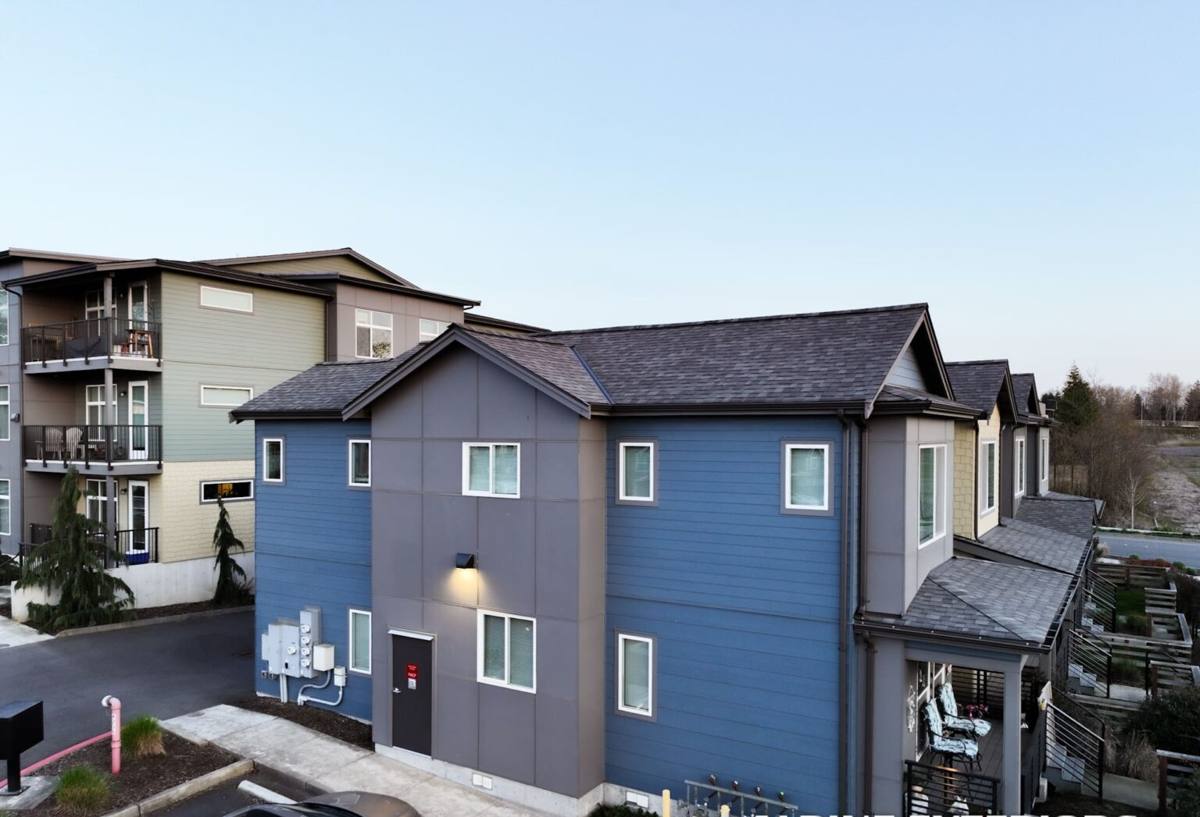
What Salt Air, Rain, and Moss Actually Do to Windows
Each of these factors attacks a window installation differently, and understanding the mechanism helps explain why a correct install matters more here than it would in a drier, inland town.
Salt Air
Airborne salt is corrosive to exposed metal — hardware, cheaper aluminum components, and fasteners that aren't rated for coastal exposure. Over years, it accelerates pitting and can compromise the hardware that keeps a window sealed tight against wind-driven rain, even if the glass and frame are otherwise sound.
Driving Rain
Whatcom County storms don't always fall straight down — wind pushes rain sideways into wall openings, which is exactly where a window installation either holds up or fails. Water doesn't need a big gap to get in; it needs a path, and a poorly lapped flashing detail or a bead of caulk asked to do a flashing's job will eventually find one.
Moss and Sustained Moisture
Moss thrives in the shaded, damp conditions common on north-facing walls and under eaves in this region. Beyond the cosmetic issue, moss holds moisture against trim and siding longer than bare wood would, which keeps the area around a window opening wet for more of the year. That prolonged dampness is what actually causes rot — not a single storm, but months of a window's surroundings never fully drying out.
Signs a Burlington Home May Need Window Work
Because the damage caused by this climate develops slowly, most homeowners don't notice it until it's visible from inside the house. Here's what we tell people to watch for:
- Soft or spongy wood at the sill or lower corners of the window frame, inside or out
- Paint that bubbles, peels, or won't hold near the window trim, even after repainting
- Fogging or a milky look between panes of double-pane glass — a sign the seal has failed
- Drafts you can feel with a hand near the frame on a windy day
- Windows that are hard to open, close, or lock, which often points to a frame that's swelled or warped
- Visible moss or dark streaking on the siding directly above or beside a window
- A musty smell in a room even when the window looks fine from outside
Any one of these on its own might be minor. Several together, especially on the same window, usually means water has been getting past the original installation for a while.
What a Correct Window Installation Actually Involves
The window unit itself is often the smaller part of the job. What determines whether it lasts is the work most people never see once the trim goes back on.
Removing the Old Window Without Guessing
Before anything new goes in, we pull back enough of the surrounding wall to actually see the condition of the framing, sheathing, and any existing flashing. This is where hidden rot from years of moss and driving rain typically shows up. Installing a new window over damaged framing just hides the problem behind a fresh unit — it doesn't fix it.
Flashing, Not Just Caulk
A window opening needs to be flashed in layers so that any water that does get behind the siding is directed back out, not trapped inside the wall. That means a sill pan at the bottom of the opening, weather-resistant barrier integration at the sides and top, and head flashing that laps correctly with the material above it. Caulk has a role in this system, but it's a backup, not the primary defense — caulk alone fails, and it fails quietly.
Setting the Window Square and Level
A window that's slightly out of square will bind, won't seal evenly, and puts uneven stress on the frame over time — which shortens the life of weatherstripping and hardware. We shim and set every unit level, plumb, and square before it's fastened, and check operation before we move on to trim and sealant.
Insulating the Gap Correctly
The gap between the window frame and the rough opening needs to be filled with a low-expansion foam or backer rod and sealant designed for that gap — not packed tight with fiberglass insulation, which does little to stop air movement and nothing to stop bulk water.
Interior and Exterior Sealing
The last step is sealing both the interior air barrier and the exterior weather barrier with the right products for each surface, then reinstalling or replacing trim so the finished look matches the rest of the house.
Choosing a Window for This Climate
Frame material and glass package both matter more here than in a milder, drier climate. We walk homeowners through the honest trade-offs rather than pushing one product line regardless of the home.
| Frame Material | How It Handles This Climate | Maintenance |
|---|---|---|
| Vinyl | Doesn't rot or corrode from salt air; performs well against moisture | Low — occasional cleaning, no painting |
| Fiberglass | Very stable in temperature swings and moisture; strong long-term option in coastal exposure | Low — durable finish, rarely needs attention |
| Wood (uncoated or poorly clad) | Attractive but vulnerable to prolonged moisture and moss-related dampness without diligent upkeep | High — regular painting/sealing required |
| Wood-clad (quality exterior cladding) | Combines interior wood look with a weather-resistant exterior shell; performs reasonably well if the cladding and flashing are done right | Moderate — exterior is low-maintenance, interior wood still needs occasional care |
| Aluminum | Can corrode with sustained salt exposure unless properly rated and finished; also conducts cold, which shows up as condensation in our winters | Moderate — watch for corrosion at coastal properties |
For most Burlington homes exposed to salt air and heavy rain, we tend to steer people toward vinyl or fiberglass for the exterior-facing performance, reserving wood or wood-clad for homes where matching an existing architectural look is the priority and the owner understands the maintenance commitment. On glass, look for a low U-factor to hold heat in during our cool, damp winters and a moderate solar heat gain coefficient — Northwest homes don't usually need the aggressive solar control that's built for hotter climates.
New-Construction vs. Retrofit Installation
There are two general approaches to putting a window into an existing wall, and which one applies changes both the process and the cost.
Full-Frame (New-Construction Style) Replacement
This method removes the window down to the rough opening, including the old flashing, so we can inspect and rebuild the moisture management system from scratch. It's the more thorough option and the one we recommend whenever there's any sign of past water intrusion, since it's the only way to actually see and fix what's behind the trim.
Insert (Pocket) Replacement
This method fits a new window frame inside the existing, sound frame, leaving the original flashing and trim largely undisturbed. It's faster and less invasive, and it's a reasonable choice when the existing frame is confirmed to be dry and structurally solid. We won't recommend it on an opening we haven't been able to verify is free of hidden moisture damage — doing so would just seal a problem back up.
Our Process, Start to Finish
- On-site assessment — we look at the windows in question, the surrounding siding and trim, and ask about any drafts, fogging, or moisture issues you've noticed.
- Honest recommendation — we tell you whether a retrofit or full-frame replacement is appropriate, and why, before we talk product options.
- Product selection — we walk through frame material and glass package trade-offs based on the specific wall, exposure, and budget.
- Written estimate — a clear scope of work and price, no surprise add-ons sprung on you mid-project.
- Removal and inspection — old units come out carefully, and we show you what we find in the opening before closing anything up.
- Flashing, setting, and sealing — done in the sequence described above, not shortcuts stacked on top of each other.
- Trim and cleanup — interior and exterior trim finished to match, site cleaned up, old windows hauled away.
- Final walkthrough — we test operation on every window with you before we call the job done.
Cost Factors Worth Understanding
Window installation pricing varies by project, but a few factors consistently drive the range: the number of windows, whether the job is a full-frame or insert replacement, the frame material chosen, glass upgrades, and whether hidden rot repair is needed once the old window comes out. Full-frame replacements with rot repair cost more than a straightforward insert swap into a sound opening — but skipping the inspection to save money on a wall that's already compromised usually costs more later, once the damage has spread further into the framing.
Why a Crew That Already Works Burlington Matters
Window installation isn't a one-size-fits-all trade. A crew that mostly works drier, inland areas may not think twice about relying on caulk over a proper flashing detail, or may not flag moss buildup as a moisture risk worth addressing before it reaches the framing. Working Burlington and the surrounding Whatcom County area on a regular basis means we've opened up enough walls in this specific climate to know where water tends to find its way in, which frame materials actually hold up against salt air over the long run, and what a rushed job looks like once it's a few years old. That's the kind of judgment that doesn't show up in a brochure — it shows up in whether the window is still sealed tight five winters from now.
If you're noticing drafts, fogging, sticking sashes, or moisture damage around your windows — or you're just planning ahead for a home in this climate — we're happy to take a look and give you a straightforward, no-pressure estimate. Use the form below to get started.