 Chuckanut
 Windows Built for What Sehome Weather Actually Does
Homes in the Sehome area near Chuckanut deal with a specific combination of weather stress that inland Washington homes don't see nearly as often. Salt-laden air off the water works into metal hardware and fasteners over time. Driving rain — the sideways kind, not just straight-down — gets pushed into any gap in flashing or trim by wind coming off the water. And Whatcom County's long, damp moss season means anything with a horizontal surface or a shaded north face stays wet longer than it should, which is exactly the condition that lets rot get started around window openings.
None of this means windows here fail faster than anywhere else. It means they fail differently, and usually for reasons that trace back to how they were installed rather than the window itself. A window that's a great product on paper can still leak, fog, or rot at the sill if the flashing and sealing weren't done correctly for this climate. That's the part of the job that matters most, and it's the part that's easiest to get wrong if a crew doesn't install windows in this kind of weather on a regular basis.
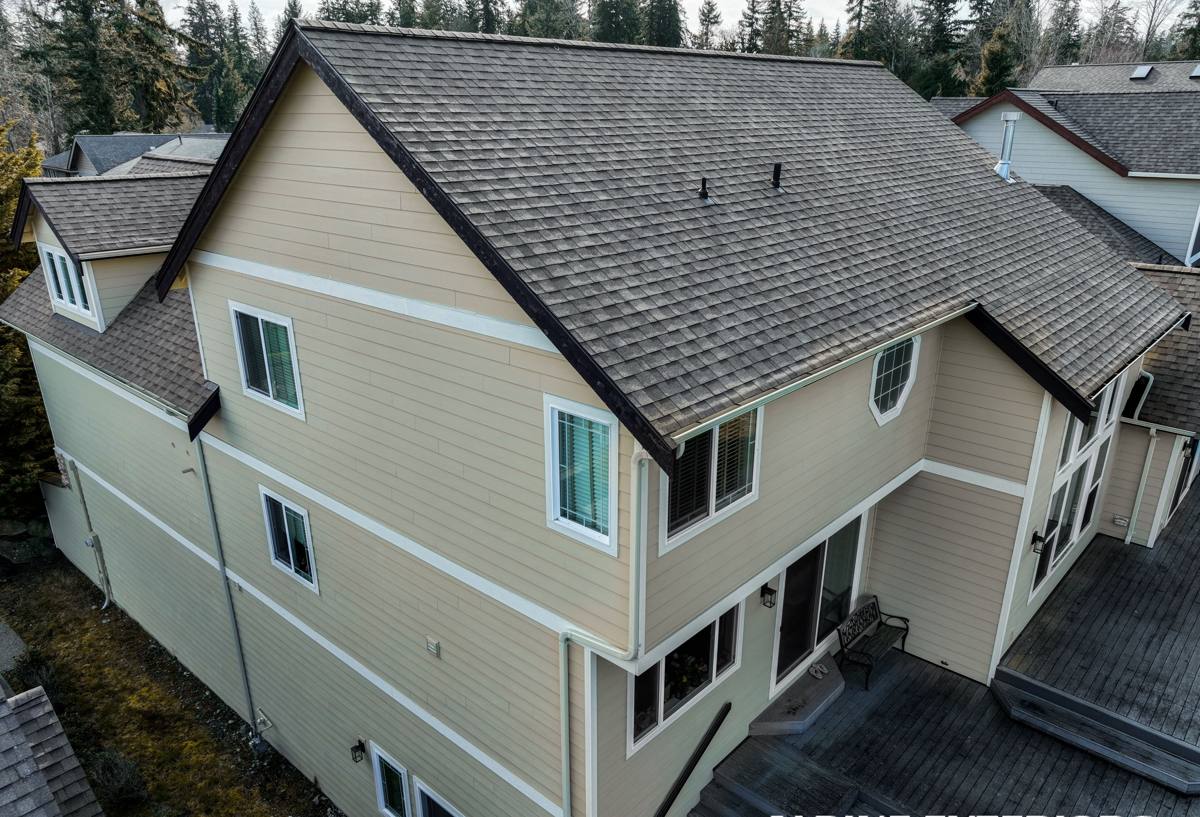
What a Correct Window Installation Actually Involves
Window installation looks simple from the outside — old window out, new window in — but the steps that actually determine whether a window performs for the next 20+ years happen where you can't see them once the trim goes back on.
Removal and Opening Inspection
Once the old window is out, the rough opening gets a real look: sill condition, framing, any signs of past water intrusion or soft wood. In a salt-air, high-rainfall area, this step matters more than people expect. It's common to find minor sill damage behind an old window that never showed up as a visible leak indoors — catching it now is far cheaper than dealing with it after a new window is sealed over it.
Flashing and Water Management
This is the single most important part of the job in this climate. Proper flashing directs any water that gets past the window itself back out, rather than letting it collect at the sill or work into the wall framing. Sill pan flashing, correctly lapped house wrap, and properly integrated flashing tape around the whole opening are what actually keep driving rain out — not caulk alone. Caulk is a backup, not the primary defense.
Air Sealing and Insulation
The gap between the window frame and the rough opening needs to be sealed and insulated correctly — not overpacked with expanding foam, which can bow the frame and cause the window to operate poorly, and not left with gaps, which lets moist air condense inside the wall cavity. This is a balance that comes from experience, not a one-size-fits-all rule.
Fastening, Leveling, and Trim
A window that's slightly out of square will bind, won't seal against its own weatherstripping correctly, and will show stress at the corners over time. Fasteners need to be corrosion-resistant given the salt air exposure — this is one area where using the wrong hardware can quietly shorten the life of an otherwise good installation.
Quick Checklist: What a Sehome-Ready Installation Should Include
- Full inspection of the rough opening and sill before the new window goes in
- Sill pan flashing, not just caulk, at the base of the opening
- Properly lapped flashing tape and house wrap integration around the full frame
- Corrosion-resistant fasteners suited to coastal air exposure
- Correct, non-excessive insulation in the shim space — no overpacked foam
- Frame checked for level, plumb, and square before final fastening
- Exterior trim and sealant detail that sheds water rather than trapping it
Choosing a Window Frame Material for This Climate
The right frame material for a Sehome home depends on exposure, budget, and how much upkeep you want to take on. Here's how the common options actually compare under salt air and heavy rain, rather than in ideal conditions.
| Frame Material | Salt Air Behavior | Moisture Resistance | Upkeep |
|---|---|---|---|
| Vinyl | Won't corrode; UV-stable finishes hold up well | Good — no wood to rot at the frame | Low — occasional cleaning |
| Fiberglass | Excellent — dimensionally stable, resists pitting | Very good, handles temperature/moisture swings well | Low |
| Aluminum | Prone to corrosion and pitting near salt air unless marine-grade coated | Conducts moisture and cold; condensation-prone | Moderate to high in coastal exposure |
| Wood-clad | Cladding protects the face, but any breach exposes wood to rot | Depends entirely on installation quality and seal integrity | Highest — needs regular inspection and maintenance |
We install a range of frame materials because the right choice depends on the specific home — a shaded, north-facing wall that stays damp longer needs a different recommendation than a sunnier, more sheltered elevation. What we won't do is put a maintenance-heavy option in a spot where it's set up to fail early, without being upfront with you about that trade-off first.
Signs Your Windows Need Replacing, Not Just Repair
- Visible fogging or moisture between glass panes — the seal has failed and can't be fixed, only replaced
- Soft, discolored, or spongy trim or sill wood around the frame
- Windows that are difficult to open, close, or lock, especially after damp weather
- Noticeable draft or cold spot near the frame even when the window is fully closed
- Visible gaps between the frame and the wall, or caulk that's cracked and pulling away
- Persistent moss or dark staining building up on the sill or exterior trim
Any one of these on its own might just need attention. Several at once, especially on a wall that takes the brunt of weather off the water, usually means it's time to replace rather than keep patching.
Our Installation Process
- On-site assessment. We look at each window opening individually — sun exposure, wind exposure, current condition — rather than quoting the whole house as identical.
- Product recommendation. We walk through frame material and glass options suited to each opening's exposure, with honest trade-offs, not just the highest-margin option.
- Written estimate. Clear scope, materials, and cost — no surprise add-ons once work starts.
- Removal and opening prep. Old window out, opening inspected and repaired if needed before anything new goes in.
- Flashing and installation. Sill pan, flashing tape, insulation, and fastening done to the standard this climate requires.
- Trim and final seal. Interior and exterior finish work, with a final check of operation and seal.
- Walkthrough. We confirm every window operates correctly and answer any questions before we consider the job done.
What Affects the Cost of a Window Installation
| Factor | Why It Matters |
|---|---|
| Frame material | Vinyl is typically the most budget-friendly; fiberglass and wood-clad cost more upfront |
| Opening condition | Rot or framing repair found during removal adds labor and material |
| Window size and type | Custom shapes, larger picture windows, or specialty operating styles cost more than standard sizes |
| Number of windows | Per-window cost usually drops slightly with a full-house project versus one-off replacements |
| Glass package | Double vs. triple pane, and low-E or gas-fill options, affect both cost and long-term energy performance |
| Access and exposure | Second-story or hard-to-access windows, and highly weather-exposed elevations, can add labor time |
We don't quote in vague ranges without seeing the actual openings — the honest answer is that cost depends on what we find once we're looking at your specific windows, not a flat per-window number that ignores condition and exposure.
Why Local Experience in Sehome Matters
A crew that regularly works homes in the Sehome area and around Chuckanut has already seen how this specific stretch of Whatcom County weather treats window installations — which elevations take the worst of the driving rain, how fast moss builds up on north-facing sills, and where salt air does the most damage to hardware. That's not something you get from a general install checklist. It's the difference between a window that's technically installed correctly and one that's installed correctly for this exact climate.
It also means we're not guessing about product durability — we see how different frame materials and installation details actually hold up on homes in this area over years, not just what a manufacturer's spec sheet claims.
Keeping Your New Windows Performing Long-Term
A correctly installed window still benefits from basic upkeep, especially given the moss and moisture conditions here.
- Clear debris and moss buildup from sills and tracks a couple of times a year
- Check exterior caulk and sealant lines annually for cracking or separation
- Rinse salt residue off frames and hardware periodically if you're close to the water
- Make sure gutters and downspouts near window openings are directing water away, not onto the wall
If you're seeing drafts, sticking sashes, or signs of moisture around your windows, or you're simply ready to replace aging windows before they become a bigger problem, we're happy to take a look and give you a straightforward, no-pressure estimate for your Sehome home.