 Chuckanut
 Roofing in York Isn't Like Roofing Inland
Homes in the York area, tucked close to Chuckanut and the water in Whatcom County, take a different kind of beating than a house twenty miles inland. The combination of salt-laden air off the bay, near-constant driving rain through fall and winter, and shaded, damp conditions that never fully dry out creates a roofing environment that punishes shortcuts. A roof that would last twenty-five years in a drier climate can start failing in half that time here if it wasn't built for these specific conditions.
We've replaced enough roofs in this stretch of Whatcom County to know what actually fails first, and it's rarely the shingles themselves. It's the fasteners, the flashing, the underlayment, and the ventilation — the parts of a roof system that don't show up in a curb-side photo but determine whether the roof makes it to year 10 or year 25.
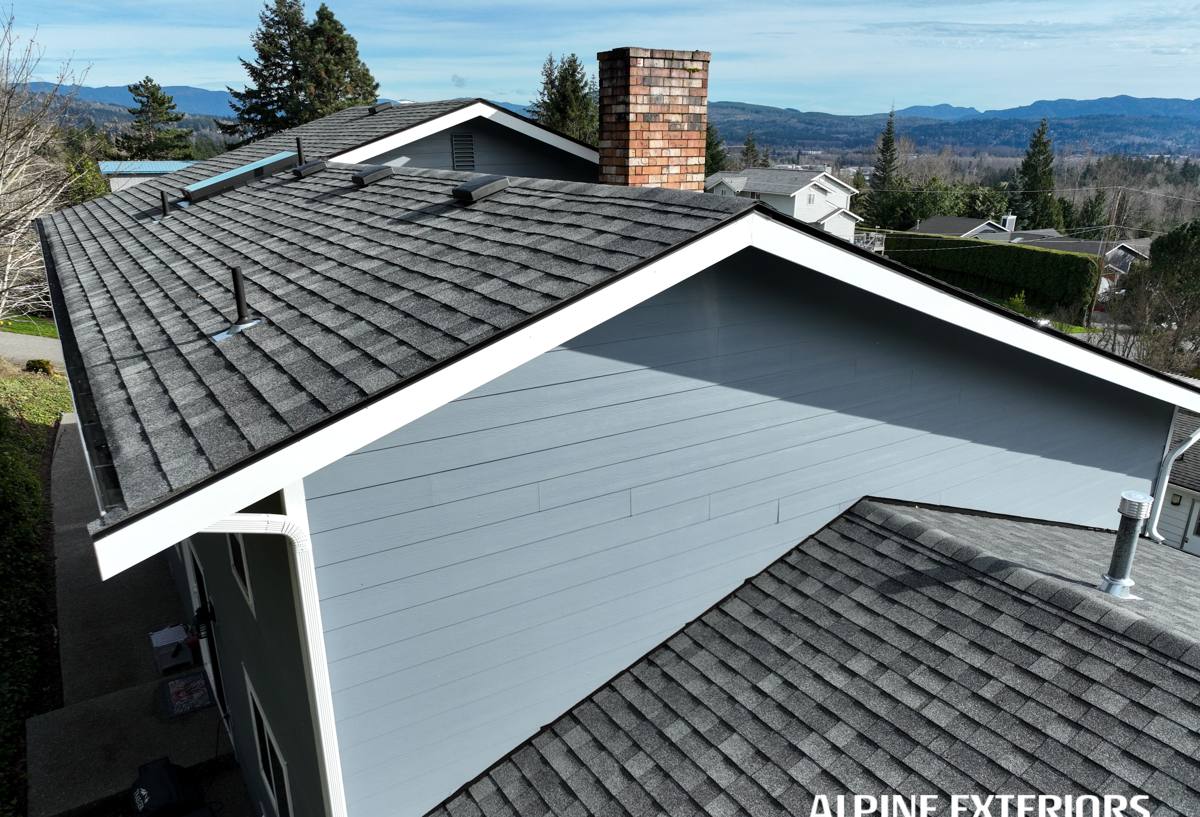
What Salt Air, Rain, and Moss Actually Do to a Roof
Salt Air
Airborne salt from the bay accelerates corrosion on anything metal — nails, flashing, gutter fasteners, and exposed screws on metal roofing. Standard galvanized fasteners can start rusting years before an inland roof would show the same wear. This is a materials and fastener decision, not something you can fix after the fact.
Driving Rain
Wind-driven rain doesn't just fall on a roof, it gets pushed sideways and upward under laps, around vents, and into any gap in the flashing. A roof detailed for calm, vertical rainfall will leak here even if it would hold up fine somewhere drier. Every penetration — chimneys, vents, skylights — needs flashing work done to a higher standard than the minimum code requires.
Moss and Prolonged Dampness
Shade, moisture, and mild temperatures are exactly what moss needs to thrive, and a roof with a long moss season rarely dries out completely between storms. Moss holds water against the roofing surface, works its way under shingle tabs and shakes, and can lift material enough to let water through even when the shingles themselves aren't worn out. Left unaddressed, moss growth alone can shorten a roof's usable life by years.
Signs Your York-Area Roof Is Due for Replacement, Not Another Repair
Not every roofing problem means you need a full replacement — but in this climate, small issues compound faster than homeowners expect. Here's how we tell the difference on an inspection:
- Granule loss heavy enough to see bare fiberglass mat on multiple shingles, not just a few isolated spots
- Moss growth that's established in the shingle mat itself, not just sitting on the surface
- Soft or spongy decking felt underfoot when walking the roof — a sign moisture has already reached the wood
- Curling, cupping, or cracked shingles concentrated on the north- or shade-facing slopes
- Rusted or failing metal flashing around chimneys, vents, and valleys
- Daylight visible through the roof deck from inside the attic, or water staining on rafters
- A roof already past 18-20 years old with two or more of the above present
If a roof shows one or two of these issues in isolation, targeted repair can still make sense. When several show up together, patch work usually turns into paying twice — once for the patch, again for the replacement a year or two later.
What a Correct Roof Replacement Actually Involves Here
A roof replacement built for this stretch of Whatcom County isn't just stripping old shingles and laying new ones. The parts that matter most are the ones you won't see once the job is finished:
Full Tear-Off and Deck Inspection
We remove the old roofing down to the deck rather than layering over it, because moisture damage under an aging roof is common in this climate and it needs to be caught and repaired, not sealed in. Any soft, delaminated, or water-stained decking gets replaced before anything new goes down.
Ice and Water Barrier at Vulnerable Points
Eaves, valleys, and areas around penetrations get self-adhering waterproof underlayment, not just standard felt. These are the spots where driving rain and wind-blown water find their way in first.
Upgraded Flashing Details
Step flashing at walls and chimneys, and properly lapped valley flashing, sized and installed to shed wind-driven rain rather than the bare code minimum.
Balanced Ventilation
Intake at the eaves and exhaust at the ridge, sized to actually move air through the attic. Good ventilation keeps the underside of the deck dry, which slows both rot and the conditions moss needs to spread.
Corrosion-Resistant Fasteners and Metal
Given the salt air, we use fasteners and flashing rated for coastal exposure rather than standard galvanized hardware that will show rust within a few seasons.
Choosing a Roofing Material for This Climate
There's no single "best" roofing material for every home — it depends on the house, the budget, and how much maintenance you want to take on. Here's how the common options stack up specifically against salt air, driving rain, and moss:
| Material | Moss & Moisture Behavior | Typical Lifespan Here | Considerations |
|---|---|---|---|
| Architectural asphalt shingle | Good when installed with proper ventilation; algae-resistant granules help slow moss/moss-adjacent growth | 20-25 years | Most cost-effective; performance depends heavily on installation quality |
| Standing seam metal | Sheds water and moss quickly due to steep, smooth surface; needs corrosion-resistant fasteners near the water | 40-50 years | Higher upfront cost; fastener and flashing detail matters more, not less |
| Cedar shake | Attractive but naturally more prone to holding moisture and moss without diligent upkeep | 20-30 years with maintenance | Requires regular cleaning and treatment; higher long-term maintenance burden in this climate |
| Synthetic composite shingle | Resists moisture absorption well; less organic material for moss to take hold in | 30-40 years | Good middle ground on cost and durability; product selection varies by manufacturer |
Our general standard: whatever material a homeowner chooses, we won't install it without the underlayment, flashing, and ventilation upgrades this climate calls for. A premium material over a poorly detailed roof deck still fails early; a mid-range material properly installed will often outperform it.
Our Process, Start to Finish
- On-site inspection: We walk the roof and attic, check the decking, ventilation, and flashing, and document what we find with photos.
- Honest scope and estimate: You get a written estimate that separates what's needed from what's optional, with material options at different price points.
- Scheduling around the weather: Given how much rain this area sees, we plan tear-off and dry-in carefully so your home isn't left exposed overnight.
- Tear-off and deck repair: Old roofing comes off, decking is inspected, and any damaged sections are replaced before anything new is installed.
- Installation: Underlayment, flashing, ventilation components, and the new roofing material go in to manufacturer specification and to our own detailing standards for wind-driven rain.
- Cleanup and walk-through: Magnetic sweep for stray fasteners, full site cleanup, and a walk-through so you understand what was done and what to watch for going forward.
Ventilation and Moisture Control Deserve Their Own Attention
It's tempting to think of ventilation as a minor detail compared to shingles or metal panels, but in a climate with a long moss season and persistent dampness, it's often the difference between a roof that lasts and one that doesn't. Poor attic airflow traps warm, moist air against the underside of the deck, which speeds up rot from the inside while the moss works from the outside. We size and balance intake and exhaust ventilation as a standard part of every replacement here, not as an upsell.
Keeping a New Roof Performing After Installation
A properly installed roof still benefits from basic upkeep in this climate. A few habits go a long way toward protecting the investment:
- Have moss growth treated or removed at the first sign of it, rather than waiting for a full season of growth
- Keep gutters clear so water isn't backing up under the eaves during heavy rain
- Trim back overhanging branches that keep sections of the roof shaded and damp longer than the rest
- Schedule a visual inspection every year or two, especially after major storms
- Address any small flashing or fastener issues right away — in this climate, small leaks don't stay small for long
Why It Matters That We Already Work in York
A roofing crew that's worked this specific area understands the microclimate without having to learn it on your roof. We know which details tend to fail first on homes exposed to the bay's salt air, how much moss pressure to expect on shaded slopes, and where driving rain typically finds weak flashing. That familiarity shows up in fewer surprises during the job and a roof detailed for the conditions it will actually face, not generic textbook conditions.
If your roof is showing wear, or you just want an honest read on how much life it has left, we're happy to take a look. Reach out for a free, no-pressure estimate using the form below.