 Chuckanut
 Why Siding in York Takes a Different Approach Than Inland Installs
Homes in the York area of Chuckanut sit close enough to the water that the air itself works against your exterior. Salt-laden moisture rides in on marine air, settles into seams and fastener heads, and never fully lets go. Add Whatcom County's long, wet winters — driving rain that comes in sideways off the water more often than straight down — and you have an exterior that's under near-constant load for eight or nine months of the year. Then there's moss season, which here isn't a season so much as a standing condition. Shaded north walls, tree-lined lots, and persistent damp air give moss and algae everything they need to take hold on siding, trim, and roof lines alike.
Siding that isn't built and installed for this combination doesn't fail all at once. It fails slowly — a soft spot behind a downspout, a swollen panel edge, a stain that won't pressure-wash off anymore — until a homeowner is looking at a full replacement years earlier than they should be. Getting the installation right the first time, with a product engineered for this climate, is the difference between a 30-year exterior and a 10-year one.
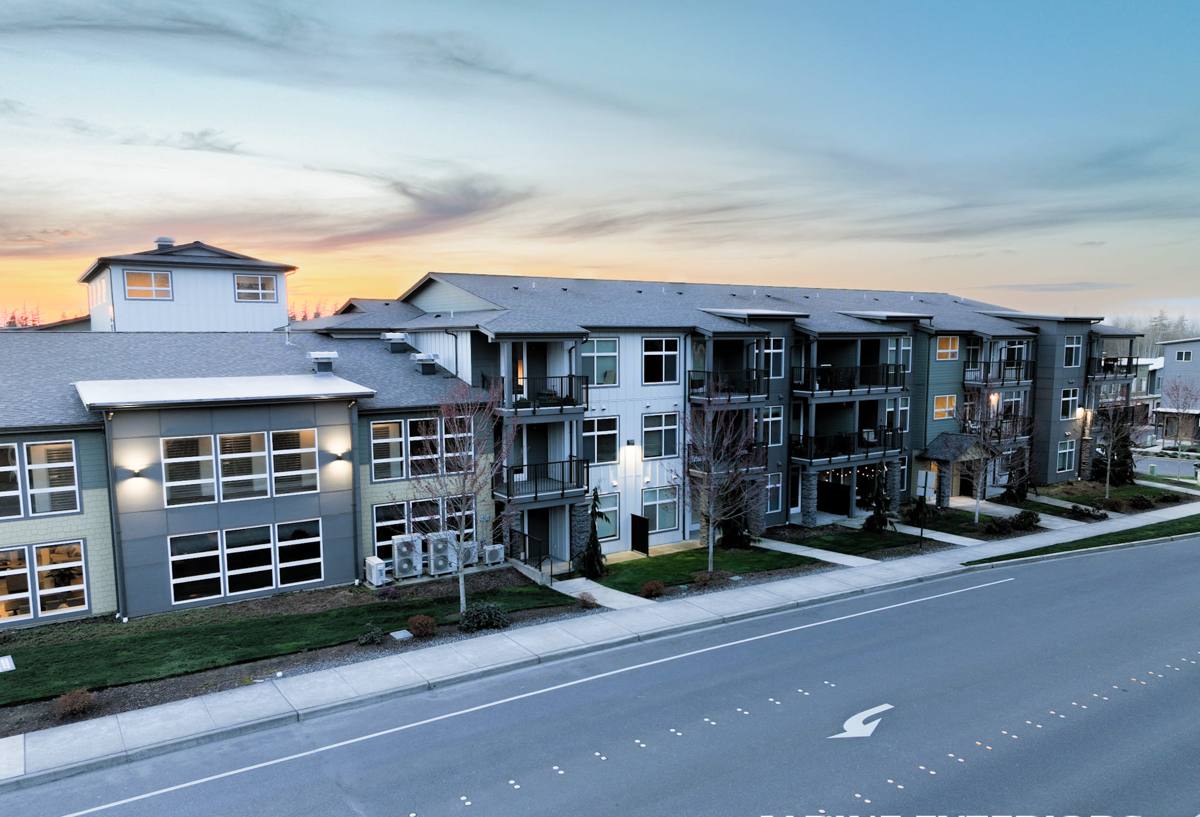
What Correct Siding Installation Actually Involves
Siding installation isn't just fastening boards to a wall. The siding itself is the least of the work — most of what determines whether a job lasts happens underneath it, where you'll never see it again once the crew leaves.
Water Management Starts Before the Siding Goes On
Every wall needs a continuous weather-resistant barrier, properly lapped so water sheds downward and outward rather than working its way in behind a seam. Every window, door, and penetration needs flashing that directs water out onto the surface of the siding, not into the wall cavity behind it. In a place like York, where wind-driven rain hits walls at an angle instead of falling straight down, sloppy flashing details are exactly where water finds its way in. This is the part of the job that's invisible once it's done — and the part that matters most.
Fastening and Clearances That Hold Up
Fiber cement siding needs to be fastened correctly for the product line and exposure — wrong nail placement or over-driven fasteners create stress points that crack over time as the material moves with temperature and moisture swings. Clearances matter just as much: siding that's installed tight to a deck, patio, or grade line traps moisture against the bottom edge and starts to fail there first, often before the rest of the wall shows any wear. Manufacturer-specified gaps at the ground, roofline, and trim keep water moving away from the material instead of sitting against it.
Why We Install Only James Hardie Fiber Cement
We standardized on James Hardie for one reason: it's the product that holds up best to exactly the conditions York deals with. It's fiber cement, not wood-based, so it doesn't absorb moisture and swell the way engineered wood products can, and it's inherently resistant to the moss, mildew, and algae growth that's a year-round concern this close to the water. Hardie's ColorPlus factory finish is baked on and warranted separately from the substrate, which matters in a climate where UV, salt air, and constant damp all work to break down a field-applied paint job faster than they would somewhere drier. Hardie also builds region-specific HZ product lines engineered for high-moisture, coastal-adjacent climates like ours, rather than a one-size-fits-all formulation.
We don't install vinyl, LP SmartSide, Cemplank, Allura, primed spruce, or cedar — not because those products have no place anywhere, but because we've seen how they perform specifically in Whatcom County's salt air and rain load, and we're not willing to put our name on an install we don't believe will hold up here. That's a standard we apply to every job, not a sales pitch for one.
Our Installation Process for York Homes
Assessment and Tear-Off
We start by walking the exterior and identifying what's actually happening behind the current siding — not just what's visible from the ground. In older York homes, this is often where we find moisture damage that's been quietly building for years, especially around windows, at deck ledgers, and on north- and west-facing walls that get the least sun exposure and the most weather. Full tear-off gives us the chance to fix rot and framing issues before they get covered up again, which is not optional if you want the new siding to actually last.
Prep and Weather Barrier
Once the wall is open, we repair any damaged sheathing or framing, install a continuous weather-resistant barrier, and detail flashing at every window, door, and penetration before a single piece of siding goes up. This is the step that gets skipped or rushed on lower-quality installs, and it's the step that determines whether you're dealing with a water intrusion problem again in five years.
Installation and Finish
We install James Hardie panels, plank, or shingle siding to manufacturer spec — correct fastener type and placement, correct clearances at grade and rooflines, and correct caulking and trim detail at every joint. We walk the finished job with the homeowner before we consider it done, so nothing gets missed.
Signs Your Current Siding Is Already Losing the Fight
Because siding failure in this climate tends to start hidden and work its way outward, it helps to know what to look for before a small problem becomes a full wall replacement:
- Soft or spongy spots when you press on the siding, especially near the bottom edge or under windows
- Paint that's bubbling, peeling, or chalking faster than it used to
- Dark streaking or persistent moss and algae growth that comes back within weeks of cleaning
- Panels or boards that look warped, cupped, or separated at the seams
- Visible gaps opening up around trim, corners, or window casings
- A noticeable jump in heating costs, which can point to moisture-compromised insulation behind the siding
Any one of these on its own might be minor. Two or three together, especially on the same wall, usually means water has been getting behind the siding for a while.
What Drives the Cost of a Siding Installation
Every York property is a little different, and the honest answer to "what will this cost" depends on several factors that need to be assessed in person rather than quoted over the phone. Here's what actually moves the number:
| Factor | Why It Matters in York |
|---|---|
| Home size and wall complexity | More corners, dormers, and roof intersections mean more flashing detail and cutting |
| Tear-off condition | Hidden rot or moisture damage found during removal adds repair scope before new siding can go on |
| Number of stories and access | Multi-story or hard-to-access walls near steep or wooded lots take more time and equipment |
| Siding profile chosen | Lap plank, shingle, and panel Hardie products differ in material and labor cost |
| Trim and detail level | Custom trim, board-and-batten accents, or matching existing architectural detail adds time |
| Existing weather barrier condition | A compromised barrier layer means more prep before siding installation can begin |
We give firm numbers after an in-person walkthrough, not before — anything else is a guess dressed up as a quote.
Why Hiring a Crew That Already Works in York Matters
Siding installation isn't a generic skill applied the same way everywhere. A crew that regularly works the York area already knows which walls take the worst of the weather, where moss tends to establish first, and how prior installations in this specific pocket of Chuckanut have held up or failed over time. That's not something you get from a crew that's mostly worked inland or in drier parts of the county — the flashing details, clearances, and product choices that hold up here are shaped by conditions that don't show up the same way twenty miles away from the water.
It also means accountability. A local crew has a reputation in the area to protect and is easy to reach if a question comes up after the job is done — not a call center or a subcontractor who's moved on to the next region.
Ready to Talk About Your Siding?
If your siding is showing any of the wear signs above, or you're just planning ahead for a home in York, we're happy to walk the property, answer questions honestly, and give you a straight assessment — no pressure, no sales script. Fill out the form below to schedule a free estimate.