 Chuckanut
 Building new in Burlington gives you one advantage you don't get on a remodel: the chance to get window installation right from the very first stud, before drywall, siding, or a single coat of paint hides the details that actually determine whether a window performs for the next 30 years or leaks behind the wall in five. Burlington sits in Whatcom County's marine-influenced weather system, which means new construction here has to be built around salt-tinged air, driving rain, and a moss season that runs longer than it does in drier parts of the state. Getting the window opening built correctly the first time is far cheaper, and far more reliable, than fixing it after the wall is closed up.
Why New Construction Is Different From Replacement
Window replacement work is a game of compromises — you're often fitting a new unit into an existing rough opening, working around siding you'd rather not disturb more than necessary, and sometimes discovering hidden damage only after the old window comes out. New construction removes most of those constraints. The rough opening, the flashing plane, the housewrap, and the siding all get built in the correct sequence, together, instead of being reverse-engineered around something already in place. That sequencing is the whole game. A window unit itself rarely fails on its own; what fails is the assembly around it when steps get skipped or done out of order.
That's also why new-construction window work rewards a crew that treats it as a systems problem rather than a product-installation task. The window, the flashing, the housewrap, and the siding all have to integrate as one water-management system, and Burlington's climate gives that system a real workout every winter.
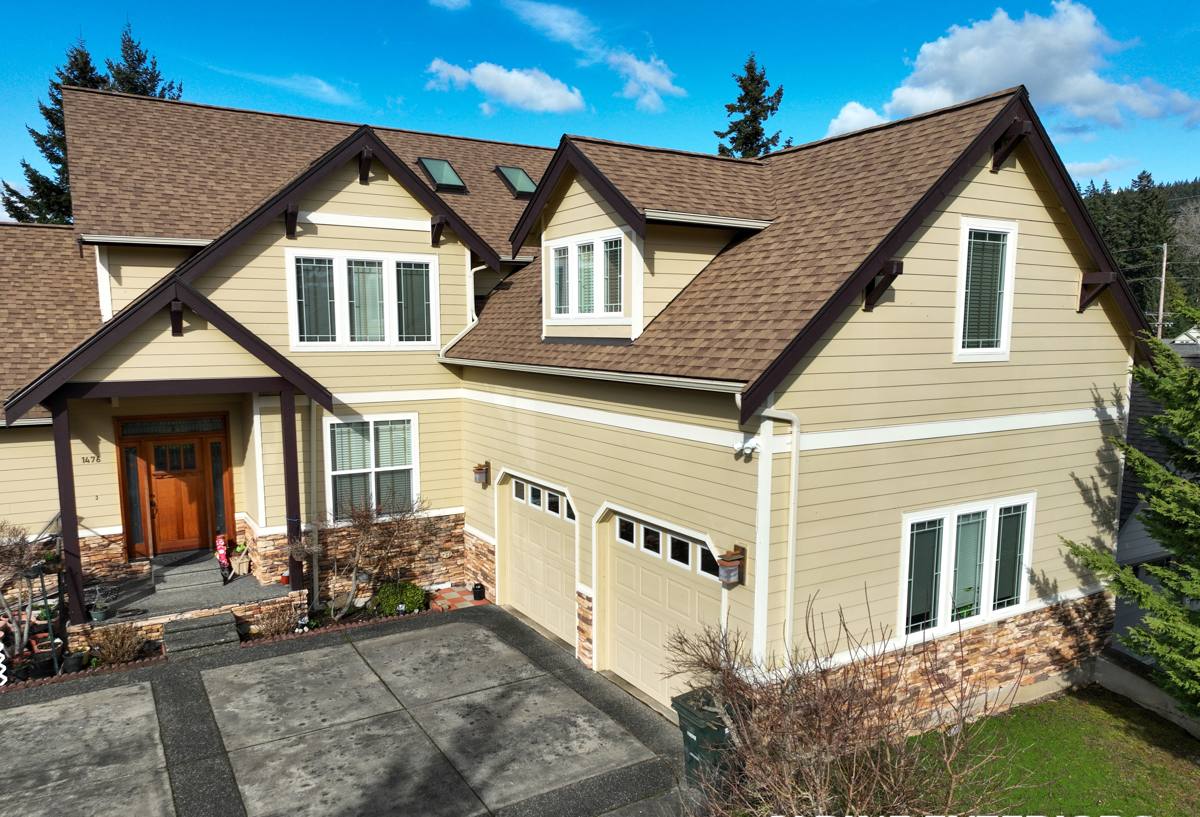
What Burlington's Climate Demands From a New Build
Salt Air and Long-Term Hardware Life
Burlington doesn't sit directly on open water, but it's close enough to Skagit Bay and the broader Puget Sound system that salt-carrying marine air moves through the valley on a regular basis. Over years, that accelerates corrosion on window hardware, screen frames, and lower-grade fasteners — especially on elevations facing prevailing weather. On a new build, this is a one-time decision point: specify corrosion-resistant hardware and fasteners now, while it costs almost nothing extra, rather than dealing with pitted locks and stiff cranks a decade in.
Driving Rain and the Rough Opening
Rain in the Skagit Valley rarely falls straight down. Storm fronts push it sideways into whatever wall happens to be facing the weather, and a rough opening built without a properly sloped sill pan and correctly lapped flashing will eventually let that wind-driven water find its way behind the siding. This is the single most consequential detail in new-construction window work, and it's also the cheapest one to get right, because on a new build there's no existing material to work around — the flashing plane gets built correctly from bare sheathing, in the right order, the first time.
A Long Moss Season and Shaded Elevations
Shaded lots and north-facing walls around Burlington stay damp longer after a storm than open, sun-exposed elevations do, and that extended dampness is exactly what moss and mildew need to establish themselves. On a new build, this mostly affects sill design and drainage: a sill that's pitched correctly and drains cleanly won't hold standing moisture the way a flat or poorly built one will, regardless of how much shade the wall sees.
Window Materials for a New Burlington Build
New construction is the best time to choose a frame material deliberately, since you're not constrained by an existing opening size or trim profile. Budget, sun exposure, and how long you plan to own the home all factor into the right answer.
| Frame Material | Moisture & Corrosion Behavior | Typical Maintenance | Realistic Lifespan Here |
|---|---|---|---|
| Vinyl | Won't rot; performance depends heavily on weld and seam quality at install | Low; occasional track and weep-hole cleaning | 20-30 years |
| Fiberglass | Dimensionally stable across temperature swings, resists moisture and corrosion well | Low | 30-40+ years |
| Wood, painted or clad | Attractive but vulnerable at joints and sills without diligent, ongoing upkeep | Higher; regular paint or finish maintenance | 15-30 years depending on upkeep |
| Aluminum | Conducts cold and can corrode over time in salt-influenced air unless well-finished | Moderate | 20-30 years |
We'll walk you through the real trade-offs for your specific plan set and lot rather than defaulting to whichever product is easiest to sell. A shaded elevation and a sun-exposed one on the same new build don't always call for the same frame material or glass package.
How Correct New-Construction Window Installation Works
On a new build, window installation is really water-management sequencing. Skipping or reordering any of these steps is what turns a window that should last decades into one that's quietly leaking behind the wall within a few winters:
- Rough opening is framed to the window manufacturer's specified tolerances — not tight, not oversized
- Housewrap or building paper is installed and lapped so water sheds downward and outward, before the window ever goes in
- A sloped sill pan is built at the base of the opening so any water that gets past the window drains back outside instead of pooling under the frame
- The window unit is set, leveled, and fastened per the manufacturer's schedule for spacing and fastener type
- Jamb flashing is integrated into the housewrap on both sides, tied into the drainage plane rather than relying on caulk alone
- Head flashing is installed last and lapped over the housewrap above the window, completing the shingle-style water path
- Weep holes and drainage paths are confirmed clear before siding closes the wall up
- Interior air sealing is done with a vapor-appropriate sealant that doesn't trap moisture against the framing
None of these steps meaningfully add to the cost of a new build relative to the size of the overall project. Skipping them is what generates the callback nobody wants two winters after the certificate of occupancy is issued.
Coordinating Windows With Siding, Roofing, and Trim
A window opening doesn't exist in isolation on a new build — it has to integrate with the siding plan, the roofline above it, and any trim or decking nearby. We handle siding, roofing, and deck construction as well as windows, which matters on new construction specifically because the sequencing between trades has to be coordinated: siding crews need the window flashing finished and inspected before they close the wall, and roof-to-wall transitions above upper-floor windows need to be resolved before that flashing goes in, not patched afterward. When one crew is responsible for more of that sequence, fewer details fall into the gap between two contractors who never talked to each other.
Full-Frame vs. Insert: Why New Construction Simplifies the Decision
On a replacement project, one of the first questions is whether to do a full-frame or insert installation, largely because the existing frame and siding are already in place and removing them adds cost and disruption. New construction removes that question entirely — every window is installed full-frame into a fresh rough opening, built to spec from bare sheathing. That's a genuine advantage: there's no compromise forced by existing material, no guessing at what's hidden behind an old frame, and no risk of sealing a pre-existing moisture problem behind new trim.
A Practical Checklist Before Windows Go In
- Rough openings framed square, plumb, and to the window manufacturer's specified dimensions
- Housewrap installed and lapped correctly before any window sets
- Sill pan flashing sloped to drain outward, not flat or reverse-pitched
- Frame material and glass package matched to each elevation's actual sun and wind exposure
- Corrosion-resistant hardware and fasteners specified for salt-influenced air
- Head flashing sequence planned before siding crews are scheduled to close the wall
- Roof-to-wall transitions above upper-floor windows resolved before flashing is finalized
- Manufacturer warranty registration completed and documented for the homeowner
Cost Factors on a New-Construction Window Package
New-construction window pricing depends on more variables than any single number can capture honestly, but a few factors consistently move the total the most:
| Factor | Why It Matters |
|---|---|
| Frame material | Vinyl, fiberglass, wood-clad, and aluminum carry different material costs and different long-term maintenance profiles |
| Number and size of openings | More openings and larger units mean more material, more flashing detail work, and more labor hours |
| Glass package | Double-pane versus triple-pane, low-E coatings, and impact considerations all affect unit cost |
| Elevation exposure | Walls facing prevailing wind and rain sometimes warrant upgraded flashing details or hardware |
| Scheduling with other trades | Coordinating window install tightly with framing, housewrap, and siding crews avoids costly rework and delay |
We'll give you a specific, itemized number for your plan set once we've reviewed it — not a rough guess that changes once the job is already underway.
Why a Local Whatcom County Crew Matters on New Construction
A crew that installs windows across Whatcom County through every season understands how salt air, wind-driven rain, and a long moss season actually behave on real houses over years, not just how a product performs on a manufacturer's spec sheet. On new construction, that experience shows up in decisions made before the wall is ever closed: how much extra flashing attention a given Burlington lot's orientation warrants, how a sill pan should be pitched for the amount of water a specific elevation will see, and which sequencing details are worth the extra time on-site so the homeowner isn't dealing with a hidden leak two winters after move-in. It also means working with a crew that already coordinates window, siding, and roofing work as one project, rather than treating windows as a separate trade that shows up, installs, and leaves.
Get a Free, No-Pressure Estimate
If you're building new in Burlington and want windows specified and installed correctly from the start, we're glad to review your plan set and walk through the options honestly. Reach out using the form below to schedule a free estimate — no pressure, no upsell script.