 Chuckanut
 Why Bow Homes Need a Different Approach to Siding
Bow sits close enough to the water and the wooded slopes around Chuckanut that its homes take a different kind of beating than a house twenty miles inland. You've got salt-laden air rolling off the bay, driving rain that comes in sideways during winter storms, and a moss season that can stretch from October clear through April when the tree cover and damp ground keep everything shaded and wet. Any siding installed here has to handle all three at once, not just one of them.
That combination is why we don't treat a Bow siding job the same way we'd treat a job in a drier, more open part of Whatcom County. The install sequence, the flashing details, and the material itself all get chosen with this specific exposure in mind.
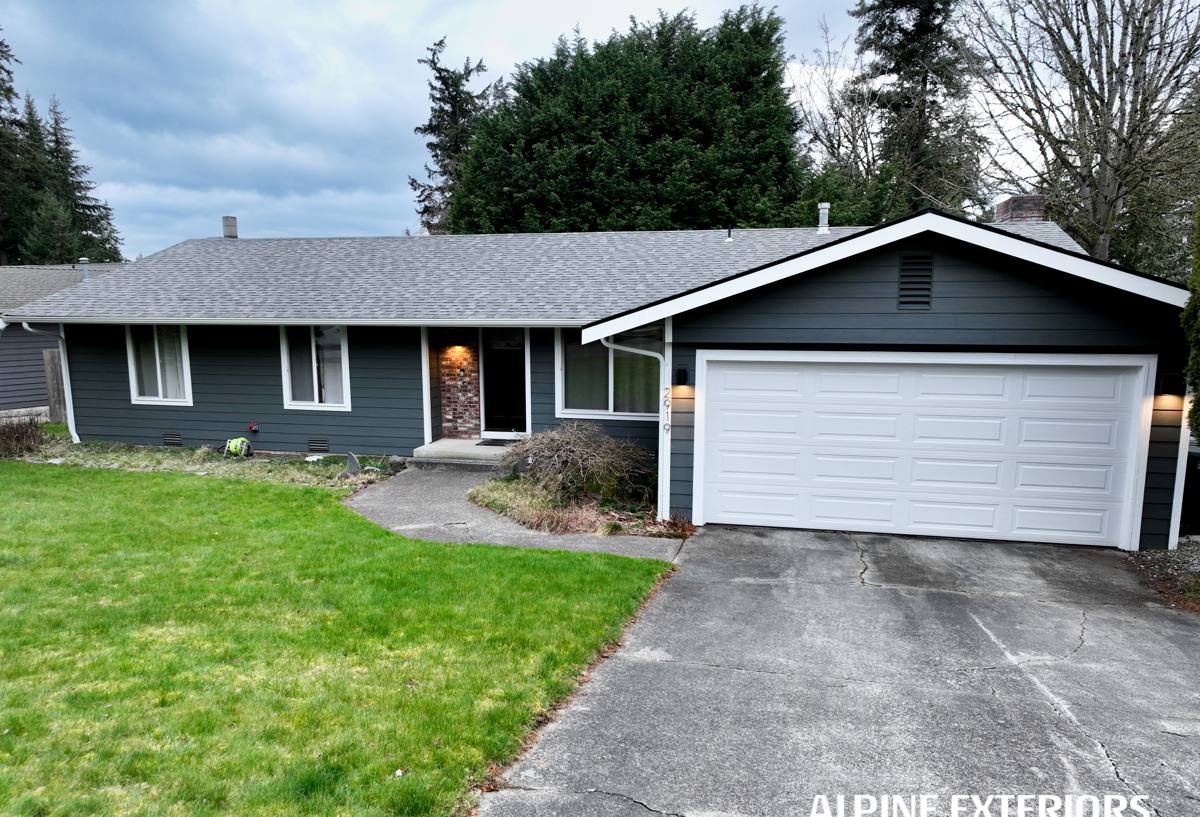
What Salt Air, Rain, and Moss Actually Do to Siding
Salt Air
Airborne salt is corrosive to metal and hard on any siding material that relies on surface coatings to stay watertight. Over years, it accelerates the breakdown of cheap fasteners, thin trim coil, and factory finishes that weren't engineered for coastal exposure. You see it first in fastener bleed, chalking paint, and trim that starts to look tired well before it should.
Driving Rain
Wind-driven rain doesn't just fall on siding — it gets pushed sideways into laps, seams, and butt joints. A siding system that isn't detailed correctly at those joints will eventually let moisture behind the cladding, where it can sit against sheathing and framing far longer than anyone notices from the outside.
Moss and Sustained Dampness
A long moss season means siding surfaces, especially anything horizontal or north-facing under tree cover, stay damp for extended stretches. Moss and algae growth isn't just cosmetic — the moisture they hold against the surface keeps that surface wetter, longer, which is hard on materials that swell, delaminate, or absorb water when saturated.
Why We Install James Hardie Fiber Cement — And Nothing Else
We standardized on James Hardie fiber cement siding for every job we take on, including here in Bow, and we don't install vinyl, LP SmartSide, Cemplank, Allura, primed spruce, or cedar. That's not a marketing position — it's a decision based on how those materials actually perform under the exposure conditions this area produces.
Fiber cement is non-combustible and dimensionally stable, meaning it doesn't expand, contract, warp, or absorb water the way wood-based or engineered-wood products can. James Hardie's HZ5 product line is specifically engineered for cold, wet climates like the Pacific Northwest, and the factory-applied ColorPlus finish is baked on under controlled conditions rather than field-applied, which gives it much better resistance to fading, chalking, and moisture intrusion at the coating level than a job-site paint job.
We're not going to tell you other products are junk — plenty of them have a place. But for a Bow property sitting in salt air, driving rain, and months of shaded dampness, we've made the call that fiber cement is the material we're willing to put our name behind and warranty.
Why We Don't Install the Alternatives
- Vinyl: lightweight and low-cost, but it expands and contracts with temperature swings, can warp or crack in wind-driven weather, and its seams and fasteners are more vulnerable to water intrusion over time than a properly installed fiber cement joint.
- LP SmartSide and other engineered wood: treated to resist moisture, but it's still wood-based at its core — any breach in the coating or a caulk joint that fails gives water a path into a material that can swell and degrade once it's wet.
- Cemplank and Allura: also fiber cement, and reasonable products, but we've standardized on one manufacturer's system, warranty structure, and factory finish rather than mixing suppliers.
- Primed spruce or raw cedar: beautiful when new, but they demand ongoing refinishing to stay ahead of moisture, and in a moss-heavy, high-rain environment that maintenance schedule gets steep fast.
What a Correct Siding Install Looks Like in This Climate
The material is only half the equation. A lot of siding failures we get called out to inspect trace back to installation shortcuts, not the product itself. For a Bow home, that means paying close attention to a few things a lot of crews rush through:
- Weather-resistive barrier installed and lapped correctly, with all seams sealed, before a single piece of siding goes up
- Rainscreen or drainage gap behind the siding so any moisture that does get past the surface can drain and dry instead of sitting against the sheathing
- Flashing at every window, door, and horizontal trim transition — not just caulk standing in for flashing
- Correct fastener type and placement per James Hardie's published specs, since improper nailing is one of the most common warranty-voiding mistakes
- Proper clearance between the bottom of the siding and grade, decks, or roof lines so splashback and standing water don't sit against the material
- Factory-cut and factory-primed edges used wherever possible, since field-cut edges need to be sealed correctly to maintain the product's warranty and water resistance
Skip any one of these and you can end up with a wall that looks fine from the street but is quietly holding moisture behind it — which shows up years later as rot, mold, or siding that fails long before it should have.
Our Process for a Bow Siding Installation
1. On-Site Assessment
We walk the exterior, check the condition of the existing siding and sheathing, and look specifically for moisture damage, past flashing failures, and any areas that get more direct exposure to wind-driven rain or stay shaded and damp longer than the rest of the house.
2. Tear-Off and Sheathing Check
Once the old siding is off, we inspect the sheathing underneath. This is often the first time hidden moisture damage becomes visible, and it needs to be addressed before anything new goes back on — covering up compromised sheathing just buries the problem.
3. Weather Barrier and Drainage Plane
We install the weather-resistive barrier and drainage gap system correctly lapped and sealed, since this layer does more long-term work protecting the structure than the visible siding does.
4. Hardie Installation to Manufacturer Spec
Siding, trim, and fascia go up following James Hardie's installation guidelines exactly — fastener spacing, gapping, flashing details, and finish work — so the system performs and the warranty stays intact.
5. Final Walkthrough
We walk the finished job with you, cover care and cleaning (including how to handle moss and algae growth without damaging the finish), and make sure you know what the warranty covers.
Comparing Siding Materials for a Bow Property
| Factor | James Hardie Fiber Cement | Vinyl | Engineered Wood / Cedar |
|---|---|---|---|
| Salt air resistance | Strong — factory finish engineered for coastal/wet climates | Moderate — coating can chalk and fade over time | Weak to moderate — depends entirely on coating maintenance |
| Driving rain performance | Strong when installed with proper flashing and drainage | Moderate — seams and fasteners are vulnerable points | Moderate — vulnerable if coating or caulk fails |
| Moss/algae season durability | Strong — doesn't swell or absorb moisture | Strong physically, but growth is hard to remove without scratching | Weak — sustained dampness accelerates decay |
| Fire resistance | Non-combustible | Combustible | Combustible |
| Maintenance over time | Low — factory finish, no repainting cycle typically needed | Low, but limited to cleaning | High — periodic refinishing required |
Cost Factors for a Bow Siding Job
Every home is different, but a few things consistently move the price of a siding installation up or down in this area:
- Total square footage and the complexity of the roofline and wall planes
- Condition of the existing sheathing — hidden moisture damage found during tear-off adds repair work
- Amount of trim, fascia, and detail work around windows, doors, and corners
- Site access, since some Bow properties have limited staging space or steep approaches
- Product selection within the James Hardie lineup, including plank profile and ColorPlus color choice
We give you a firm, itemized number after the on-site assessment rather than a rough estimate over the phone — a house's actual condition matters too much here to guess at.
Why Local Experience Matters for This Job
A crew that hasn't worked in this specific stretch of Whatcom County can miss things that aren't obvious from a spec sheet — how much shade a particular wall gets and for how long, how hard the wind-driven rain hits certain elevations during winter storms, or how quickly moss establishes itself on a north-facing wall near tree cover. None of that is exotic knowledge, but it's the kind of thing you only really internalize by installing siding on homes in this area season after season. It shows up in small decisions: where we add extra flashing attention, which elevations get prioritized for drainage detailing, and how we set expectations for moss maintenance after the job is done.
If your Bow home's siding is showing its age, or you're planning ahead of a needed replacement, we're happy to come take a look and walk you through what we'd recommend. The estimate is free, there's no pressure, and you'll get a straight answer about what your home actually needs.