 Chuckanut
 Windows are one of the few parts of a home's exterior that homeowners interact with every day, and in Bellingham that daily contact usually comes with a complaint: a cold draft near the sill in January, condensation fogging the glass on a damp morning, a window that's gotten stubborn to open since last winter. Those aren't just annoyances. In a climate that gives Whatcom County salt air, driving rain, and a long moss season, they're usually early signs that a window's seals, frame, or glazing are losing the fight against the weather. This page is about what energy-efficient window service actually looks like for a Bellingham home — not a generic list of window features, but what this specific climate demands and how a correct installation holds up against it.
Why Window Performance Matters More in This Climate
Every window in a home is a break in the wall assembly — a place where framing, insulation, and weather-resistant barrier all have to be interrupted and then carefully rejoined around a manufactured unit. In a mild, dry climate, a mediocre window or a slightly rushed installation might go years without showing a problem. Bellingham doesn't offer that kind of forgiveness. Between salt-laden air off the bay, storms that drive rain sideways into west- and south-facing walls, and long shaded, damp stretches that keep moss and mildew active most of the year, any weak point in a window's seal or frame gets tested constantly rather than occasionally.
That's the real argument for energy-efficient windows here — not just a lower heating bill, though that matters too. A window built and installed for this climate keeps water out, keeps conditioned air in, and doesn't quietly degrade every time a storm rolls off the Sound. A window that isn't gets worn down faster here than it would almost anywhere else in the state.
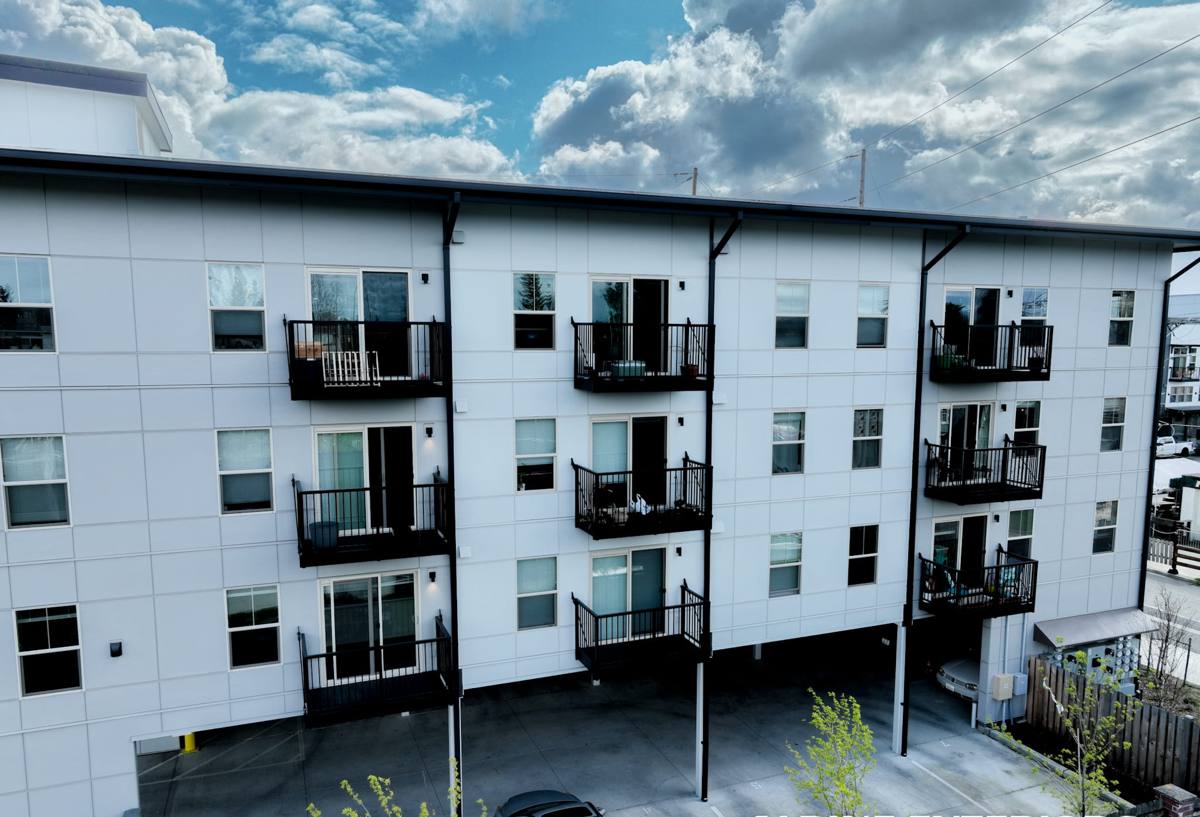
What Salt Air, Driving Rain, and Moss Do to Windows Over Time
Salt Air and Metal Components
Salt air accelerates corrosion on anything metal — hinges, cranks, balance springs, and lower-quality fasteners all wear faster near the water than they would inland. A window that starts out opening smoothly can become stiff or misaligned years before the glass or frame itself is actually failing, simply because the hardware holding it together has corroded.
Wind-Driven Rain and Seal Failure
Storms here don't just fall straight down; they push rain sideways into exposed walls, and a window's weakest points — the perimeter seal between frame and rough opening, the sash-to-frame seal, and any corner joints in the frame itself — take that pressure directly. Once a seal starts to fail, water finds its way behind the trim and into the wall cavity long before a homeowner notices anything wrong from inside.
Moss, Algae, and Shaded Frames
Windows on shaded, north-facing walls or under heavy tree cover stay damp longer after every storm, which is exactly the environment moss and algae need to take hold on sills, tracks, and frame surfaces. Beyond the cosmetic issue, sustained moisture sitting in a track or sill pocket accelerates wear on wood components and can hold water against seals that are supposed to stay dry.
Signs Your Current Windows Are Underperforming
Most window problems in this climate show up gradually, through symptoms that are easy to write off individually but add up to a clear pattern. Before assuming a window is fine because the glass still looks intact, check for these:
- Noticeable drafts near the sash or sill, especially during windy, wet weather
- Condensation or fogging between panes, which usually means a failed seal on a double- or triple-pane unit
- Frames that feel cold to the touch or visibly sweat on the inside during cold snaps
- Windows that stick, won't stay open, or take real effort to latch
- Visible moss, algae, or dark staining on sills and lower frame sections
- Soft or discolored trim or wall material directly around the window opening
- A heating bill that's crept up without a clear reason tied to usage
Any one of these on its own might just need a repair. Several of them together, especially on the same wall, usually point to windows that are past the point where sealing or hardware fixes will solve the underlying problem.
What "Energy-Efficient" Actually Means
Energy-efficient windows get sold on a lot of marketing language, but the performance comes down to a handful of measurable factors. Understanding them helps a homeowner ask better questions and evaluate a quote on its merits, not just its price.
U-Factor and Solar Heat Gain
U-factor measures how much heat a window lets escape — lower is better, and it's the single most useful number for judging insulating performance. Solar heat gain coefficient measures how much of the sun's heat passes through the glass, which matters less for heating cost here but still affects comfort on the sunnier stretches of the year.
Low-E Coatings and Gas Fills
A low-emissivity coating is a microscopically thin layer on the glass that reflects heat back toward its source, keeping interior heat in during winter without noticeably changing how much light comes through. Argon or krypton gas fills between panes add another layer of insulation over plain air, and together with the coating, they're a big part of why a modern double- or triple-pane window outperforms an older single-pane or early dual-pane unit by a wide margin.
Frame Material
The frame does more than hold the glass — it's a major factor in both insulating value and how the window holds up to this specific climate. The table below covers the trade-offs between the frame materials we most commonly discuss with Bellingham homeowners.
| Frame Material | Energy Performance | Moisture & Salt-Air Tolerance | Maintenance |
|---|---|---|---|
| Vinyl | Good, especially with multi-chamber designs | Doesn't rot or corrode; seams can be a weak point if not well-made | Low — no painting or refinishing required |
| Fiberglass | Very good; low thermal expansion helps seals last | Excellent — dimensionally stable in wet, salt-air conditions | Low to moderate |
| Wood | Good natural insulator | Vulnerable without diligent finish maintenance | High — regular refinishing needed to prevent decay |
| Wood-clad | Good, combines wood interior with protected exterior | Better than raw wood; cladding still needs correctly sealed joints | Moderate |
| Aluminum | Poor unless thermally broken | Corrodes faster in salt air without a quality finish | Low, but performance concerns limit our use of it here |
There's no single "correct" frame material for every home — a lot depends on the look a homeowner wants, the window's exposure, and budget. What we won't do is put a frame material in a location where its known weaknesses in this climate outweigh its benefits, without being upfront about that trade-off first.
Installation Details That Actually Determine Performance
A high-performance window installed poorly will underperform a modest window installed correctly, and this is where being a siding contractor as well as a window installer matters. A window replacement isn't just swapping the unit in the same opening — it's an interruption in the wall's weather-resistant barrier that has to be rebuilt correctly around the new frame.
Getting that right means flashing the opening so water sheds down and out, over the layers below it rather than behind them; shimming the unit square and level so the sash seals evenly on all sides instead of gapping at one corner; insulating the gap between frame and rough opening without overpacking it, which can bow the frame; and sealing the exterior perimeter with a sealant rated for this kind of sustained wet exposure. Skip or rush any one of those steps, and even a premium window can leak, draft, or fail its seal years before it should.
Because we handle the siding around the window as part of the same job, the flashing and the surrounding cladding get integrated as one system rather than handed off between two separate crews who never see each other's work. That coordination is a bigger factor in long-term performance than most homeowners realize when they're comparing window quotes.
Our Window Replacement Process
We keep the process straightforward and try to minimize how long any opening in your wall sits exposed to Bellingham weather.
- On-site assessment — we look at your existing windows, their orientation and exposure, and any signs of moisture or hardware failure before recommending anything.
- Product selection — we walk through frame material, glazing, and performance options suited to that specific window's exposure and your budget, honestly, including trade-offs.
- Scheduling around weather — we plan installation for a window in the forecast that lets us keep the opening protected and dry throughout the work.
- Removal and opening prep — the old unit comes out carefully, and we inspect the rough opening and surrounding wall for hidden moisture damage before installing anything new.
- Flashing and installation — the new window goes in shimmed, squared, flashed, and integrated with the surrounding weather-resistant barrier and siding.
- Sealing and finish work — interior and exterior trim and sealant are finished to shed water correctly and match the rest of the wall.
- Walkthrough — we confirm the window operates correctly and go over anything you should know about care going forward.
Why Hiring a Crew That Already Works Bellingham Matters
Window performance claims are made in a lab; window performance in real life is made on your specific wall, facing your specific direction, in this specific climate. A crew that regularly works in and around Bellingham has already seen which walls take the worst of the wind-driven rain, which orientations grow moss fastest, and where salt air off the bay does the most damage to hardware and finishes over time. That experience shows up in small decisions — where to add extra flashing detail, which frame material to steer away from on an exposed west wall, how tight to run a sealant joint — that a crew unfamiliar with this specific coastal exposure might not think to make.
It also matters because window work here rarely stays isolated to the window itself. Old flashing, damaged sheathing, or a compromised weather barrier discovered during removal needs a crew comfortable working on the broader wall assembly, not just the manufactured unit — which is exactly the kind of work a siding-and-exteriors contractor handles as a matter of course.
Cost Factors to Expect
Every window project is different, and we don't think broad national averages tell a Bellingham homeowner much. What's more useful is understanding what actually moves the price on your specific project.
| Factor | Why It Affects Cost |
|---|---|
| Frame material | Vinyl is generally the most budget-friendly; fiberglass and wood-clad units run higher |
| Glazing package | Triple-pane and higher-performance Low-E coatings cost more than standard double-pane |
| Window size and style | Larger units, custom shapes, and operable styles like casements typically cost more than standard sliders |
| Condition of the existing opening | Hidden rot, damaged sheathing, or out-of-square framing found during removal adds labor |
| Number of windows | Whole-house replacements typically bring a better per-window rate than one-off replacements |
| Access and height | Second-story or hard-to-access windows take more time and equipment to install safely |
As a broad range, expect single-window replacement costs to run from several hundred dollars for a basic vinyl unit up to well over a thousand per window for premium fiberglass or wood-clad units with upgraded glazing — with the specifics of your home determining where a given project actually lands. We'll always give you a real number based on your windows, not a guess based on square footage alone.
Getting a Straight Answer for Your Home
Windows are a long-term investment, and in a climate that puts salt air, driving rain, and moss to work on every weak seam year-round, the difference between a correct installation and a rushed one shows up eventually — usually as a draft, a soft spot in the trim, or a heating bill that doesn't add up. If you're noticing any of those signs, or you're just ready to stop losing heat through windows that have earned their retirement, we're glad to take a look and walk you through what we'd actually recommend for your home. Reach out for a free, no-pressure estimate using the form below.