 Chuckanut
 Siding Repair Built for Where Happy Valley Sits
Happy Valley homes sit in one of the more demanding stretches of Whatcom County for exterior materials. You're close enough to the water that salt-laden air reaches painted and fiber cement surfaces alike, driving rain off Chuckanut's forested hillsides pushes moisture sideways into wall assemblies for months at a time, and shade from mature evergreens keeps north- and west-facing walls damp long after a storm has passed through. That combination is why siding repair here isn't a cosmetic afterthought — it's maintenance that protects the framing and sheathing behind the cladding, not just the paint on top of it.
This page covers siding repair specifically, not full replacement, for homes in and around Happy Valley. If your siding is fundamentally sound but has isolated damage, failed caulk lines, or trim that's letting water in, this is what a correct repair looks like, what it should cost you in time and disruption, and what a crew that already works this specific area does differently than a contractor driving in from somewhere else in the county.
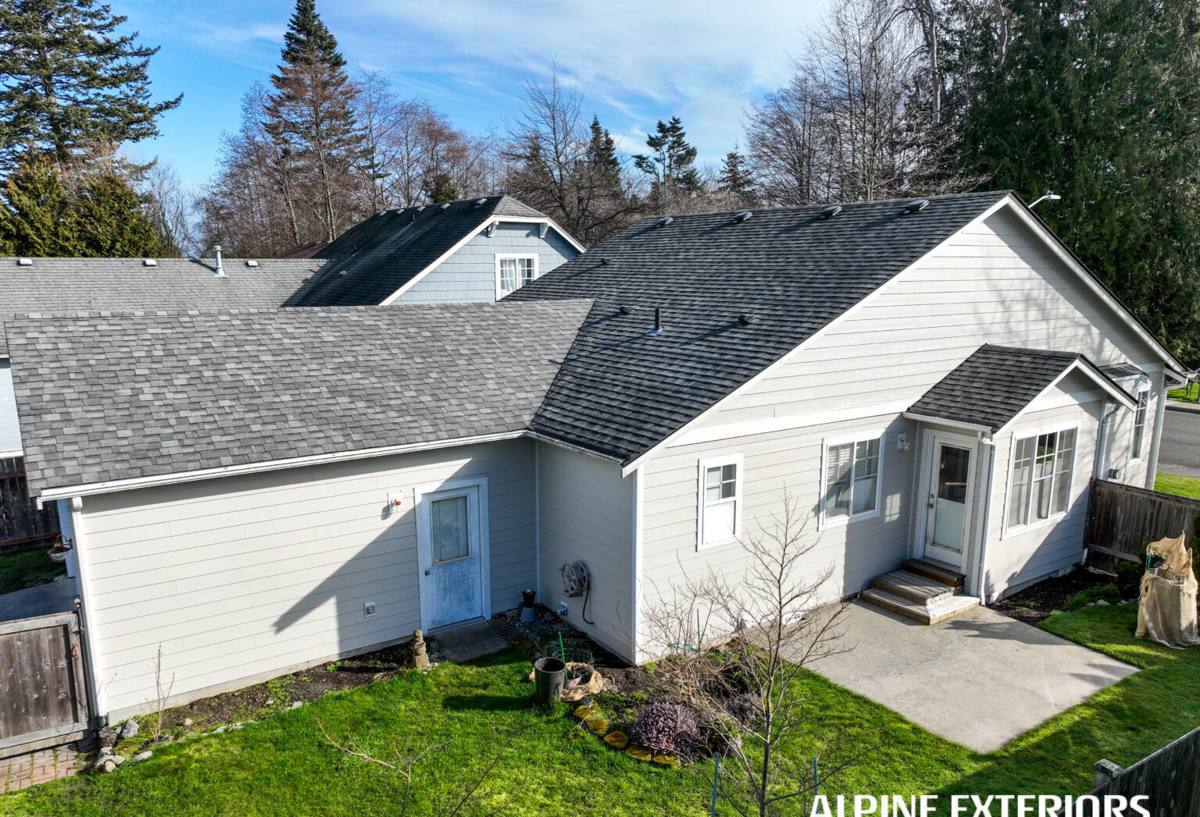
What Chuckanut's Climate Does to Siding Over Time
Salt Air
Airborne salt from the bay accelerates corrosion on fasteners, flashing, and any exposed metal trim. On painted wood and some engineered wood products, salt residue also holds moisture against the surface longer than it would inland, which speeds up paint failure, edge swelling, and the slow softening that turns into a repair call a few years later.
Driving Rain
The terrain around Chuckanut funnels wind-driven rain against homes at angles that flat, straightforward siding details weren't built to handle. Water gets pushed up and under laps, into unsealed seams, and behind trim boards that were caulked instead of properly flashed at installation. Over years, that's how small gaps become soft spots, and soft spots become full-course replacements.
Long Moss Season
Shade from tree cover combined with near-constant winter moisture means moss and algae get a running start here and often don't fully dry out between rain events. Moss holds water against the siding surface for extended periods, and where it's allowed to establish at butt joints, behind trim, or in ground-level courses, it accelerates rot in wood-based products and leaves persistent staining on any surface it touches.
Signs a Happy Valley Home Needs Siding Repair
Most siding repair calls we get in this area start with one of these:
- Soft or spongy siding when pressed, especially near the bottom courses or below windows
- Visible gaps at seams, corners, or trim joints where caulk has cracked or pulled away
- Peeling or bubbling paint concentrated on north- or west-facing walls
- Moss or dark staining that keeps returning in the same spot shortly after cleaning
- Warped, cupped, or delaminating boards, particularly on older wood or non-Hardie fiber cement
- Rust streaks below nail heads or metal flashing
- A musty smell or visible staining on interior walls that back up to exterior siding
Any one of these on its own might be minor and easy to address. Several showing up together, especially on the same wall or elevation, usually means water has been getting behind the siding for a while, and the repair needs to address the cause, not just the visible symptom.
What a Correct Siding Repair Actually Involves
Diagnosing the Cause, Not Just the Symptom
Patching a soft board without figuring out why it went soft just buys a year or two before the same spot fails again. A proper repair starts by tracing the water path — often back to a flashing detail that was skipped, a caulked joint that should have been lapped, or a grading or gutter issue pushing splashback onto the wall every time it rains.
Removing Damage Back to Sound Material
Rotted or delaminated siding gets cut back to material that's actually solid, not just to the edge of what's visibly stained or discolored. We also check the water-resistive barrier and sheathing underneath before closing anything back up — repairing over a compromised barrier just hides the problem behind new siding for another season.
Matching Material and Reveal
Replacement pieces need to match the existing plank width, reveal, and texture, or the repair reads as an obvious patch from the street. For Hardie siding this is straightforward since the product lines and profiles are consistent and well documented. Matching older or discontinued products from other manufacturers is harder, and sometimes not possible without replacing a full elevation to keep the wall looking uniform.
Correct Flashing and Fastening
Every repair gets proper flashing at horizontal joints and trim, not caulk used as a substitute for flashing — caulk is a seal, not a water management system, and it fails faster than flashing does. Fasteners are placed and set per manufacturer specification; overdriven or underdriven nails are one of the most common causes of repeat failures we find when we're called out to fix someone else's earlier repair.
Finish and Touch-Up
Where repairs involve factory-finished ColorPlus material, color and sheen are matched using the manufacturer's touch-up system rather than field-mixed paint, which weathers at a different rate and shows as a visible patch within a season or two, right when you'd expect the repair to have disappeared into the wall.
What Affects the Cost of a Repair
We don't quote pricing without seeing the home, but the factors that move a repair estimate up or down are consistent from job to job:
| Factor | Keeps Cost Lower | Adds to Cost |
|---|---|---|
| Extent of damage | Isolated boards or a single joint | Multiple courses or several walls |
| Cause identified | Straightforward flashing or caulk fix | Hidden moisture behind sheathing |
| Access | Ground-level, clear approach | Second story, obstructed by landscaping |
| Material match | Current James Hardie profile on the wall | Discontinued or non-Hardie product |
| Finish work | Standard ColorPlus touch-up | Custom or heavily weathered color match |
Simple caulk, trim, and single-board repairs are a modest job. Repairs that turn up rotted sheathing or a compromised barrier behind the siding take longer and cost more, because the fix has to go deeper than the surface — and we'll walk you through exactly what we find before any of that work happens.
Repair or Replace? How We Make That Call
Not every damaged wall needs full replacement, and not every repair is worth doing instead of replacing. Here's roughly how we think through it on a Happy Valley home: a repair makes sense when the damage is isolated, the rest of the siding is still performing well, and the water-resistive barrier underneath is intact. Replacement starts to make more sense when damage is spread across multiple elevations, the existing product is near the end of its expected service life, or the siding on the wall is discontinued or non-Hardie and simply can't be matched without it looking patched together.
We'll tell you honestly which side of that line your home falls on before we recommend anything. A repair that's likely to fail again within a couple of years isn't a good use of your money, and we'll say so upfront rather than sell you a short-term fix.
Our Process for Happy Valley Siding Repair Calls
1. On-Site Assessment
We walk the affected walls, check moisture levels where we can, and look at flashing, grade, and drainage around the home — not just the damaged boards themselves. Most of the useful information is in what's happening around the damage, not just at it.
2. Honest Scope and Estimate
You get a clear explanation of what's causing the damage, what needs to be replaced, and what it will involve — with repair and, if relevant, replacement laid out side by side so you can make an informed call either way.
3. The Repair Itself
Damaged material comes out, the barrier and sheathing underneath get checked and addressed if needed, new material goes in with correct flashing and fastening, and finish work is matched to the surrounding siding so the repair blends in rather than standing out.
4. Follow-Up
Because we work in Happy Valley and the surrounding Chuckanut area on a regular basis, checking back on a repair or answering a follow-up question doesn't mean scheduling a special trip across the county. We're already going to be nearby.
Why We Only Repair With James Hardie Fiber Cement
We install and repair James Hardie fiber cement exclusively — we don't work with vinyl, LP SmartSide, Cemplank, Allura, primed spruce, or cedar. For repair work specifically, that standard matters for a practical reason: Hardie's product lines have been consistent for years, which means matching plank widths, reveals, and ColorPlus finishes can be done with confidence instead of guessing at a discontinued profile that no longer exists on the market.
Hardie fiber cement is also non-combustible and engineered for climates like this one — the HZ5 product line is formulated for wetter, harsher weather patterns, which is close to what Happy Valley sees for a good part of the year. When full siding replacement makes more sense than repair, this is the product we put on, backed by a strong transferable warranty. Every siding product has a place, and other materials have real advantages in the right setting — but we've made a professional decision to stand behind one system we know performs here, and that's the one we carry parts, profiles, and finish-matching for.
Why a Local Chuckanut Crew Matters for Repair Work
Siding repair is diagnostic work as much as it's carpentry. A crew that's already done repair calls in Happy Valley and along Chuckanut has seen how water actually moves on homes in this specific terrain — where splashback collects, which elevations stay wet longest under the tree cover, and which earlier repairs in the area have held up and which haven't. That local pattern recognition is what keeps a repair from being a one-year fix that has to be redone.
It also means a faster response when it matters. Salt air and driving rain don't wait for a contractor to drive in from another part of the county, and a small gap or soft spot left through another wet season only gets more expensive to fix.
If you're seeing soft siding, cracked caulk lines, recurring moss, or paint failure on your Happy Valley home, we're happy to take a look and give you a straight answer on repair versus replacement — no pressure, no upsell. Request a free estimate below and we'll walk the property with you.