 Chuckanut
 Building New in Fairhaven Means Building for the Water
A new-construction window opening is the one chance to get the water management right before the walls are closed up. In most of Whatcom County that's a forgiving margin. On a lot near Fairhaven, close to Bellingham Bay, it isn't. Wind-driven rain off the water, salt-laden air, and a wet season that runs long enough to grow moss on the north side of a house all put more stress on a rough opening than an inland framing crew typically plans for. Get the flashing sequence, the fasteners, and the frame material right at rough-in, and the windows will perform for decades. Get any one of them wrong, and the first sign of trouble is usually hidden behind the drywall long before it shows up as a stain.
This page is about that one job — new-construction window installation for homes going up in and around Fairhaven — not window replacement, and not a general overview of every service we offer.
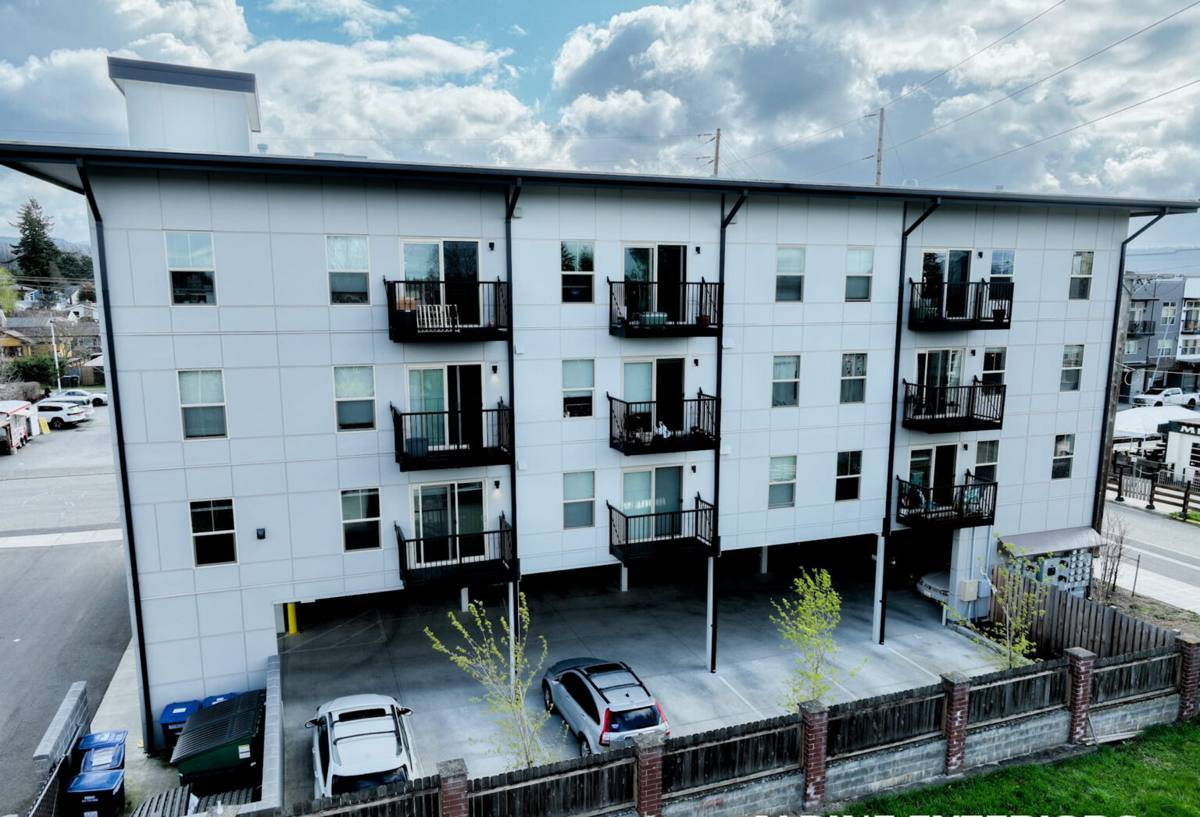
What the Local Climate Actually Does to a Window Opening
Salt Air
Homes within a mile or two of Bellingham Bay sit in a mild salt-air environment. It's not the same exposure as an oceanfront lot on the outer coast, but it's enough to accelerate corrosion on unprotected steel fasteners, cheap window hardware, and exposed aluminum trim over time. The practical response isn't to over-engineer every detail — it's to use corrosion-resistant fasteners at the window flange and rely on frame materials and cladding that don't depend on paint alone to hold up.
Driving Rain
Storms coming off the water push rain sideways, not straight down. That matters because a window opening is only as good as its weakest lap. Flashing has to be installed so every layer sheds water onto the layer below it — sill first, then jambs, then head, then the water-resistive barrier over the top of that — so wind-driven rain never finds a seam that runs the wrong way.
The Long Moss Season
Whatcom County's wet stretch runs long, and shaded, north-facing walls stay damp for months at a time. Moss itself doesn't hurt a window, but the conditions that grow it — trapped moisture, poor drying, still air behind the cladding — will. A new-construction opening needs a real path for incidental water to drain and for the wall assembly to dry, not just a sealed box.
New Construction vs. Replacement: Why the Method Is Different
Replacement windows go into an opening that already has siding and trim around it, so the installer works with what's there and seals to the existing exterior. New construction is the opposite: the rough opening is open lumber, the water-resistive barrier isn't installed yet, and the window's nailing flange gets integrated directly into the wall's drainage plane. That's an advantage — it means the flashing can be built correctly in layers instead of retrofitted — but only if the crew doing it treats the sequence as load-bearing, not optional.
| Factor | New Construction | Replacement |
|---|---|---|
| Flashing method | Integrated with WRB in shingle-lap order | Sealed to existing exterior finish |
| Window style | Nail-fin or flush-fin | Pocket, block-frame, or full-frame |
| Access to framing | Open studs, full sill/jamb visibility | Limited to existing rough opening |
| Best time to correct a bad opening | Before siding goes on | Only during the swap itself |
What a Correct Installation Actually Involves
Sloped Sill Pan Flashing
The sill of every rough opening should carry a sloped pan flashing with end dams, so any water that gets past the window is directed back outside rather than pooling on the framing. This is the single most common shortcut we see skipped on speculative new builds, and it's the hardest one to fix later without pulling the window back out.
Jamb and Head Flashing, Shingle-Lapped
Jamb flashing goes on next, then the window, then head flashing over the top of the nailing flange, then the housewrap laps over the head flashing. Every layer overlaps the one below it — never the reverse — so water always has a downhill path to the outside.
Fastening at the Nail Fin
Corrosion-resistant fasteners at the flange matter more here than on an inland lot. We also don't over-fasten or under-fasten the fin — too few fasteners lets the frame rack under wind load; too many, placed wrong, can distort the frame and bind the sash.
A Drainage Gap Behind the Cladding
Especially on shaded or bay-facing walls, a small air gap between the water-resistive barrier and the finish siding gives incidental moisture somewhere to go and lets the wall dry both ways. That's part of the wall assembly rather than the window itself, but it's coordinated at the same stage of the build, and it's worth planning for on any Fairhaven-area new construction.
Choosing a Frame Material for a Near-Water Lot
There's no single "right" frame material for coastal Whatcom County — the right choice depends on the home's exposure, the budget, and how much upkeep the owner wants to take on. Here's how the common options compare for this climate specifically:
| Frame Material | Salt-Air Behavior | Maintenance | Typical Cost Tier |
|---|---|---|---|
| Vinyl | Good — won't corrode, some UV fading over decades | Low | Lower |
| Fiberglass | Very good — dimensionally stable, resists corrosion | Low | Mid to upper |
| Aluminum-clad wood | Good exterior protection if detailing is tight; interior wood needs normal upkeep | Moderate | Upper |
| Bare aluminum | Prone to pitting and corrosion near the water without added protection | Higher | Lower to mid |
Our standard on bay-adjacent new construction is to steer clients away from bare aluminum unless it's a protected elevation, not because it's a bad product broadly, but because it asks the most of a maintenance schedule in exactly the environment where upkeep tends to slip. Vinyl and fiberglass carry the exposure with the least ongoing attention; clad wood is a fine choice when the owner wants a wood interior and is comfortable with routine care.
Coordinating With Your Builder's Schedule
New-construction window installation isn't a standalone job — it happens on the general contractor's timeline, between framing inspection and the water-resistive barrier going up, and it has to be done before siding starts. We work directly with the framer and the GC's schedule rather than asking a build to wait on us, and we flag any rough-opening issues — out-of-square framing, missing blocking, wrong opening sizes — before the window itself ever shows up on site, so nobody's reworking a wall after the fact.
Our Process
- Walk the rough openings with the builder before windows arrive, checking size, square, and level
- Confirm frame material, glazing package, and hardware finish against the plans and the site's exposure
- Install sloped sill pans with end dams at every opening
- Set jamb flashing, then the window, then head flashing, shingle-lapped with the water-resistive barrier
- Fasten the nail fin with corrosion-resistant fasteners at manufacturer-specified spacing
- Check every unit for square, level, and smooth sash operation before moving to the next opening
- Walk the finished openings with the GC or owner and document flashing before siding closes it in
A Pre-Install Checklist for Homeowners and Builders
- Confirm frame material and glazing package match the home's actual exposure, not just the plan set's default spec
- Ask whether sloped sill pan flashing with end dams is included as standard, not an upgrade
- Confirm the flashing order will be shingle-lapped with the water-resistive barrier before siding goes on
- Ask what fastener type will be used at the nail fin, especially within a mile or two of the bay
- Plan for a drainage gap behind the cladding on shaded or water-facing walls
- Get flashing photos before the wall is closed in — it's the only stage where anyone can see it
Why a Crew That Already Works Fairhaven Matters
Anyone can install a window on a calm, inland lot. What separates a good new-construction install near the bay is knowing, before the first pan flashing goes in, which elevations take the weather straight on and which ones stay damp long enough to need extra attention to drainage. A crew that's worked this part of Whatcom County has already made those calls on other builds — they're not learning the site's exposure at the owner's expense. That local judgment, paired with a flashing sequence that doesn't get shortcut, is what keeps a new build's windows performing quietly for the next thirty years instead of becoming the first repair call.
If you're building in or near Fairhaven and want the window installation planned into your framing schedule correctly from the start, we're happy to walk the plans with you and give you a straightforward, no-pressure estimate — just fill out the form below.