 Chuckanut
 Burlington Roofs Work Harder Than People Realize
Homes in the Burlington area sit close enough to the water and the Chuckanut hillside that the roof over your head deals with a combination most inland houses never see: salt-laden air off the Sound, long stretches of driving rain pushed sideways by coastal wind, and a moss season that can run from October well into spring. Any one of those on its own is manageable. Together, over years, they wear down flashing, work moss roots into shingle mat, and turn small leaks into rot before anyone notices a stain on the ceiling.
We repair roofs in this specific stretch of Whatcom County regularly, which means we're not guessing at what's causing a leak — we've usually seen the same failure pattern on a house two streets over. This page is about roof repair specifically, not full replacement, and specifically for Burlington: what tends to go wrong here, what a repair should actually include, and how to tell when a patch is the right call versus when you're just delaying a bigger job.
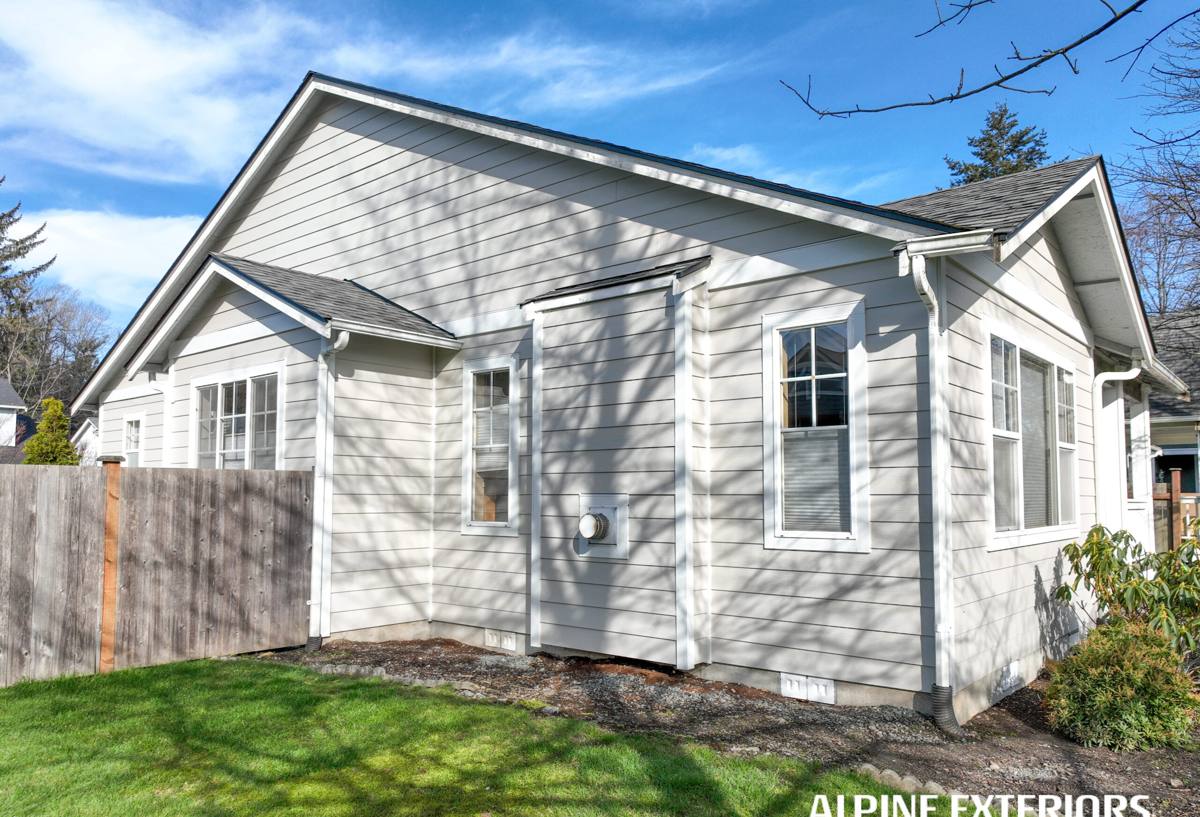
What the Local Climate Does to a Roof
Salt Air and Metal Fatigue
Salt air accelerates corrosion on exposed metal — nail heads, flashing seams, vent boots with metal collars, and gutter fasteners all corrode faster near the water than they would twenty miles inland. Corroded fasteners back out or lose their grip, and corroded flashing pinholes quietly before it ever looks obviously "bad" from the ground.
Driving Rain and Wind-Driven Water
Rain that falls straight down mostly runs off. Rain pushed sideways by wind off the water finds every gap — under lifted shingle tabs, behind poorly lapped step flashing, into exposed nail heads. A roof that would shed water fine in calm conditions can leak during a wind-driven storm because water is being forced uphill under the shingle edge instead of just running down it.
The Long Moss Season
Whatcom County's damp, mild winters are close to ideal moss conditions, and moss doesn't just sit on top of a roof — it holds moisture against the shingle surface, works into granule loss over time, and can lift shingle edges as it grows. A shaded, north-facing slope near mature trees can carry visible moss most of the year if it isn't kept in check.
Signs a Burlington Roof Needs Repair
Most roof leaks don't announce themselves with an obvious hole. They show up as small, easy-to-miss signals first. Worth checking for:
- Granules collecting in gutters or at downspout outlets (a sign of accelerated shingle wear)
- Moss or dark streaking concentrated on shaded or north-facing slopes
- Curling, cupping, or lifted shingle edges, especially on the roof faces that catch the most wind
- Rust staining or visible corrosion around flashing, vent boots, or valley metal
- Ceiling stains that appear or worsen only during wind-driven storms, not calm rain
- Daylight visible through the roof deck from inside the attic
- Soft or spongy spots when walking the roof (a sign of deck rot beneath the surface)
What Actually Causes Most Repair Calls We See
Flashing Failure, Not Shingle Failure
The majority of leaks we're called out for in this area trace back to flashing — around chimneys, skylights, dormers, and roof-to-wall transitions — rather than the shingle field itself. Flashing is thin, mechanically fastened, and directly exposed to both salt air corrosion and wind-driven rain, which makes it the first thing to fail even on a roof that's otherwise in decent shape.
Valley Wear
Valleys concentrate more water than any other part of the roof, and in driving rain they carry it fast and sideways. Worn or undersized valley metal, or valleys where moss has slowed drainage, are a common source of repair calls after a hard storm.
Moss-Related Granule Loss
Where moss has been established for a season or more, the shingles underneath it are often thinner and more brittle than the rest of the roof. That section will usually need targeted repair even if the rest of the roof has years of life left.
What a Correct Repair Actually Involves
A repair that just covers a stain from the inside, or nails down a lifted shingle without addressing why it lifted, tends to come back. A repair that holds does a few things every time:
- Finds the actual entry point — not just the spot where the stain appears inside, which is often several feet from the real leak
- Matches materials to what's already on the roof — mismatched shingle profiles or incompatible flashing metals create new weak points
- Replaces flashing, not just sealant — caulk over failing flashing buys a season, not years
- Checks and clears moss and debris in the surrounding area so the repair isn't undermined again within a year
- Inspects the deck underneath before closing the repair back up, since soft or rotted decking needs to be addressed, not covered
Repair vs. Replacement: How to Think About It
Not every leak means a new roof, and not every roof is worth repairing indefinitely. The honest answer depends on the roof's age, how localized the damage is, and how many previous repairs it's already carrying.
| Factor | Favors Repair | Favors Replacement |
|---|---|---|
| Roof age | Well within expected lifespan | Near or past typical service life for the material |
| Damage location | Isolated to one flashing point, valley, or slope | Spread across multiple slopes or the whole field |
| Shingle condition nearby | Still flexible, granules intact | Widespread curling, brittleness, granule loss |
| Repair history | First or second repair | Repeated patches in the same areas |
| Deck condition | Solid, no rot found | Soft decking or rot discovered during inspection |
We'll tell you plainly which category your roof falls into. If a repair is the right call, that's what we'll recommend — a roof doesn't need to be replaced just because it has a leak.
Our Repair Process
- Inspection — we walk the roof (not just look from the ground) and check the attic from inside where accessible, tracing water paths rather than guessing from the interior stain
- Diagnosis and scope — we identify every contributing issue, not just the most obvious one, and explain what we found in plain terms
- Written estimate — a clear scope and price before any work starts, no surprise add-ons mid-job
- Repair — flashing, shingles, decking, or valley metal replaced as needed, matched to your existing roof
- Moss and debris clearing around the repaired area so the fix isn't undone by the next wet season
- Final check — we confirm the fix from both the roof surface and, where possible, the attic side
Materials We Work With
Most Burlington-area roofs we repair are asphalt shingle, with a growing number of metal roofs as well. Each has different repair considerations in this climate:
Asphalt Shingle
The most common material here, and generally the most straightforward to repair section-by-section as long as reasonably close-matching shingles are available. Older roofs where the exact shingle is long discontinued sometimes need a slightly larger repair area to blend properly — we'll explain that trade-off before starting.
Metal Roofing
Metal roofs handle driving rain well when seams and fasteners are sound, but salt air makes fastener and flashing material choice important. We use corrosion-appropriate fasteners and flashing rather than whatever is cheapest, because mismatched metals or bargain fasteners are exactly what leads to early corrosion repairs on a roof that should otherwise last decades.
Why Local Experience Matters for This Kind of Work
A repair crew that already works the Burlington and broader Chuckanut area knows which slopes on this kind of house tend to hold moss longest, which flashing details fail first in wind-driven storms off the water, and roughly how the local permitting and weather windows line up for scheduling repair work. That's not something you get from a general roofing outfit that swings through the area occasionally — it's the difference between a repair that's guessing and one that's informed by having seen the same failure patterns on similar roofs nearby.
It also means we're not disappearing after the invoice. If a repair doesn't hold the way it should, we're a local call, not a number that changes every season.
Keeping a Repaired Roof in Good Shape
A few habits go a long way toward stretching the life of both new and repaired roof sections in this climate:
- Keep gutters and downspouts clear so water isn't backing up under the roof edge
- Have moss treated or removed before it establishes for a full season, not after
- Trim back branches that keep a slope shaded and slow to dry
- Have flashing and valleys checked after any major windstorm, not just once a year
- Address small leaks early — a repair now is almost always smaller and cheaper than the repair after a winter of water getting into the deck
If you're dealing with a leak, a moss problem, or just want an honest read on what shape your roof is actually in, we're glad to take a look. Fill out the form below for a free, no-pressure estimate — we'll tell you straight whether it's a repair, and what that repair should include.