 Chuckanut
 Why Mount Vernon Roofs Wear Out Faster Than the Warranty Says
Every roofing material sold in this region comes with a warranty number that assumes average conditions. Mount Vernon doesn't get average conditions. Sitting near the Skagit River delta with open exposure to marine air off the Salish Sea, homes here deal with a mix of salt-laden moisture, near-constant driving rain through the fall and winter, and long stretches of shade and dampness that keep moss and algae established on north-facing slopes almost year-round. That combination shortens the real-world life of a roof compared to the same product installed somewhere drier or further inland.
None of that means you need exotic materials or a premium tier product. It means the installation details — ventilation, underlayment, flashing, and fastening — have to be done correctly the first time, because this climate has no patience for shortcuts. A roof that's "close enough" in a dry climate will show leaks, granule loss, and moss intrusion here within a few seasons instead of a couple decades.
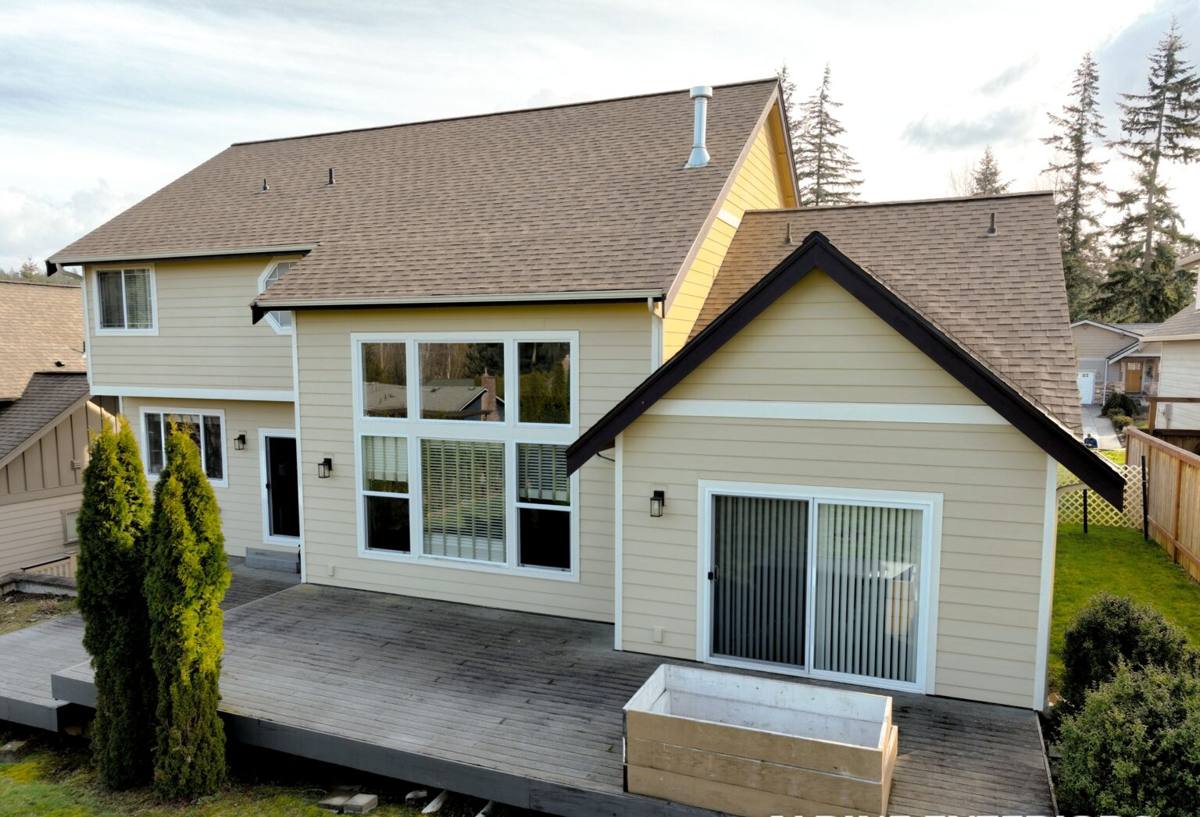
Signs a Mount Vernon Roof Needs Replacement, Not Another Repair
Repairs make sense when the underlying roof system is still sound and the problem is isolated. Replacement makes sense once the damage is spread out or the roof is past the point where patching buys you meaningful time. Some signs point clearly one way or the other:
- Granule loss showing as bald patches or granules collecting in gutters and downspouts
- Shingles that are cupping, curling, or cracking across multiple sections of the roof, not just one spot
- Moss or algae growth that keeps returning within a season or two of cleaning, especially on shaded north- and west-facing slopes
- Soft or spongy decking felt underfoot, or daylight visible through the roof deck from the attic
- Staining on interior ceilings or attic sheathing that shows up after heavy rain, even if it dries between storms
- A roof approaching or past 20–25 years old for asphalt shingle, especially if it was never re-vented or re-flashed
If you're only seeing one or two of these and the roof is otherwise young, a targeted repair is usually the honest answer. We'll tell you that directly during an inspection rather than push a full tear-off you don't need.
What a Correct Roof Replacement Actually Involves
A roof replacement isn't just stripping old shingles and nailing down new ones. In a climate this wet, the parts homeowners don't see are the parts that determine whether the roof lasts.
Tear-Off and Deck Inspection
Every layer of old roofing comes off down to the deck. This is the only point where we can actually see the plywood or OSB sheathing underneath — and in older Mount Vernon homes, it's common to find sections that have softened from long-term moisture intrusion around old flashing or valleys. Soft decking gets replaced before anything new goes down, not covered over.
Underlayment
Underlayment is the roof's real waterproofing layer; the shingles or panels on top are the wear surface. Given how much driving rain this area sees, we treat underlayment coverage and ice-and-water shield placement at eaves, valleys, and penetrations as non-negotiable, not an upgrade option.
Flashing and Penetrations
Chimneys, skylights, vent pipes, and roof-to-wall transitions are where the large majority of roof leaks actually start — not in the open field of shingles. New flashing gets installed at every one of these points, not just wherever the old flashing looked reusable.
Ventilation
Proper intake and exhaust ventilation keeps moisture from condensing in the attic and helps prevent the moss and algae growth that thrives on cool, damp roof surfaces. A roof that's replaced without correcting inadequate ventilation will develop the same moisture problems again, just with newer materials.
Material Options and How They Hold Up Here
There's no single "best" roofing material — there's a best fit for your home, your budget, and how much long-term maintenance you're willing to do. Here's how the common options compare under Mount Vernon's rain-and-moss conditions:
| Material | Moisture & Moss Behavior | Maintenance | Typical Lifespan |
|---|---|---|---|
| Architectural asphalt shingle | Good when ventilated properly; algae-resistant granules help but don't eliminate moss on shaded slopes | Periodic moss/debris removal recommended | 20–30 years |
| Standing-seam metal | Sheds water and debris fast, resists moss buildup better due to smooth slick surface | Low; occasional fastener and seam checks | 40–50+ years |
| Cedar shake | Attractive but absorbs moisture and is more sensitive to sustained damp shade | Higher; needs regular treatment and inspection | 20–30 years with upkeep |
| Synthetic/composite shingle | Doesn't absorb moisture like wood; performance varies by manufacturer | Low to moderate | 30–50 years depending on product |
We don't push cedar shake as a default recommendation for shaded, damp lots in this area — not because it's a bad product, but because it demands a maintenance commitment that most homeowners underestimate when they're comparing it to asphalt or metal at the point of sale. If you want that look, we'll install it correctly and tell you honestly what upkeep it needs; we just won't sell it as low-maintenance when it isn't.
How Our Roof Replacement Process Works
1. On-Site Inspection and Written Estimate
We walk the roof (or use a lift/drone where pitch or access requires it), check the attic for ventilation and moisture signs, and give you a written scope and price — not a verbal ballpark that changes once the crew shows up.
2. Scheduling Around the Weather
Given how much of the year here sees rain, we plan tear-off days around forecasts and stage the job so your home is never left with an open deck overnight. Sections are dried in the same day they're opened.
3. Tear-Off, Deck Repair, and Dry-In
Old roofing comes off, damaged decking is replaced, and underlayment goes down the same day to protect the structure from any surprise weather.
4. Flashing, Ventilation, and Final Install
New flashing, vents, and the finish roofing material go on per manufacturer spec, not shortcuts to save labor time.
5. Cleanup and Walkthrough
Magnetic sweep for nails, full debris haul-off, and a walkthrough so you know exactly what was done and what to watch for going forward.
Ventilation and Moss Prevention Matter More Than Product Choice
Homeowners often ask which shingle brand resists moss best. The honest answer is that ventilation, sun exposure, and tree cover affect moss growth more than the shingle itself. A well-ventilated roof with good airflow dries out faster after the region's frequent rain, which starves moss of the sustained dampness it needs to establish. During replacement, we assess your existing intake and exhaust venting and correct undersized or blocked ventilation as part of the job — not as a separate upsell afterward.
What Affects the Cost of a Roof Replacement
Every roof is priced from its own specifics, but the same handful of factors drive most of the variation between jobs:
| Factor | Why It Matters |
|---|---|
| Roof size and pitch | Steeper roofs take longer and require more safety setup; larger roofs need more material |
| Number of existing layers | Multiple layers of old roofing add tear-off labor and disposal cost |
| Decking condition | Rot or soft sheathing found during tear-off means replacement boards, priced as encountered |
| Material selection | Asphalt, metal, and specialty materials carry different material and labor costs |
| Roof complexity | Valleys, dormers, skylights, and chimneys all add flashing work and time |
| Access and site conditions | Tight lots, tall trees, or limited staging area can affect equipment and labor needs |
Full roof replacements in this area commonly run from the high single-digit thousands for a straightforward asphalt shingle roof up into the low-to-mid five figures for larger homes, steep pitches, or premium materials like standing-seam metal. We won't give you a real number until we've actually looked at your roof — anyone who quotes a firm price sight unseen is guessing.
Why It Matters That We Already Work in Mount Vernon
A crew that regularly works this area already knows how the local rain patterns, wind exposure, and tree cover affect roof performance, and has already dealt with the permitting process for this jurisdiction. That familiarity shows up in small but real ways: knowing which slopes in this area tend to hold moisture longest, sizing ventilation for actual local humidity instead of a generic spec sheet, and being able to respond quickly if weather interrupts a job partway through. It also means we're not learning the area's climate on your roof — we've already accounted for it in how we scope and install every job here.
Questions to Ask Before You Sign a Roofing Contract
Whoever you hire, these are worth confirming in writing before work starts:
- Is the estimate itemized, or is it a single lump number with no breakdown?
- Does the scope explicitly include decking inspection and replacement pricing if rot is found?
- What underlayment and ice-and-water shield coverage is included, and where?
- Is attic ventilation being assessed and corrected, or left as-is?
- Who pulls the building permit, and is that cost included?
- What's covered under workmanship warranty versus manufacturer material warranty, and for how long?
- What happens if rain interrupts the job mid-tear-off?
If a contractor can't answer these clearly before you sign, that's worth treating as a warning sign, not a detail to sort out later.
If your Mount Vernon roof is showing its age or you just want an honest read on whether repair or full replacement makes sense, we're glad to take a look. Use the form below to request a free, no-pressure estimate.