 Chuckanut
 Samish sits right where the roofs get tested. Between the open water along Chuckanut Drive and the wooded slopes climbing up from the shoreline, homes here take a different kind of beating than roofs a few miles inland. Wind comes off Samish Bay with real force, rain arrives sideways as often as it falls straight down, and the tree cover that makes this part of Whatcom County beautiful also keeps roofs shaded and damp for months at a time. When a storm rolls through and does damage, the repair needs to account for all of that — not just patch the spot that's leaking.
Why Storms Hit Samish Roofs Differently
A storm repair in Samish isn't the same job as a storm repair in a dry inland subdivision. The combination of salt-laden air, wind-driven rain, and heavy shade changes how a roof fails and how it should be fixed.
Salt Air and Metal Fatigue
Homes close to the water deal with a slow, steady corrosion problem that inland homes simply don't. Salt air accelerates rust on exposed fasteners, flashing, and vent caps. A storm that pulls loose a section of flashing on a coastal roof is often exposing metal that was already weakened by years of salt exposure — which is why a "quick patch" on a Samish roof can fail again within a season if the underlying corrosion isn't addressed.
Wind-Driven Rain Off the Water
Open water next to a roofline means wind doesn't just blow — it drives rain sideways and up under laps, edges, and flashing that would stay dry in a straight-down rain event. Storm damage here frequently shows up not as an obvious missing shingle, but as water intrusion at a joint, valley, or penetration that looks fine from the ground. That's a big reason surface-level inspections miss real damage in this area.
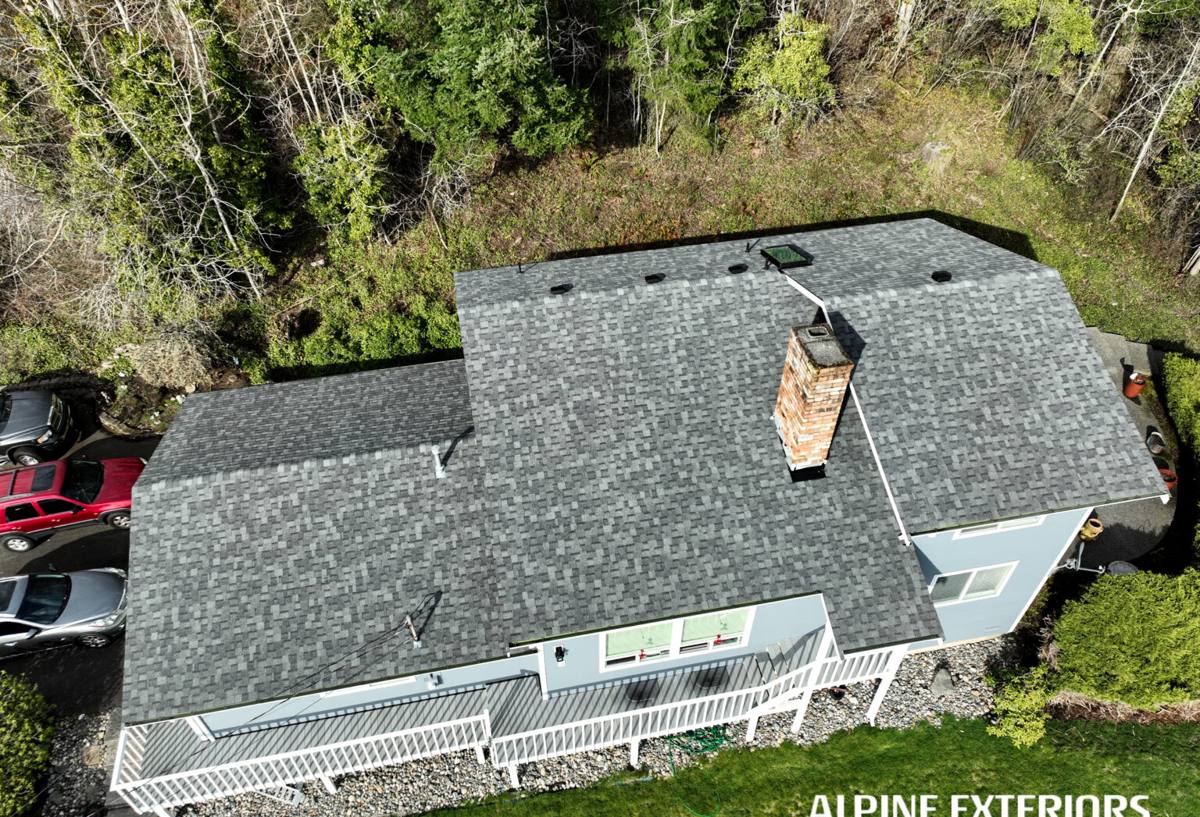
Signs Your Roof Took Storm Damage
Not all storm damage is dramatic. Some of the most costly problems start small and quiet. After any significant wind or rain event, it's worth checking for the following:
- Granules collecting in gutters or downspouts (a sign of shingle wear from wind abrasion)
- Lifted, curled, or missing shingle tabs, especially on the side that faces the water
- Soft or discolored ceiling spots inside the home after a storm, even if they dry out
- Flashing that looks bent, separated, or rust-streaked around chimneys, vents, and skylights
- Debris — branches, needles, moss clumps — pooled in valleys instead of draining off
- Gutters pulling away from the fascia or sagging under storm debris weight
- A musty smell in the attic, which often shows up before any visible ceiling stain
What a Correct Storm Repair Actually Involves
A proper storm damage repair starts with figuring out what actually failed, not just where the leak is showing up inside the house. Water travels before it drips, so the visible stain and the real point of entry are often several feet apart.
Diagnosing Beyond the Obvious
This means getting on the roof, not just looking at it from the driveway. It means checking the attic from the inside for water tracking along rafters, checking flashing at every penetration, and confirming whether the underlayment beneath the damaged area is still intact. Skipping this step is how homeowners end up paying for the same repair twice.
Flashing, Underlayment, and Fasteners
In a climate like this one, the repair materials matter as much as the workmanship. Flashing should be corrosion-resistant given the salt exposure. Underlayment in the repaired section should be a quality synthetic or ice-and-water product at vulnerable points like valleys and eaves, not just whatever patches the visible hole fastest. Fasteners should be rated for coastal exposure — standard fasteners can start showing rust streaks within a couple of years this close to the water.
Moss Season and Long-Term Roof Health
Whatcom County's long wet season and heavy tree cover give moss and algae a real head start on Samish roofs. Moss holds moisture against the shingle surface, works its way under tabs, and gradually lifts them — which turns a healthy roof into storm-vulnerable roof over a few seasons, even without a single big weather event. When we're repairing storm damage, we're also looking at moss growth patterns, because a roof with heavy moss buildup is more likely to have taken damage in the first place, and more likely to take damage again in the next storm if the moss isn't addressed as part of the repair.
Materials That Hold Up in This Climate
Not every roofing product performs the same way under salt air, shade, and driving rain. Part of doing this job right in Samish is choosing repair materials suited to the actual conditions, not just the cheapest match for the existing roof.
| Consideration | Why It Matters Here |
|---|---|
| Algae-resistant shingles | Reduces moss and algae staining common under tree cover and in damp, shaded sections of roof |
| Corrosion-resistant flashing | Salt air accelerates rust on standard flashing and fasteners near the water |
| Proper attic ventilation | Poor airflow traps moisture, which speeds up moss growth and shortens shingle life |
| Ice-and-water underlayment at valleys/eaves | Adds a real barrier where wind-driven rain is most likely to force water backward under shingles |
| Sealed, gasketed vent boots | Standard rubber boots degrade faster under constant damp exposure and become a common leak point |
Repair or Replace: How We Help You Decide
Storm damage doesn't always mean a full roof replacement, and it doesn't always mean a cheap patch will hold. The right call depends on the roof's age, how widespread the damage is, and what condition the rest of the roofing system is in.
| Situation | Typical Approach |
|---|---|
| Isolated damage on a roof under 10 years old | Targeted repair — replace affected shingles, flashing, and underlayment in that section |
| Damage in multiple areas, or roof nearing the end of its service life | Repair now to stop active leaking, with an honest conversation about replacement timing |
| Repeated storm damage in the same spot | Investigate underlying cause — often ventilation, flashing design, or moss buildup — before repairing again |
| Storm damage plus significant moss/algae coverage | Repair paired with moss treatment and gutter clearing to prevent repeat damage |
We'll always tell you honestly which category your roof falls into. A repair that's set up to fail again within a year isn't a good use of your money, and neither is a full replacement when a solid, targeted repair will genuinely hold.
Our Process, Start to Finish
We keep the process straightforward:
- We inspect the roof in person — on the roof and in the attic, not just from ground level
- We document what we find with photos, so you know exactly what happened and why
- We give you a clear, written scope of repair and an honest price range before any work starts
- We complete the repair with materials suited to this coastal, shaded climate
- We clean up debris and check drainage paths — gutters, valleys, downspouts — before we call the job done
If the damage is serious enough to affect the interior of the home, we'll walk you through what we're seeing so you're not left guessing about the extent of it.
Working With Your Insurance
Many storm damage repairs in this area do get handled through homeowners insurance. We're happy to document the damage clearly and answer an adjuster's questions about the scope of work, but we'd rather be straight with you upfront: not every case is covered, and coverage details depend entirely on your policy. We'll give you an honest assessment of the damage itself; how it's paid for is between you and your insurer.
Why a Crew That Already Works Samish Matters
Roofing knowledge that works fine in a dry, inland town doesn't automatically transfer to a property sitting near open water in Whatcom County. A crew that regularly works this stretch near Chuckanut already knows how salt air ages metal, how wind off the bay drives rain into places a straight-on storm never would, and how much moss buildup is normal versus a sign of a bigger drainage problem. That local pattern recognition is what separates a repair that holds up through the next few storm seasons from one that's back on the schedule in a year.
If a recent storm left you with a leak, missing shingles, or just a nagging feeling that something's not right up there, we're glad to take a look. Reach out for a free, no-pressure estimate — we'll tell you honestly what we find and what it'll take to fix it right.