 Chuckanut
 Window Installation in Bow: Why the Local Climate Changes the Job
Bow sits close enough to the water that homes here deal with a different mix of weather stress than houses just a few miles inland. Salt-laden air off Samish Bay and the surrounding sound moves through this part of Whatcom County constantly, and it settles on everything, including window frames, hardware, and glazing seals. Add driving, wind-blown rain that comes in sideways during fall and winter storms, and a long moss season that keeps north-facing surfaces damp for months at a stretch, and you have a climate that is genuinely harder on windows than a lot of other parts of the state. A window installation in Bow is not the same job as a window installation in a dry inland town, and it shouldn't be treated that way.
We install windows across Chuckanut and the surrounding Whatcom County communities, and Bow's mix of coastal exposure, tree cover, and older housing stock is a pattern we see often. The goal of this page is to walk through what that actually means for your project: what the climate does to windows over time, what a correct installation involves, and how we approach the work so it holds up.
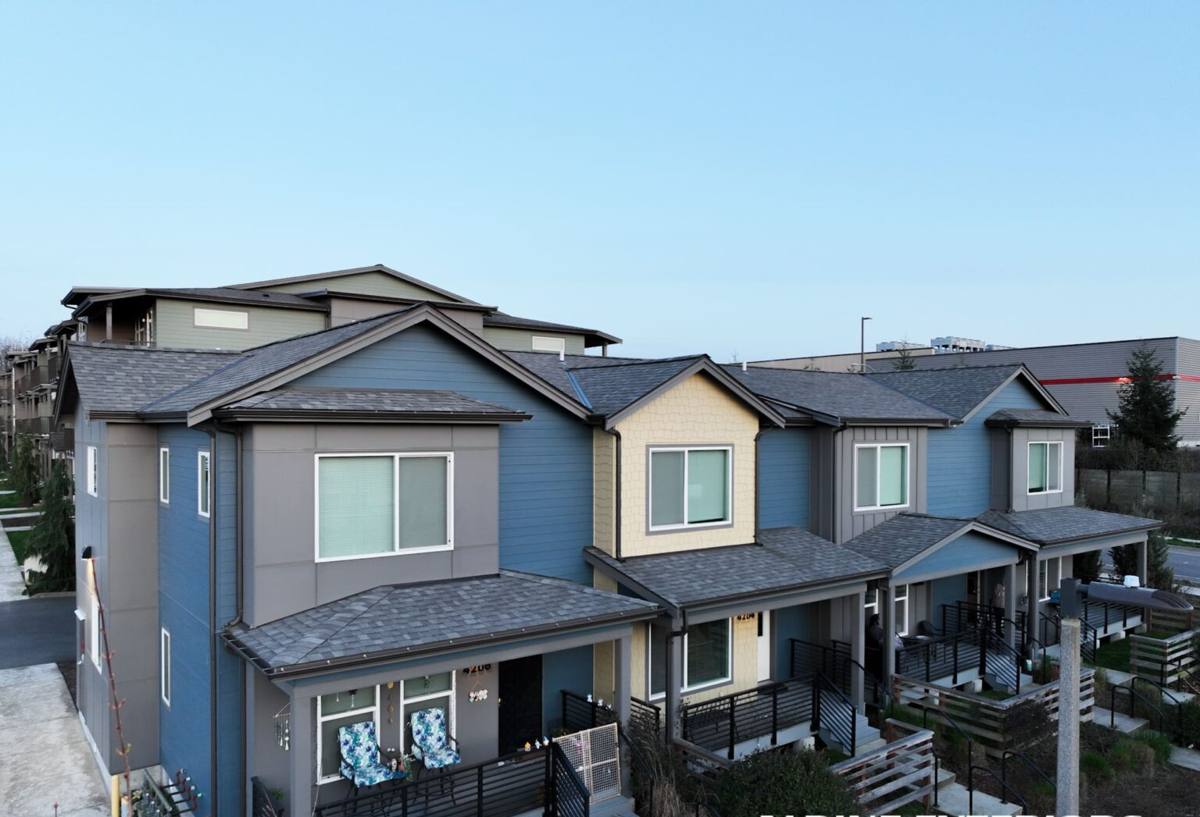
What Salt Air, Driving Rain, and Moss Season Do to Windows
Salt Air and Metal Components
Salt in the air accelerates corrosion on anything metal — window balances, cranks, screen frames, and especially lower-quality hardware finishes. Over years, this shows up as stiff or failing operation, pitted or discolored metal, and hardware that simply wears out faster than the manufacturer's warranty assumes it will. It doesn't ruin a window overnight, but it shortens the useful life of the moving parts if the hardware wasn't chosen with that exposure in mind.
Driving Rain and Water Intrusion
Wind-driven rain is a different problem than a normal vertical rainfall. It gets pushed sideways and upward under trim, around poorly sealed nailing flanges, and into any gap in the flashing detail. Most window failures we're called out to inspect in this area aren't glass failures at all — they're water intrusion problems around the frame, caused by an installation that didn't account for how hard the rain actually hits this part of the county. Once water gets behind a window and into the wall framing, it can sit there a long time before it becomes visible, which brings us to moss and moisture.
Moss Season and Trapped Moisture
Bow gets a long stretch of the year where shaded and north-facing exterior surfaces stay damp, and moss and algae take hold on siding, trim, and window sills that don't get much direct sun or airflow. That constant moisture load is hard on wood trim and sills in particular, and it's part of why sill design and drainage details matter as much as the window unit itself. A window that's technically installed correctly but sits in standing moisture for months at a time will still fail early.
Signs It's Time to Replace, Not Just Repair
- Fogging or a permanent haze between the panes — the seal has failed and the insulated glass unit needs replacing, not just cleaning
- Soft or discolored wood trim or sill, especially on north- or west-facing windows that don't dry out quickly
- Windows that are noticeably harder to open, close, or lock than they used to be
- Visible daylight, drafts, or a whistling sound around the frame during windy weather
- Paint or finish that keeps failing in the same spot no matter how often it's touched up — usually a sign of moisture getting into the wood underneath
- Rooms near certain windows that feel noticeably colder or draftier than the rest of the house
Some of these are cosmetic and can wait. Fogged glass, soft framing, and persistent drafts usually aren't — they tend to get more expensive the longer they're left alone, especially once moisture reaches the wall framing around the window opening.
What a Correct Window Installation Actually Involves
Swapping an old window for a new one sounds simple, and the window itself is the easy part. The details that actually determine whether it lasts through Bow's weather happen in the rough opening, before the new window ever goes in.
Inspecting the Opening First
Before anything goes in, we check the rough opening for rot, soft framing, or existing water damage. Installing a brand-new window into a compromised opening just seals the problem behind new trim — it doesn't fix it. Any damaged framing gets addressed before installation continues.
Sill Pans and Drainage
A sloped sill pan under the window gives any water that does get past the exterior seal somewhere to go — out, not into the wall cavity. This is one of the details that separates a durable install from one that looks fine for a few years and then causes a hidden problem. In a driving-rain climate like this one, we treat it as standard, not optional.
Flashing and Water-Resistive Barrier Integration
Flashing tape and the house's weather-resistive barrier need to be integrated in the right order — shingled like the layers of a roof — so water is always directed outward and downward, never trapped behind the siding. This is the single most common point of failure we find on older or lower-budget installs, and it's invisible once the trim goes back on, which is exactly why it has to be done right the first time.
Air Sealing and Insulation
The gap between the window frame and the rough opening gets sealed with a proper low-expansion foam or backer rod and sealant — not just stuffed with fiberglass — to control both drafts and condensation risk without bowing the frame out of square.
Exterior Sealant and Trim
The final exterior sealant bead is what most homeowners actually see, but it's the last line of defense, not the primary one. A good sealant job on top of poor flashing will still fail. We treat it as the finishing step, not a substitute for the layers underneath.
Choosing Materials for Bow's Coastal Exposure
There's no single "best" window material for every house — it depends on your home's style, budget, and how exposed a given wall is to wind and rain. Here's how the common options actually compare for a coastal Whatcom County setting like Bow.
| Material | Performance in Salt Air & Rain | Maintenance | General Cost Range |
|---|---|---|---|
| Vinyl | Won't corrode or rot; good moisture resistance | Low — occasional cleaning | Most affordable |
| Fiberglass | Very stable in temperature and moisture swings; strong against warping | Low | Mid to upper-mid |
| Wood (unclad) | Attractive but vulnerable to prolonged dampness and moss-season moisture without diligent upkeep | High — regular painting/sealing | Higher |
| Wood-clad (exterior aluminum or fiberglass shell) | Good — exterior shell resists weather while interior keeps a wood look | Moderate | Higher |
For homes with heavy direct exposure to wind-driven rain or salt air, we generally steer clients toward vinyl or fiberglass on those elevations because they hold up with the least maintenance burden. Unclad wood can still be the right call on protected or covered elevations where a homeowner wants that traditional look and is willing to keep up with the finish. We'll walk your specific house and tell you honestly which option fits which wall — it's rarely the same answer on every side of the home.
Glass and Hardware Notes
Double-pane, low-E glass is the standard for this region and makes a real difference in comfort and condensation control. For hardware, look for corrosion-resistant finishes on locks, cranks, and hinges — in a salt-air environment, cheaper hardware is often the first thing to fail, well before the window unit itself.
Our Window Installation Process in Bow
- On-site assessment of your existing windows, openings, and any visible water or moisture issues
- Honest recommendation on material, glass, and hardware based on that specific wall's sun and rain exposure
- Written estimate with clear scope — no vague allowances
- Removal of old units and inspection of the rough opening for hidden rot or damage
- Repair of any compromised framing before the new window goes in
- Sill pan, flashing, and weather-barrier integration installed to shed water outward
- New window set, shimmed square and level, and properly air-sealed
- Exterior trim and sealant finished, interior trim reset or replaced as needed
- Final walkthrough so you can operate every window and confirm the work before we consider the job done
Why It Matters That We Already Work in Bow
A crew that only occasionally works this stretch of Chuckanut and the Whatcom County coastline doesn't necessarily know how hard the rain drives in during a fall storm off the bay, or how quickly a shaded sill grows moss if the drainage detail isn't right. Those are things you learn from doing the work here repeatedly, not from a general training manual. Local experience shows up in small decisions — where to add extra flashing overlap, which elevations need the more weather-resistant material, how much drainage slope a given sill needs — and those small decisions are what determine whether an installation is still performing well in ten or fifteen years.
It also matters for accountability. A local, established contractor is easy to find again if a question comes up after the job — you're not chasing down a crew that came through once and moved on.
Keeping New Windows Performing After Installation
- Rinse salt residue off frames and glass periodically, especially after storms with onshore wind
- Keep weep holes at the base of the frame clear of debris, pollen, and moss so water can drain properly
- Wipe down and lightly lubricate hardware (locks, cranks, hinges) once or twice a year
- Check exterior caulking annually and re-seal any cracked or separated joints before winter rains set in
- Trim back vegetation or moss growth near window sills to reduce trapped moisture
- Watch for condensation between panes — it's an early, reliable sign a seal has failed
None of this is complicated, but skipping it is how a well-installed window ends up with an avoidable problem five or ten years down the line.
Get a Straight Answer on Your Windows
If you're dealing with drafty, foggy, or hard-to-operate windows in Bow, or you're planning ahead for a full replacement, we're happy to take a look and give you a straightforward assessment — what actually needs replacing, what materials make sense for your home's exposure, and what it will cost. Use the form below to request a free, no-pressure estimate.